
The single most effective way to combat bloat risk isn’t just slowing your dog’s eating—it’s transforming the mealtime ‘sprint’ into a calming, brain-engaging ritual.
- Working for food via puzzles triggers a positive dopamine response, satisfying a dog’s natural foraging instincts and reducing mealtime anxiety.
- A balanced “mental diet” combining active enrichment (like puzzle feeders) with physical exercise and rest is key to a calm, healthy, and well-adjusted dog.
Recommendation: Immediately switch from a standard bowl to a Level 1 puzzle feeder and begin the process of turning feeding into a structured, life-saving game.
The sound is unmistakable: the frantic clatter of kibble, the gulping, the vacuum-like speed. For an owner of a deep-chested breed, it’s not just a sign of a hungry dog; it’s a sound that triggers a spike of pure fear. You know the danger of Gastric Dilatation-Volvulus (GDV), or bloat, is real and that rapid eating is a primary contributor. Every meal feels like a gamble, a race against a potentially fatal clock.
The common advice is simple and often repeated: “Get a slow feeder bowl.” While well-intentioned, this advice barely scratches the surface. It treats the symptom—fast eating—without addressing the underlying cause: a dog’s psychological and physiological state during meals. Simply putting obstacles in a bowl can sometimes increase frustration and air-gulping, failing to mitigate the core risks.
But what if the solution wasn’t just about forcing a slower pace, but about fundamentally re-engineering your dog’s entire relationship with food? What if you could turn this moment of high risk into a powerful, life-saving ritual? This is where specialized feeders and the principle of cognitive engagement come in. This isn’t about restriction; it’s about enrichment. It’s about shifting your dog’s brain from a state of frantic consumption to one of focused, satisfying work.
This guide will walk you through the science of why this works, how to choose the right tools, how to build a progressive training plan, and how to troubleshoot common issues. By the end, you won’t just see a food bowl; you’ll see a critical tool for proactive health, mental wellness, and life-saving prevention.
This article provides a comprehensive framework for transforming your dog’s mealtime. Explore the sections below to understand the science, select the right tools, and implement a safe, effective feeding strategy.
Summary: The Complete Guide to Transforming Mealtime with Puzzle Feeders
- Why Working for Food Calms High-Energy Dogs?
- Plastic vs. Ceramic Puzzles: Avoiding Feline Chin Acne?
- Snuffle Mat to Slider Puzzle: How to Scale Difficulty?
- The Frustration Threshold: What to Do If Your Dog Gives Up on the Puzzle?
- How to Clean Complex Feeders to Prevent Mold Growth?
- Active Play vs. Cuddle Time: Which Builds Trust Faster for Cats?
- Kitchen Scale vs. Measuring Cup: The Accuracy Difference That Sheds Pounds
- Passive vs. Active Enrichment: Balancing the Mental Diet
Why Working for Food Calms High-Energy Dogs?
To understand why a puzzle feeder is more than just an obstacle course for food, we need to look inside the canine brain. High-energy and anxious dogs often approach their food bowl with a frantic urgency that directly contributes to dangerous air-gulping, a key risk factor for bloat. The solution isn’t just to slow the body, but to engage the mind. This is achieved through a fascinating behavior known as Contrafreeloading: the innate preference of animals to work for their food, even when an identical free meal is readily available.
Why would they do this? The answer lies in brain chemistry. The act of seeking, sniffing, and problem-solving to get food is a powerful foraging behavior. This process triggers the release of dopamine, the “feel-good” neurotransmitter. Crucially, neuroscience research demonstrates that dopamine levels are higher during the seeking and anticipation phase than during the actual consumption. A standard bowl offers zero seeking time, leading to a quick, unsatisfying dopamine spike. A puzzle feeder, however, extends this seeking phase, turning a 30-second frantic gulp into a 15-minute engaging “work” session.
This prolonged mental effort has a profound calming effect. It channels a dog’s excess energy into a productive, focused task. As highlighted in a study published in Scientific Reports, providing food enrichment allows dogs to satisfy these natural tendencies, which is inherently rewarding and improves their welfare. Instead of a stressed, rushed meal, you create a structured, calming ritual that tires them out mentally, leading to a more relaxed dog long after the bowl is empty. This mental fatigue is a powerful tool in managing high-energy breeds and reducing the anxiety that fuels dangerous eating habits.
Plastic vs. Ceramic Puzzles: Avoiding Feline Chin Acne?
While often discussed in the context of feline chin acne, the choice of material for a feeding puzzle is a critical hygiene factor for all pets, especially for dogs where bacterial buildup can lead to digestive upset or skin issues. Your dog’s feeder is a daily-use item, and its material directly impacts health, safety, and cleanliness. The debate between plastic, ceramic, and other materials is not just about aesthetics; it’s about microbiology.
Plastic puzzles are popular and affordable, but they come with a significant drawback: they are prone to microscopic scratches over time. These tiny grooves, invisible to the naked eye, become perfect breeding grounds for biofilm—a slimy layer of bacteria that is difficult to remove. Even BPA-free plastic can harbor these bacteria. This is why some cats develop chin acne from plastic bowls, and for a dog, it can mean ingesting harmful bacteria with every meal. Ceramic is a step up in terms of hygiene as it’s less prone to scratching, but it can chip or break, creating sharp edges and new havens for germs.
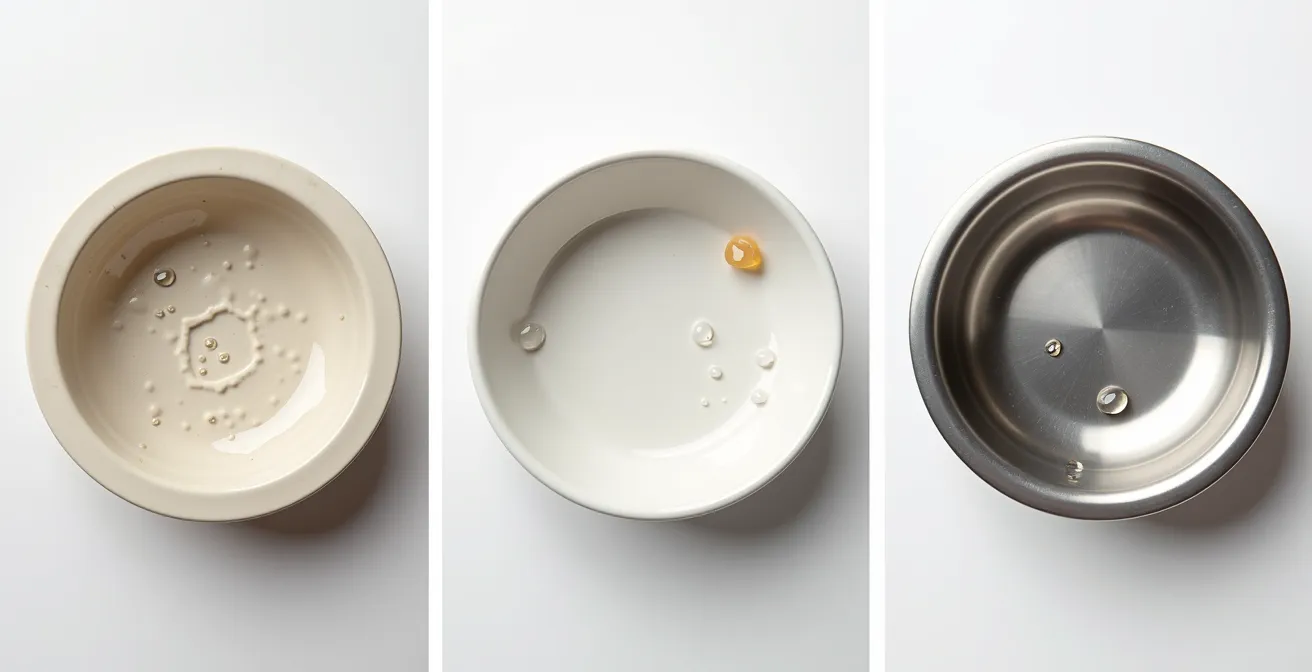
As the detailed image above illustrates, surface integrity is key. For ultimate hygiene and durability, food-grade silicone and stainless steel are superior choices. Stainless steel is non-porous, virtually indestructible, and doesn’t scratch easily, preventing biofilm from taking hold. Silicone offers flexibility, is gentle on a dog’s snout, and is typically dishwasher-safe for easy sanitization. Choosing a puzzle made from one of these materials is a crucial step in your life-saving feeding ritual, ensuring that you’re not trading one health risk (bloat) for another (bacterial infection).
This comparative analysis provides a clear overview of how different materials stack up in terms of health and safety.
| Material | Hygiene Score | Durability | BPA-Free Status | Best For |
|---|---|---|---|---|
| Food-Grade Silicone | Excellent (dishwasher-safe) | High flexibility | Always BPA-free | Wet food, lick mats |
| Stainless Steel | Superior (no scratches) | Unbreakable | N/A (no plastic) | All food types |
| Ceramic | Very Good | Can chip/break | N/A | Aesthetic preference |
| BPA-Free Plastic | Good (prone to scratches) | Moderate | Yes (verified) | Budget option |
Snuffle Mat to Slider Puzzle: How to Scale Difficulty?
Introducing a puzzle feeder is not a one-time switch; it’s the beginning of a progressive training journey. Starting with a puzzle that is too difficult is the fastest way to failure. As dog behavior expert Cathy Madson notes, “When a dog can’t get the food out, they get frustrated and give up.” This “unproductive frustration” can lead to stress, destructive behavior towards the feeder, or complete abandonment of the activity, defeating the entire purpose. The key is to build confidence by scaling the difficulty gradually, ensuring your dog is always challenged but never overwhelmed.
The progression should be logical, moving from simple sensory exploration to complex problem-solving.
- Level 1: Open-Design Feeders. Start with simple slow-feed bowls with ridges or a snuffle mat. The goal here is not complex thought, but to introduce the concept of foraging and slow the pace.
- Level 2: Single-Mechanism Toys. Introduce puzzles that require one simple action, like flipping a lid or nudging a single slider. LickiMats with wet food or yogurt also fall into this category, focusing on licking which is a naturally calming behavior.
- Level 3: Multi-Step Puzzles. Once your dog masters single actions, you can move to puzzles that require a sequence of two or three different actions, like lifting a cone and then sliding a panel.
This careful progression turns mealtime into a confidence-building game. The reward is twofold: the food itself and the satisfaction of solving the puzzle. This process is incredibly enriching, and powerful in its impact. In fact, research indicates that a 15-minute maze feeding session provides mental exercise equivalent to a 30-minute walk. By carefully managing the difficulty, you are not just feeding your dog; you are training their brain, building their resilience, and providing a crucial outlet for their mental energy.
What usually happened is that the puzzles they tried were too hard for their dog’s skill level. When a dog can’t get the food out, they get frustrated and give up.
– Cathy Madson, CPDT-KA, Preventive Vet – Dog Behavior Expert
The Frustration Threshold: What to Do If Your Dog Gives Up on the Puzzle?
There is a fine line between productive, engaging frustration and a level of stress that causes a dog to shut down. The goal of a puzzle feeder is to elicit the former, not the latter. Studies on dog behavior during problem-solving activities show a clear difference: dogs that successfully solved puzzles wagged their tails more and were more excited. Those that became overly frustrated showed signs like chewing the device or disengaging entirely. Your role as the owner is to be a good coach, recognizing the signs of genuine stress and intervening to rebuild confidence.
If you notice your dog giving up, whining, barking at the puzzle, or trying to destroy it, it’s a clear signal that the difficulty is too high or their confidence is too low. Do not let them fail. This is a critical moment in your feeding ritual. Immediately reduce the difficulty. You can do this by “pre-solving” parts of the puzzle for them, using higher-value treats to increase motivation, or going back to an easier puzzle they have already mastered. The goal is to end the session on a success, no matter how small.
Building this “frustration tolerance” is a skill. You are teaching your dog that when faced with a challenge, persistence (not brute force) pays off. This is where a strategic toolkit becomes invaluable. You can guide them without giving the answer away, ensuring they feel a sense of accomplishment. This process strengthens their problem-solving skills and, more importantly, reinforces their trust in you as a reliable partner who sets them up for success.
Your Action Plan: Building Confidence for a Frustrated Dog
- Assess the Setup: Check for environmental distractions. Is the dog overly hungry or tired? Ensure the setting is calm and conducive to focus.
- Implement Scent Trails: Use a tiny smear of peanut butter or wet food to create a “scent trail” leading your dog’s nose towards the solution, making discovery easier.
- Use “Jackpotting”: When your dog shows even minor effort or interacts correctly with the puzzle, reward them with a surprise high-value treat (like cheese or liver) separate from the kibble in the puzzle.
- Teach Backwards (Back-chaining): Start by teaching the very last step of the puzzle first. Once mastered, teach the second-to-last step, and so on. This builds momentum and confidence.
- Maintain an 80% Success Rate: As a rule of thumb, only increase the difficulty of a puzzle when your dog can successfully and easily solve the current level at least 80% of the time.
How to Clean Complex Feeders to Prevent Mold Growth?
A puzzle feeder can quickly turn from a health-promoting tool into a hazardous one if not cleaned meticulously. The complex nooks, crannies, and crevices that make these feeders challenging for your dog also make them a paradise for mold, yeast, and harmful bacteria. Food particles, mixed with dog saliva, create a nutrient-rich environment for microbial growth, which can cause severe gastrointestinal distress and other health issues. Therefore, a strict cleaning protocol is not an optional extra; it is an integral part of the life-saving feeding ritual.
The frequency and method of cleaning depend on the feeder’s material and the type of food used. Wet food requires immediate and thorough cleaning after every use, while dry kibble allows a little more leeway, though daily cleaning is still best practice. Never simply “refill” a puzzle feeder. Each day should start with a clean, dry, and fully sanitized device. This requires disassembling complex toys to clean each part individually. Specialized tools like bottle brushes, pipe cleaners, and even compressed air can be invaluable for reaching every corner.
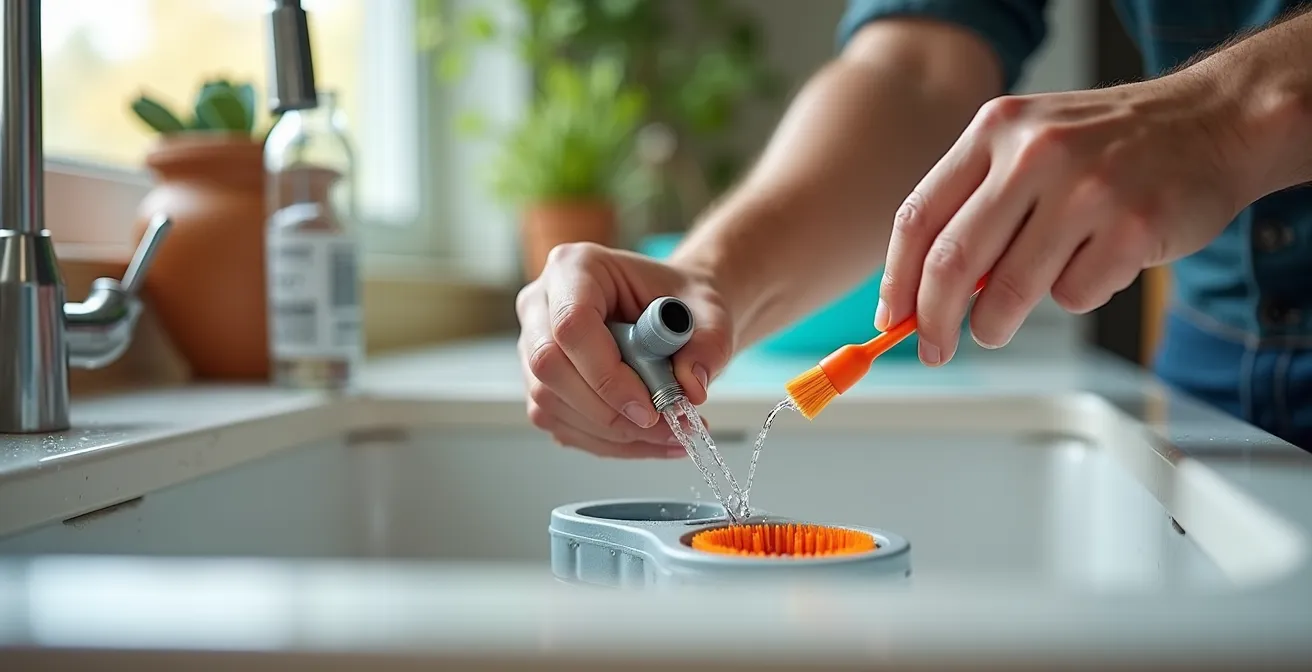
Drying is just as important as washing. A damp feeder will immediately begin to culture mold. Ensure all components are completely air-dried before reassembly. By integrating this cleaning routine into your daily schedule, you ensure the safety and integrity of your feeding program. The care you put into cleaning the feeder is a direct reflection of the care you are taking for your dog’s health.
To ensure you’re cleaning your specific type of feeder correctly, refer to these material-specific sanitization protocols.
| Material | Daily Cleaning | Deep Sanitization | Drying Method |
|---|---|---|---|
| Plastic Puzzles | Warm soapy water + bottle brush | 1:1 vinegar/water soak 10 min | Air dry upside down |
| Silicone Mats | Dishwasher top rack | Boiling water immersion safe | Shake dry + towel |
| Stainless Steel | Dishwasher any rack | Sanitize cycle 165°F | Immediate towel dry |
| Complex Toys | Disassemble + individual cleaning | Compressed air for crevices | 24-hour air dry |
Active Play vs. Cuddle Time: Which Builds Trust Faster for Cats?
The question of how to build trust isn’t limited to cats; for dogs, the right kind of shared activity is paramount to a strong bond. While cuddling is wonderful, a partnership forged through collaborative effort, like working through a puzzle feeder, builds a unique and powerful form of trust. When you provide a puzzle and guide your dog through the challenge, you are not just a provider of food; you become a partner in their success. You are communicating, problem-solving together, and celebrating their wins.
This interactive enrichment actively demonstrates your role as a safe and reliable leader. Research on animal behavior consistently shows the value of foraging activities. As noted in a study published in Scientific Reports, “Providing dogs with opportunities to channel their energies into using their noses in scent activities, such as by providing a snuffle mat, is posited to help anxious dogs build confidence.” This confidence in their own abilities translates directly into confidence in their environment and in you, their provider.
Even studies on species like parrots show that they have flexible preferences for foraging, indicating a desire for engaging activities over simple handouts. This proves that the “work” is not a chore, but an enjoyable form of partnership. Every time you present a clean, properly-filled puzzle feeder and encourage your dog, you are making a deposit in the trust bank. You are proving that you understand their needs beyond basic sustenance. This shared ritual of puzzle-solving becomes a cornerstone of your relationship, far more impactful than passive affection alone.
Kitchen Scale vs. Measuring Cup: The Accuracy Difference That Sheds Pounds
Your life-saving feeding ritual begins before the food even touches the puzzle feeder. It starts with precision portioning. For deep-chested breeds at risk of bloat, maintaining a lean body condition is just as critical as slowing their eating pace. Excess weight puts additional stress on their cardiovascular and skeletal systems, and scooping food with a measuring cup is one of the biggest sources of unintentional overfeeding. The density of kibble can vary, and a “scoop” is an inconsistent measure that can lead to significant calorie creep over time.
The difference is not trivial. Using a digital kitchen scale to weigh your dog’s food is the only way to ensure accuracy. This precision is vital because even small errors accumulate. As veterinary calculations show that a mere 10g daily overfeeding can lead to a one to two-pound weight gain over the course of a year in a medium-sized dog. For a large or giant breed, that variance can be even more dramatic. This slow, insidious weight gain can happen right under your nose, even while you believe you are feeding the correct amount.
Integrating a kitchen scale into your daily routine is a simple, one-time change that pays massive dividends for your dog’s long-term health. Always weigh food BEFORE placing it in the puzzle feeder. This practice removes all guesswork and establishes a precise baseline for your dog’s caloric intake. It allows you to make tiny, accurate adjustments based on their activity level, age, and body condition. Precision is a cornerstone of proactive care; it transforms feeding from an approximation into a science, giving you complete control over one of the most important variables in your dog’s health.
Key Takeaways
- Transforming mealtime into a mental challenge with puzzle feeders is a direct, life-saving intervention to reduce bloat risk.
- The material of a feeder (stainless steel or silicone over plastic) and its daily cleaning are non-negotiable for preventing harmful bacterial growth.
- Gradually increasing puzzle difficulty is crucial to build a dog’s confidence and prevent ‘unproductive frustration’ that leads to them giving up.
Passive vs. Active Enrichment: Balancing the Mental Diet
A puzzle feeder is a powerful tool, but it’s most effective when viewed as one part of a larger, balanced “mental diet.” Just as a human diet requires a mix of macronutrients, a dog’s day requires a balanced mix of different types of enrichment to achieve a state of calm well-being. Relying solely on one type of activity, whether it’s constant high-intensity fetch or endless puzzle toys, can lead to imbalance. The goal is a holistic approach that caters to all of your dog’s needs: physical, mental, and the need for simple rest.
A healthy mental diet can be broken down into three core components:
- Passive Enrichment (approx. 50% of day): This is the foundation of a calm dog. It includes napping, relaxing, watching the world from a window, or simply sniffing the air. This is crucial recovery time where the brain processes information and the body rests.
- Physical Exercise (approx. 30% of day): This includes walks, running, and fetch. It’s essential for body maintenance and releasing physical energy.
- Active Enrichment (approx. 20% of day): This is the mentally taxing, problem-solving work. It includes training sessions, nose work, and, critically, puzzle feeders. This is where your dog expends the most cognitive energy.
Viewing mealtime as the primary slot for “Active Enrichment” is a strategic masterstroke. You are taking a time of high risk and transforming it into the most mentally engaging part of your dog’s day. This balance ensures that your dog isn’t under-stimulated (leading to boredom and destructive behaviors) or over-stimulated (leading to anxiety and an inability to settle). It’s a holistic framework that puts you, the owner, in the driver’s seat of your dog’s mental wellness.
This framework, known as the “Mental Diet Plate,” provides an excellent visual for how to structure your dog’s day for optimal well-being.
| Enrichment Type | % of Day | Examples | Mental Energy Used |
|---|---|---|---|
| Passive Enrichment | 50% | Naps, window watching, ambient sniffing | Low (recovery) |
| Physical Exercise | 30% | Walks, fetch, running | Medium (body focus) |
| Active Enrichment | 20% | Puzzle feeders, training, scent work | High (problem-solving) |
By embracing this balanced approach, you move beyond being just a dog owner and become a proactive wellness advocate for your animal. You are no longer passively hoping to avoid a bloat emergency; you are actively, intelligently, and lovingly structuring your dog’s entire day to minimize risk and maximize quality of life. This is the ultimate expression of responsible ownership. Start today by evaluating your dog’s current “mental diet” and take the first step toward building this life-saving ritual.