Adoption & Training
Bringing a dog into your life represents one of the most rewarding commitments you’ll ever make, yet it’s also one that comes with significant responsibility. Whether you’re welcoming a bouncing puppy, adopting an adult rescue dog, or helping a fearful dog overcome past trauma, understanding the intersection of adoption and training transforms what could be a frustrating experience into a journey of mutual growth and trust.
The landscape of modern dog training has evolved dramatically. We’ve moved beyond outdated dominance theories toward evidence-based approaches rooted in behavioral science. This shift isn’t just academic—it has profound practical implications for how quickly your dog learns, how confident they become, and ultimately, how strong your bond will be. This comprehensive resource connects the dots between choosing the right dog, understanding their developmental needs, applying effective training principles, and troubleshooting common behavioral challenges that arise throughout a dog’s life.
Early Development: Building Strong Foundations From Puppyhood
The first sixteen weeks of a puppy’s life represent a critical window that disproportionately influences their adult temperament. Think of this period as wet concrete—every experience leaves an impression that hardens over time. Understanding these developmental stages helps you provide the right experiences at precisely the right moments.
Critical Periods and Fear Phases
Puppies experience distinct developmental phases, including multiple fear periods where they become suddenly sensitive to new stimuli. The first typically occurs around eight to ten weeks, with another emerging between six to fourteen months. During these windows, a single frightening experience—a loud noise, rough handling, or overwhelming situation—can create lasting associations. Rather than pushing through these sensitive periods, successful puppy rearing requires threshold awareness: exposing your puppy to new experiences while keeping their stress level below the point where fear takes over.
Essential Puppy Skills
Beyond basic obedience, puppies need to master several foundational skills that prevent problems down the road:
- Bite inhibition: Teaching puppies to control jaw pressure before their adult teeth emerge, typically through appropriate play interruption when biting becomes too hard
- Potty training: Establishing reliable elimination patterns through consistent scheduling, management, and strategic reinforcement rather than punishment
- Handling tolerance: Conditioning puppies to accept grooming, veterinary exams, and physical manipulation through gradual, positive associations
- Nutrition and growth: Providing appropriate caloric intake and nutrient ratios for controlled growth, particularly crucial for large breed puppies prone to developmental orthopedic issues
Vaccination Scheduling and Socialization Balance
One of the most common dilemmas new puppy owners face involves the tension between protecting an unvaccinated puppy and providing crucial socialization. While vaccination protocols typically complete around sixteen weeks, the primary socialization window closes during this same period. The solution lies in strategic exposure—carrying your puppy in public spaces, arranging controlled meetings with vaccinated dogs, and focusing on environmental variety rather than disease-risk scenarios.
Science-Based Training: How Dogs Actually Learn
Effective training isn’t about dominance, leadership, or being “the alpha”—it’s about understanding the learning principles that govern all animal behavior. When you comprehend how consequences shape future behavior, training transforms from a mysterious art into a predictable, replicable process.
The Four Quadrants of Learning
All learning falls into four categories based on whether you’re adding or removing something, and whether that change increases or decreases behavior. Positive reinforcement—adding something desirable to increase behavior—proves most effective for building new skills and creating enthusiastic responses. When your dog sits and receives a treat, praise, or access to something they want, they’re more likely to sit again. This approach builds confidence and strengthens your relationship rather than creating fear or avoidance.
Timing, Markers, and Reinforcement Schedules
The difference between effective and ineffective training often comes down to reinforcement timing. Dogs associate consequences with behaviors that occurred within roughly one to two seconds. This is why marker training—using a clicker or verbal marker like “yes” to identify the exact moment your dog performed correctly—accelerates learning. The marker bridges the gap between behavior and delivery of the actual reward, providing crystal-clear communication.
Threshold Management and Desensitization
Much of behavioral modification involves helping dogs remain calm around triggers that currently cause fear, excitement, or frustration. Threshold refers to the distance or intensity at which your dog can notice a trigger but remain calm enough to learn. Working below threshold—far enough from the trigger that your dog can still take treats and respond to cues—allows you to gradually build positive associations through systematic desensitization and counter-conditioning.
Understanding Extinction Bursts and Generalization
When a previously reinforced behavior stops working, dogs typically try harder before giving up—a phenomenon called an extinction burst. If your dog used to get attention for jumping and you suddenly ignore it, expect jumping to intensify temporarily before improving. Similarly, dogs don’t automatically generalize learned behaviors across contexts. A perfect “sit” in your quiet living room doesn’t mean your dog understands “sit” at the dog park—you’ll need to practice each skill in progressively more challenging environments.
The Transition Period: Setting Up Adopted Dogs for Success
Adult dog adoption presents unique challenges distinct from raising a puppy. Rescue dogs arrive with unknown histories, established habits, and often, emotional baggage that requires patience and understanding to address.
The Rule of Three Timeline
Rescue professionals often reference the Rule of Three: three days to decompress, three weeks to learn your routine, and three months to truly settle in. During the initial seventy-two hours, newly adopted dogs often shut down—eating little, hiding, and appearing withdrawn. This isn’t their true personality; it’s overwhelm. Resisting the urge to immediately socialize, adventure, or introduce your new dog to everyone you know allows them the mental space to process their massive life change.
Decompression Strategies and Introduction Protocols
Successful transitions prioritize predictability and safety over excitement. This means:
- Establishing a consistent daily routine for feeding, walking, and rest
- Providing a quiet sanctuary space where your dog can retreat without interruption
- Limiting visitors and novel experiences during the first week
- Introducing resident pets gradually, often through parallel walking before direct interaction
- Managing sleep and ensuring your new dog gets adequate rest—overtired dogs can’t regulate emotions effectively
Common Regression Patterns and Unknown History Triggers
Don’t be surprised if your seemingly perfect rescue dog begins showing challenging behaviors after the honeymoon period ends. As they become comfortable, their true personality emerges—including fears, resource guarding, or separation anxiety that wasn’t apparent initially. These aren’t setbacks; they’re opportunities to address underlying issues now that your dog trusts you enough to show vulnerability.
Addressing Fear, Anxiety, and Behavioral Challenges
Behavioral problems rarely emerge in a vacuum. They represent your dog’s best attempt to cope with situations they find overwhelming, threatening, or confusing. Addressing these challenges requires identifying the underlying emotion and systematically changing how your dog feels, not just how they behave.
Environmental Trigger Management
Dogs can develop fear responses to countless environmental stimuli—thunder, fireworks, vehicle travel, novel surfaces, or handling by strangers. Effective treatment involves systematic desensitization: exposing your dog to progressively more intense versions of the trigger while maintaining a positive emotional state. For noise phobias, this might mean playing recordings at barely audible volumes while engaging in activities your dog loves, gradually increasing volume over weeks or months.
Separation Anxiety: Beyond Simple Boredom
True separation anxiety represents a panic disorder, not a training problem. Dogs suffering from isolation distress show extreme symptoms—destructive behavior focused on exit points, self-injury, house soiling despite being potty trained, and excessive vocalization. Treatment requires identifying departure cues that trigger anxiety (picking up keys, putting on shoes), systematically desensitizing to these cues, and building tolerance for alone time through gradual departure exercises starting with seconds, not minutes. In moderate to severe cases, medication support from a veterinarian becomes necessary to reduce panic enough for behavior modification to work.
Leash Reactivity and On-Leash Aggression
The dog who lunges, barks, and pulls toward triggers on leash often acts from frustration or fear, not aggression. Being confined by the leash creates conflict—fight or flight responses with flight removed as an option. Management focuses on increasing distance from triggers, teaching alternative behaviors incompatible with reacting, and addressing trigger stacking (the cumulative effect of multiple stressors). The seemingly minor frustrations—an uncomfortable harness, hunger, insufficient exercise—lower threshold and increase reactivity.
Socialization: Quality Over Quantity
Modern understanding reframes socialization away from encouraging every dog interaction toward teaching environmental neutrality. The goal isn’t creating a dog who wants to greet every person and dog they encounter—it’s developing a dog who can calmly exist in the presence of various stimuli without needing to interact.
For puppies, this means prioritizing diverse environmental exposure—different surfaces, sounds, ages of people, and contexts—over maximizing play dates. For adult dogs with incomplete early socialization, the focus shifts to creating positive associations with novel stimuli from a distance rather than forcing interaction. A dog who calmly watches other dogs at the park demonstrates better socialization than one who must greet everyone.
Park etiquette extends this principle into practical application. Not all dogs enjoy or benefit from off-leash dog parks, and that’s perfectly acceptable. Quality socialization might involve structured parallel walks with known, compatible dogs rather than the chaos of open play with unfamiliar dogs of varying play styles and communication skills.
Essential Life Skills Every Dog Needs
While teaching your dog to shake hands or roll over can be fun, certain skills carry genuine safety implications. Prioritizing these life-saving behaviors over party tricks ensures your dog can navigate real-world situations safely.
Emergency Stop and Impulse Control
An emergency stop cue—often taught as “wait” or “freeze”—can prevent your dog from darting into traffic, approaching a dangerous animal, or eating something toxic. Building this skill requires high-value reinforcement and practicing with progressively more tempting distractions. Similarly, impulse control exercises—waiting for permission to eat, sitting before going through doors, or maintaining a stay despite excitement—create a dog who can override immediate impulses when necessary.
Reliable Recall Under Distraction
A dependable recall potentially saves your dog’s life. Building this skill involves several key principles:
- Never calling your dog for something unpleasant, which “poisons” the cue by creating negative associations
- Using long-line training to practice recall at distance while maintaining safety
- Scaling rewards based on difficulty—higher distractions require better treats
- Managing prey drive by recognizing when instinct will override training and planning accordingly
- Developing emergency vocabulary (“here” versus “come”) to preserve one cue if the other becomes unreliable
Loose Leash Walking and Focus Work
The foundation of manageable walks rests on teaching your dog that a loose leash creates forward progress while tension stops movement. Combined with focus work—teaching your dog to check in with you and redirect attention on cue—these skills transform walks from arm-wrenching battles into enjoyable experiences for both ends of the leash.
Choosing Your Future Companion Responsibly
The training relationship begins before your dog comes home. Selecting a dog whose temperament, energy level, and needs align with your lifestyle prevents many problems that training alone cannot solve.
When seeking a puppy from a breeder, navigating accreditation systems helps identify reputable sources. Responsible breeders conduct health testing specific to their breed, provide lifetime support, willingly share health guarantees in writing, and carefully match puppies to homes. Red flags include always having puppies available, breeding multiple breeds or “designer” mixes, meeting in parking lots rather than seeing where puppies are raised, or inability to explain their breeding program’s goals beyond profit.
Interview potential breeders with specific questions about health testing results (not just veterinary checks), what happens if you can no longer keep the dog, how they select breeding pairs, and what support they provide after purchase. Price justification should be transparent—reputable breeding involves substantial expenses for health testing, appropriate puppy raising, and screening potential homes.
Mental Enrichment: The Overlooked Training Tool
Many behavioral problems stem from insufficient mental stimulation rather than inadequate training. A bored dog creates their own entertainment—often through destructive chewing, excessive barking, or other unwanted behaviors. Incorporating enrichment activities addresses the root cause rather than merely suppressing symptoms.
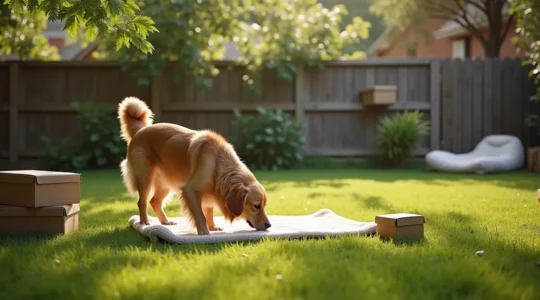
Scent work taps into your dog’s most powerful sense while providing mental exhaustion that often exceeds physical exercise. This might involve hiding treats around your home, teaching formal nose work detection, or creating snuffle mats that encourage foraging behavior. Similarly, puzzle toys, toy rotation to maintain novelty, and DIY enrichment options (frozen treats, cardboard box destruction, digging pits) satisfy natural canine needs within appropriate outlets.
Perhaps most powerfully, reframing training itself as play—using short, engaging sessions with high rates of reinforcement—transforms perceived “work” into a mentally stimulating activity your dog actively seeks. When training becomes a highlight of your dog’s day rather than a chore, both learning and relationship strengthen exponentially.
The journey of dog adoption and training never truly ends—it evolves as your dog matures, as you refine your skills, and as your relationship deepens. By grounding your approach in behavioral science, prioritizing your dog’s emotional wellbeing alongside skill development, and viewing challenges as normal parts of the process rather than failures, you create the foundation for a resilient, confident, and joyful companion who enriches your life as much as you enrich theirs.
Passive vs. Active Enrichment: Balancing the Mental Diet
The solution to your dog’s boredom isn’t found in the pet store aisle; it’s rooted in understanding their cognitive needs. Passive enrichment (a room full…
Read more
AKC Breeder of Merit vs. USDA Licensed: Which Actually Means Quality?
A government license doesn’t guarantee a quality puppy; it often signifies the bare minimum required for a commercial operation. The USDA license regulates large-scale commercial…
Read more
The Recall Whistle: Why It Works Better Than Your Voice in Wind?
In summary: Your voice gets lost in wind and environmental noise; a high-frequency whistle provides superior acoustic clarity. Repeating “Come!” teaches your dog to ignore…
Read more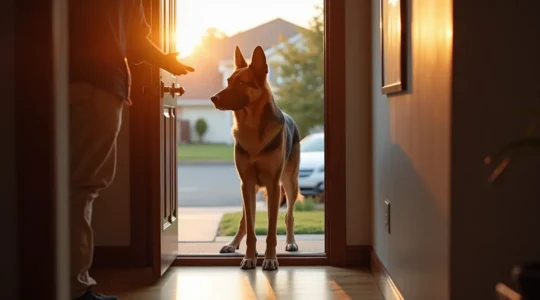
Beyond “Sit”: The Hierarchy of Commands That Actually Save Lives
Contrary to popular belief, “Sit” and “Shake” are low-priority. Your dog’s survival depends on impulse control commands that prevent accidents before they happen. Focus on…
Read more
Leash Reactivity: Is It Fear, Frustration, or Aggression?
Leash reactivity is rarely true aggression; it’s an external symptom of an internal emotional flood, often rooted in fear or frustration. Managing your dog’s cumulative…
Read more
Rethinking Socialization: Why Your Dog Shouldn’t Meet Everyone
The common belief that socializing a dog means encouraging interaction with every person and dog is actively creating reactive, anxious pets. True, effective socialization teaches…
Read more
Separation Anxiety or Boredom: How to Tell the Difference via Video?
The key to solving your dog’s destructive behavior is accurate diagnosis: video evidence reveals whether the root cause is a clinical panic disorder (separation anxiety)…
Read more
Why an Adult Rescue Dog’s Love is Different: Understanding Their Unique Bond
A rescue dog’s bond isn’t weaker than a puppy’s; it’s a more complex and profound connection forged by overcoming a history of survival. Their behaviors…
Read more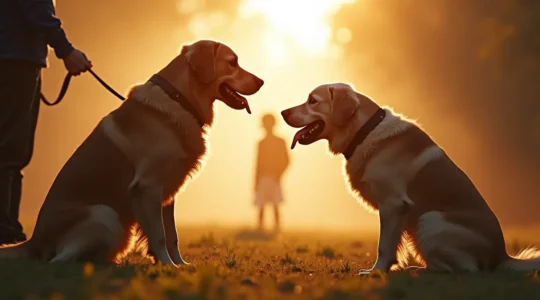
Desensitization vs. Flooding: Why Forcing Exposure Backfires?
Forcing a fearful dog to confront a trigger does not build resilience; it inflicts neurological harm and erodes trust. “Flooding” a dog’s senses overwhelms their…
Read more
The 3-3-3 Rule: What to Expect in the First 3 Months of Adoption?
In summary: Your new dog’s perplexing behaviors follow a predictable 3-day, 3-week, and 3-month adjustment timeline. The first few days require quiet and space (not…
Read more