
Investing in a true orthopedic bed for your young dog isn’t about current comfort; it’s a strategic decision to preserve their “joint capital” and prevent costly mobility issues in the future.
- High-density solid foam provides essential structural support that cheap, egg-crate style beds actively undermine.
- Proactive support prevents the accumulation of micro-damage to joints, a primary cause of premature arthritis.
- Quality materials, like waterproof liners and durable covers, significantly lower the total cost of ownership by preventing frequent replacements.
Recommendation: Prioritize a bed with a solid, medium-to-high-density foam core (4+ pounds per cubic foot) and a non-negotiable waterproof liner. View it as a foundational preventative health tool, not an accessory.
Facing a $150 price tag for an orthopedic dog bed, especially for a young, vibrant dog under five, can feel like an unnecessary extravagance. The common wisdom suggests these specialized beds are reserved for senior dogs, those already hobbled by the painful grip of arthritis. After all, your dog can sleep anywhere, and they seem perfectly happy on a plush, cheap cushion. But what if this perspective is fundamentally flawed? What if waiting for visible signs of discomfort is already too late?
The truth is that joint health isn’t a switch that flips in old age; it’s a “joint capital” account that depletes over a lifetime. Every jump, every hard landing, and every night spent on an unsupportive surface makes a small withdrawal. While you won’t see the effects now, these daily micro-stresses compound. In fact, startling research reveals that arthritis affects 80% of dogs at or beyond age 8, a condition often rooted in years of inadequate support.
This article reframes the orthopedic bed not as a reactive treatment for the old, but as a proactive investment in your young dog’s long-term mobility. We will move beyond the marketing labels to dissect the structural mechanics of what truly constitutes a supportive bed. We will explore why factors like foam density, cooling technology, and protective liners are not luxury add-ons, but essential components of a preventative health strategy. It’s about shifting from a short-term cost mindset to a long-term investment in their future comfort and quality of life.
This guide will walk you through the critical components of a true orthopedic bed and the environmental factors that maximize its benefit. By understanding the science behind proper support, you can make an informed decision that pays dividends in your dog’s health for years to come.
Summary: A Deep Dive into Proactive Orthopedic Support
- Egg Crate vs. Solid Memory Foam: Which Supports Over 50 lbs?
- How Cooling Gel Layers Prevent Overheating in Thick Beds?
- Waterproof Liners: Why They Are Non-Negotiable for Senior Beds?
- The Location Mistake: Why the Bed Shouldn’t Be in a High-Traffic Zone?
- When to Replace a Memory Foam Bed That Has Lost Resilience?
- Why Cheap Accessories Cost Your Pet Comfort in the Long Run?
- When to Stop Playing Fetch and Start Swimming?
- Adapting Your Home for a Dog With Arthritis Over 10 Years Old
Egg Crate vs. Solid Memory Foam: Which Supports Over 50 lbs?
The most critical error an owner can make is confusing “softness” with “support.” Egg crate foam and other low-density fillers feel plush to the touch, but they fail at their primary job: preventing a dog’s joints from bottoming out on the hard floor. This is a matter of structural integrity. For a dog, especially one over 50 pounds, this type of foam collapses under their pressure points (hips and shoulders), forcing the spine out of alignment and offering zero therapeutic benefit. It is, in essence, a false economy that provides the illusion of comfort while failing to protect the dog’s frame.
True orthopedic support comes from high-density solid memory foam. This material is engineered to contour to the dog’s body while providing a firm, resilient base that distributes weight evenly. The industry benchmark for effective support is a foam with a density of at least 4 to 5 pounds per cubic foot (PCF). This level of density ensures the foam can absorb pressure and support the skeletal structure, maintaining neutral spinal alignment. A clinical study by the University of Pennsylvania provided clear evidence of this, finding that a true orthopedic bed reduced joint pain and stiffness in large dogs. By providing this support early, you are actively preventing the daily micro-trauma that leads to such conditions.
When selecting a bed, the density of the foam is the single most important metric. It is the foundation of your investment in your dog’s joint health. The following table breaks down how to match foam density to your dog’s needs, ensuring the bed provides genuine, long-lasting support.
| Foam Type | Density (PCF) | Firmness Level | Best For | Durability |
|---|---|---|---|---|
| Low Density | Up to 3 lbs/ft³ | Soft | Small dogs under 30 lbs | Lower – faster breakdown |
| Medium Density | 4-5 lbs/ft³ | Medium-Firm | Dogs 30-70 lbs | Good – balanced longevity |
| High Density | 6+ lbs/ft³ | Firm | Large dogs over 70 lbs | Excellent – longest lasting |
How Cooling Gel Layers Prevent Overheating in Thick Beds?
A common side effect of the very high-density foam required for orthopedic support is heat retention. The dense cellular structure that provides support also traps body heat, which can lead to an uncomfortably warm sleeping surface. For many dogs, especially brachycephalic (flat-faced) breeds like Pugs and French Bulldogs or thick-coated breeds like Huskies, this can cause restlessness and disrupt the deep, restorative sleep necessary for physical repair. A dog who is constantly shifting to find a cool spot is not getting the full benefit of their orthopedic bed.
This is where cooling technologies become a necessary feature, not a luxury. The most effective of these is gel-infused memory foam. Gel microbeads or swirls are integrated into the foam matrix to act as a thermal conductor. They absorb excess body heat from the dog and distribute it away from the surface, helping to regulate temperature. This process is passive but highly effective at preventing the “hot spots” that can form under the dog’s core.
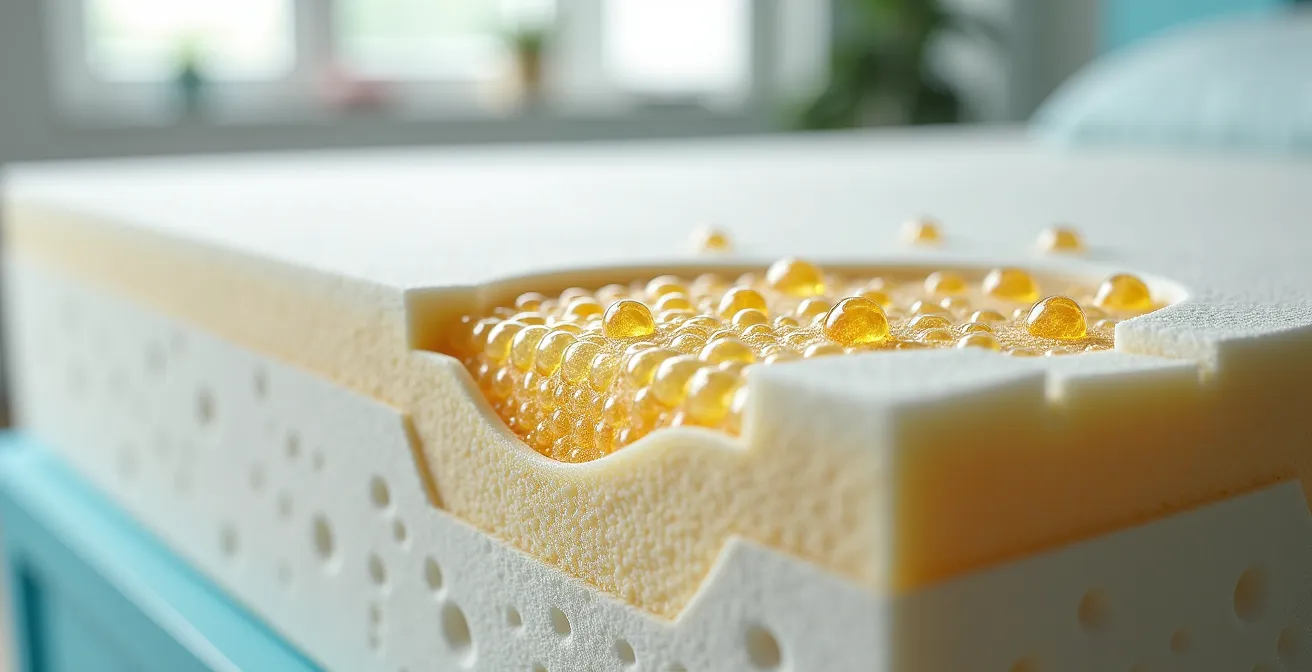
As seen in the structure of these materials, the goal is to balance support with breathability. While gel provides conductive cooling, open-cell foam structures also contribute by allowing for better airflow. The key takeaway is that for the investment in a high-density orthopedic bed to pay off in terms of sleep quality, managing its thermal properties is crucial. A cool, comfortable dog is one who will stay on the bed long enough to reap its joint-supporting benefits.
Waterproof Liners: Why They Are Non-Negotiable for Senior Beds?
While the title specifies senior beds, the logic for a waterproof liner is even more compelling as a long-term investment for a young dog’s bed. A high-quality foam core is the most expensive part of an orthopedic bed. Leaving it unprotected is like buying an expensive smartphone without a case. Moisture is the primary enemy of foam’s structural integrity. Once liquids—be it from a puppy accident, muddy paws, or even post-swim dampness—penetrate the foam, they begin to break down its cellular structure, accelerating its loss of resilience and support.
A quality waterproof liner acts as an impermeable barrier, safeguarding your investment. It ensures the foam core remains pristine, extending the effective lifespan of the bed from a few years to potentially a decade or more. This simple accessory transforms the bed from a consumable item into a durable piece of equipment. Furthermore, the benefits extend beyond just physical protection. A damp foam core is a perfect breeding ground for mold, mildew, and dust mites. These allergens can trigger a host of skin and respiratory issues, especially in young dogs whose immune systems are still developing. The liner, therefore, also serves as a critical hygienic barrier, protecting your dog’s health.
Don’t confuse a water-resistant outer cover with a true internal waterproof liner. A cover can handle a minor spill, but only a dedicated liner fully encasing the foam offers complete protection against saturation. Viewing this component as non-negotiable from the start is fundamental to maximizing the return on your orthopedic bed investment, ensuring it lasts well into your dog’s senior years when they will need it most.
The Location Mistake: Why the Bed Shouldn’t Be in a High-Traffic Zone?
Purchasing the perfect orthopedic bed is only half the equation. To unlock its full restorative potential, you must place it correctly. The common mistake is putting the bed in a high-traffic area like the middle of the living room or a busy hallway. While this seems inclusive, it undermines the bed’s primary purpose: providing a sanctuary for deep, uninterrupted rest. A dog sleeping in a central location is constantly in a state of low-level arousal, their sleep cycles disturbed by foot traffic, conversations, and household noise. This fragmented rest prevents the deep muscle relaxation and physical repair that a supportive bed is designed to facilitate.
The solution is to create a designated “den” for your dog. This should be a quiet, low-traffic corner of a main room that is out of the direct flow of movement but still allows the dog to observe the family. This placement satisfies their instinct to be part of the pack while providing the security and tranquility needed for restorative sleep. A case study involving a Cocker Spaniel and a mixed breed highlighted the success of a two-bed system: a primary orthopedic bed in a quiet corner for deep sleep, and a secondary, less-expensive pad in the family room for social lounging.
When creating this den, consider the following expert-recommended guidelines for optimal placement:
- Avoid drafts from doors or air vents, which can cause joint stiffness.
- Ensure the bed has a view of the room’s entrance without being in the direct pathway.
- Keep the bed away from noisy appliances (like washing machines) that can disrupt sleep.
- Place it on a non-slip surface to prevent movement as your dog gets on and off.
- Position the bed away from direct sunlight to prevent overheating during daytime naps.
By thoughtfully choosing the location, you elevate the bed from a simple piece of furniture to a true therapeutic tool. You are maximizing your investment by ensuring your dog uses it when it matters most—during the deep sleep cycles where their body heals and recharges.
When to Replace a Memory Foam Bed That Has Lost Resilience?
An orthopedic bed is a functional tool, and like any tool, it wears out. The most dangerous misconception is assuming a bed is still supportive just because it hasn’t developed visible dips or tears. This is called resilience failure: the foam loses its ability to spring back and properly support weight, even though it looks structurally intact. At this point, the bed is no longer a preventative tool; it’s actively contributing to joint stress by allowing the dog’s pressure points to sag, just like a cheap filler-based bed.
As a responsible owner, you must learn to assess the “health” of your investment. Simply looking at the bed is not enough. You need to physically test its performance. The most reliable method is the 5-Second Rebound Test, which measures the foam’s ability to recover from compression. A bed that fails this test is no longer providing the necessary orthopedic support and must be replaced to avoid doing more harm than good.

Understanding when your investment has depreciated to the point of being ineffective is crucial. Warranties often only cover catastrophic failures like extreme sagging (e.g., indents over 1.5 inches), but they do not cover the gradual, invisible loss of supportive properties. It is your job as the owner to monitor the bed’s performance and replace it when it no longer serves its primary function of protecting your dog’s joints.
Your Action Plan: Assessing Bed Resilience
- Perform the 5-Second Rebound Test: Press your hand firmly into the center of the foam for 10 seconds. Release and time the recovery. The foam should return to its original shape in 5 seconds or less. A slower rebound indicates compromised resilience.
- Conduct the Weight Test: Place a heavy object (like a 10-pound dumbbell or stack of books) on the bed for 30 minutes. After removing it, the indent left behind should not be deeper than 0.5 inches.
- Check for Invisible Failure: Even if the bed passes visual inspection, if your dog seems restless or hesitant to use it, trust their behavior. They can feel the loss of support before you can see it.
- Test Edge Integrity: The edges are often the first part to fail. Press down on the edge of the bed. If it compresses by more than 50% with light pressure, the internal structure is breaking down.
- Calculate a Replacement Timeline: Be proactive. A heavy dog (90 lbs) on a medium-density foam bed may require a replacement every 2-3 years, whereas a 40-pound dog on the same bed might get 4-5 years of use. Plan accordingly.
Why Cheap Accessories Cost Your Pet Comfort in the Long Run?
The investment mindset shouldn’t stop at the foam core. Skimping on accessories like covers and liners is a classic example of being “penny wise and pound foolish.” A cheap, thin polyester cover may save you $30 upfront, but it will likely pill, tear, and need replacement within six months. A high-quality, durable cover made from a certified fabric might cost more initially but will withstand years of digging, nesting, and washing, ultimately costing you less over the lifespan of the bed. This is the principle of Total Cost of Ownership (TCO).
Beyond durability, quality materials offer health benefits that cheap alternatives lack. For instance, many premium beds use fabrics and foams that are CertiPUR-US® certified. This is a crucial mark of quality assurance that cheap knock-offs will not have. As one manufacturer, Bully Beds, states in their standards, this certification ensures the “Foam is free of PBDEs, TDCPP or TCEP (‘Tris’) flame retardants, mercury, lead, heavy metals, formaldehyde, phthalates, [and] CFC’s.” These are chemicals you do not want your pet sleeping on for 8-10 hours a day. Investing in certified materials is an investment in your pet’s long-term health, protecting them from exposure to harmful substances.
The table below illustrates the Total Cost of Ownership concept over a two-year period. It clearly shows how the initial “savings” from cheap accessories are quickly erased by the need for frequent replacements, ultimately costing you more money and providing your pet with inferior comfort and safety.
| Accessory Type | Cheap Option | Quality Option | 2-Year Cost Comparison |
|---|---|---|---|
| Bed Cover | $15 polyester (replace every 6 months) | $50 CertiPUR-US certified | Cheap: $60 vs Quality: $50 |
| Waterproof Liner | $10 vinyl (replace yearly) | $35 TPU breathable | Cheap: $20 vs Quality: $35 |
| Raised Feeder | $20 wobbly plastic | $60 sturdy adjustable | Cheap: $40+ (replaced once) vs Quality: $60 |
When to Stop Playing Fetch and Start Swimming?
A proactive approach to joint health extends beyond the bed. It requires a conscious management of your dog’s “joint capital” during activity. High-impact exercises, while fun, make significant withdrawals from this capital. The repetitive, explosive movements of a game of fetch—the sudden stops, sharp turns, and hard landings—place enormous strain on a young dog’s developing ligaments and cartilage. While they may show no signs of pain now, the cumulative micro-damage is setting the stage for future problems like cruciate ligament tears and early-onset arthritis.
The goal isn’t to eliminate exercise, but to shift the portfolio of activities toward low-impact, high-reward options. Swimming is the gold standard. It is a non-weight-bearing exercise that allows for a full range of motion, building lean muscle mass that supports and stabilizes the joints without any of the damaging impact. Research from Cornell University’s veterinary program confirms that regular, low-impact exercise like swimming significantly improves outcomes for dogs at risk of joint issues. It’s the physical therapy equivalent of earning compound interest on your dog’s joint health.
The following scorecard quantifies the impact of common activities, providing a clear framework for making smarter choices about your dog’s exercise routine. It’s not about banning fetch entirely, but about rebalancing the activity budget in favor of joint-preserving exercises.
| Activity | Impact Score (1-10) | Primary Risk Area | Breed-Specific Concerns |
|---|---|---|---|
| Fetch (hard surface) | 8/10 | Cruciate ligaments, hips | Labradors: ligament tears from stops |
| Agility Training | 7/10 | Spine, shoulders | Border Collies: spinal injury from jumps |
| Running on Pavement | 9/10 | All joints | Large breeds: cumulative joint stress |
| Hiking on Dirt | 4/10 | Minimal – natural surface | Generally safe for all breeds |
| Swimming | 1/10 | None – therapeutic | Beneficial for all, especially dysplastic breeds |
Key Takeaways
- An orthopedic bed for a young dog is a preventative health investment, not a luxury.
- The most critical feature is high-density, solid foam (4+ PCF), which provides true structural support that egg crate foam lacks.
- Waterproof liners and quality covers are not optional; they protect your investment and lower the total cost of ownership over time.
Adapting Your Home for a Dog With Arthritis Over 10 Years Old
While the focus of this article is prevention, understanding the end-game—adapting a home for a senior dog with arthritis—reinforces the urgency of acting now. The modifications required for a senior dog are often a direct consequence of years of unmanaged joint stress. By “future-proofing” your home for your young dog today, you are making small, inexpensive investments that prevent the need for larger, more drastic interventions later.
One of the most critical factors in preventing joint disease is weight management. An early study on German shepherd puppies found that overweight puppies were almost twice as likely to develop hip dysplasia as their normal-weight counterparts. This demonstrates that preventative care starts from day one. Implementing a weight management program and starting joint supplements like glucosamine early are powerful, low-cost strategies with a massive long-term payoff.
Simple home modifications made now can save your dog’s joints from thousands of high-impact movements over their lifetime. Adding non-slip rugs to slippery floors prevents the small, daily strains from sliding that add up over years. Placing ramps to the car or furniture eliminates thousands of jumps that compress spinal and leg joints. These aren’t just accommodations for an old dog; they are intelligent environmental designs that preserve the “joint capital” of a young one. By taking these steps now, you are not just preparing for a potential future; you are actively working to create a better one for your pet.
- Install non-slip rugs: Place runners on hardwood or tile floors in main pathways before any mobility issues arise.
- Add ramps to cars and furniture: This single change prevents thousands of impact-heavy jumps over the dog’s lifetime.
- Start joint supplements early: Glucosamine and chondroitin are proven to be most effective when used as a long-term preventative measure.
- Implement a strict weight management program: Obesity is a primary accelerator of joint disease.
Ultimately, the decision to invest in a quality orthopedic bed is a decision to prioritize your dog’s long-term well-being over a short-term saving. By choosing a bed with the right structural integrity, protecting it with the right accessories, and complementing it with a joint-conscious lifestyle, you are providing a foundation of health that will pay dividends for years to come. Start today by evaluating your dog’s current sleeping surface, not just for its softness, but for its true supportive power.