
Contrary to popular belief, the four walls of your home are not a fortress against parasites for your indoor cat.
- Climate change is extending parasite seasons and helping vectors like ticks and mosquitoes travel into previously “safe” regions.
- A single missed dose of prevention creates a significant “risk gap,” potentially exposing your cat to fatal diseases like heartworm.
Recommendation: Implement a strict, year-round, veterinarian-approved parasite prevention protocol as a non-negotiable standard of care for all cats, regardless of lifestyle.
You watch your cat sunbathing on a windowsill, seemingly insulated from the dangers of the outside world. It’s a comforting image, one that reinforces a common belief among conscientious pet owners: an indoor life is a safe life. Many loving owners believe that by keeping their cat strictly indoors, they have effectively eliminated the risk of fleas, ticks, and heartworm. They may have a vague awareness that parasites can be “tracked in” on shoes or through an open window, but they often perceive this as a remote, almost theoretical possibility.
This perspective, however, overlooks a critical and accelerating factor: our changing climate. As a parasitologist, I must state unequivocally that these traditional assumptions are no longer valid. The environmental barriers that once offered a degree of protection are systematically breaking down. Warmer winters, shifting wildlife patterns, and increased overall ‘parasite pressure’ mean the risk for indoor-only pets is not just real—it’s growing and becoming dangerously unpredictable. The safety of your apartment is an illusion if not backed by science.
This article will dismantle the myth of the ‘safe’ indoor cat by examining the hard evidence. We will explore the severe immunological consequences of a single flea bite, the precise techniques for ensuring preventative medication is effective, the critical dangers of a missed dose, and how large-scale ecological shifts directly threaten your apartment-dwelling feline. It’s time to replace outdated assumptions with vigilant, informed action.
This guide provides a detailed look at the modern realities of parasite control. The following sections break down the specific risks and the scientific strategies you need to protect your pet effectively.
Summary: A Parasitologist’s Guide to Indoor Cat Parasite Risks
- Why One Flea Bite Can Cause Weeks of Misery for Allergic Dogs?
- How to Apply Topical Prevention So It Actually Absorbs?
- Oral Chews vs. Collars: Which Is Safer for Families With Toddlers?
- The Heartworm Risk Gap: What Happens If You Miss a Month?
- When to Start Tick Prevention in Northern Climates?
- Distemper Spillover: How Unvaccinated Dogs Threaten Wild Foxes?
- Flea Dirt vs. Ordinary Dirt: How to Tell the Difference?
- Dry Flaky Skin: Is It the Weather or a Fatty Acid Deficiency?
Why One Flea Bite Can Cause Weeks of Misery for Allergic Dogs?
To understand the severity of the threat, we can look to our canine companions. While this section title specifies dogs, the immunological mechanism is virtually identical in cats. The misery isn’t caused by the bite itself, but by an extreme allergic reaction to proteins in the flea’s saliva. This condition, known as Flea Allergy Dermatitis (FAD), is one of the most common dermatological issues diagnosed in veterinary medicine. In fact, a recent study found that 6.6% of canine veterinary patients suffer from FAD, highlighting its prevalence.
For a hypersensitive animal, a single bite can trigger a cascade of inflammation. The immune system overreacts, releasing histamine and other inflammatory mediators that cause intense, persistent itching (pruritus), redness, and skin lesions. The cat or dog will often scratch, lick, or chew the affected areas incessantly, leading to secondary bacterial infections, hair loss (alopecia), and hot spots. This isn’t a minor annoyance; it’s a significant medical event that can last for weeks, long after the flea is gone. For an indoor cat, a lone flea brought in on a pant leg can initiate a prolonged cycle of discomfort and veterinary bills.
This is why the goal of any prevention strategy is not just to reduce flea numbers, but to achieve a 100% kill rate before a flea has the chance to feed. For an allergic pet, there is no “acceptable” number of fleas. The belief that one or two fleas on an indoor cat is harmless is a dangerous fallacy that underestimates the profound biological impact of FAD.
How to Apply Topical Prevention So It Actually Absorbs?
Topical “spot-on” treatments are a cornerstone of parasite prevention, but their efficacy is entirely dependent on correct application. The active ingredients are designed to be absorbed through the skin’s lipid (oily) layer and distributed across the body. If the medication is applied to the fur instead of the skin, it cannot be absorbed properly and will be rendered ineffective, leaving your cat completely vulnerable despite your best efforts. This is a common point of failure for many well-intentioned pet owners.
The correct technique is a matter of precision. The medication must be applied directly to the skin, typically at the base of the skull where the cat cannot lick it off. You must part the fur firmly until you can clearly see the pink skin underneath. This is the target for application. Apply the entire contents of the vial directly onto this small area of visible skin. Do not “dot” it along the back or spread it around, as this increases the likelihood of it remaining on the fur or being licked off.
This visualization shows the critical point of contact needed for the medication to work. The applicator tip should be close to, or gently touching, the skin’s surface as you dispense the liquid.
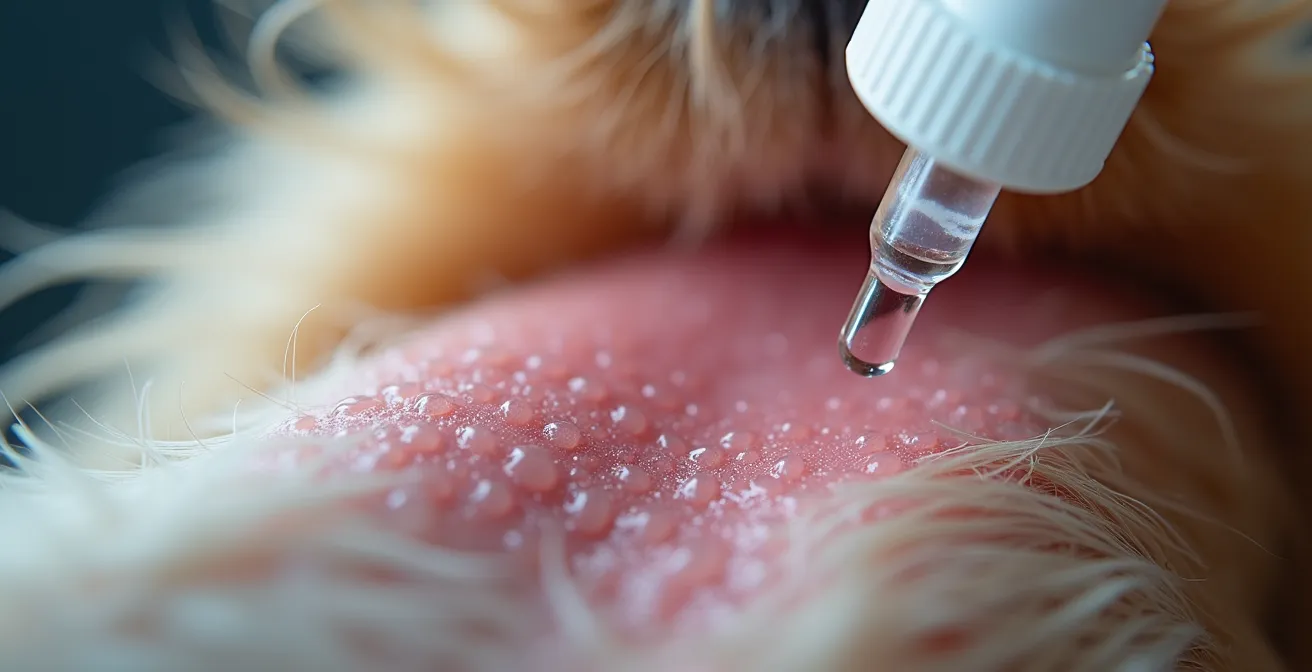
Furthermore, timing is crucial. Natural skin oils are essential for the distribution of the product. You should wait at least 48 hours after bathing your pet to apply a topical preventative. Bathing strips these oils, and applying the product too soon will severely compromise its absorption and effectiveness. Following these precise steps ensures the product works as intended, providing the protection your cat depends on.
Oral Chews vs. Collars: Which Is Safer for Families With Toddlers?
Choosing a preventative method involves weighing efficacy against lifestyle factors, especially in a home with young children. Both oral chews and flea collars have pros and cons, but from a parasitological and pediatric safety standpoint, the differences are significant. The primary concern is the potential for pesticide residue transfer from the pet to a child who frequently handles, cuddles, or shares furniture with the animal.
The following table provides a clear comparison of the risk factors associated with each method in a household with toddlers.
| Factor | Oral Chews | Flea Collars |
|---|---|---|
| Chemical Exposure Risk | Systemic only (in pet’s blood) | Topical residue on fur/furniture |
| Child Contact Risk | Low – medication internal | Moderate – transfers during petting |
| Storage Safety | Must be locked away | Worn constantly by pet |
| Effectiveness Duration | 1-3 months | 6-8 months |
| Washability After Contact | Not needed | Hand washing required |
Oral chews work systemically; the active ingredient circulates in the pet’s bloodstream and is only ingested by a parasite when it bites. This means there is virtually no risk of chemical exposure for a child petting the cat. Flea collars, on the other hand, work by continuously releasing a small amount of insecticide onto the cat’s fur and skin. This residue can easily be transferred to a child’s hands and then to their mouth. While modern collars are safer than their predecessors, the risk of topical transfer remains a valid concern for cautious parents.
Regardless of the method chosen, a critical and non-negotiable safety rule is species-specificity. Products formulated for dogs can be lethal to cats. As the PetMD Editorial Team warns in their comprehensive guide:
Dog products can’t be used on cats and will lead to severe (often fatal), reactions. Insecticides in these drugs are called permethrins. These insecticides are toxic to cats, potentially causing tremors, seizures, and death.
– PetMD Editorial Team, Flea and Tick Prevention Guide
This is not a suggestion; it is a life-or-death imperative. Always double-check that the product is explicitly labeled for feline use and weight range.
The Heartworm Risk Gap: What Happens If You Miss a Month?
While fleas are a visible nuisance, heartworm (*Dirofilaria immitis*) is an insidious and potentially fatal threat transmitted by a single mosquito bite. For indoor cats, the risk comes from mosquitoes that inevitably find their way inside. Because heartworm disease is extremely difficult to treat in cats, prevention is the only viable strategy. This is where the concept of the ‘risk gap’ becomes critically important. Monthly preventatives are highly effective, but they only work on heartworm larvae that have infected the pet within the last 30-45 days. Missing a dose by even a few weeks creates a window of vulnerability.
If a cat is bitten by an infected mosquito during this gap, the larvae can mature beyond the stage where the preventative is effective. These larvae then travel to the heart and pulmonary arteries, where they develop into adult worms, causing severe lung disease, heart failure, and sometimes sudden death. The horrifying reality is that by the time a cat shows symptoms, the damage is often irreversible. This is why a missed dose is not a minor oversight; it’s a gamble with your cat’s life. According to updated American Heartworm Society guidelines, if a dose is missed, a pet should be tested 7 months after a potential exposure, as it takes that long for an infection to become detectable.
If you realize you have missed a dose, immediate action is required. This protocol can help mitigate the risk, but it must be done in consultation with your veterinarian.
Action Plan: Missed Heartworm Dose Protocol
- Administer the missed dose immediately upon realization.
- Contact your veterinarian for guidance; do not ever administer a “double dose” to compensate.
- Schedule a heartworm test for six to seven months after the missed dose, as infections take that long to mature and become detectable.
- Discuss the possibility of doxycycline administration with your vet, which may target the *Wolbachia* bacteria that heartworms rely on.
- Resume the regular monthly prevention schedule without fail moving forward.
The only true security comes from uninterrupted, year-round prevention. Setting a recurring monthly reminder on your calendar is one of the most important things you can do for your cat’s health.
When to Start Tick Prevention in Northern Climates?
The idea of a “flea and tick season” is a dangerously outdated concept, especially in northern climates once considered low-risk during winter. Climate change has led to milder, shorter winters, which has a direct and alarming impact on parasite survival and activity. Ticks, which can transmit pathogens causing Lyme disease, anaplasmosis, and other serious illnesses, are not killed off by a light frost. In fact, many tick species, including the deer tick (*Ixodes scapularis*), become active at any temperature above 4°C (40°F). On a sunny winter day, it is entirely possible for temperatures to rise above this threshold, allowing ticks to emerge and seek a host.
An indoor cat’s risk comes from these ticks hitching a ride inside on human clothing, on a dog, or even through an open apartment door. The “season” for prevention is no longer a few months in the summer; it is now any day the temperature permits tick activity. This paradigm shift means that year-round prevention is the new scientific standard, regardless of geography.
Case Study: The Northward Migration of the Lone Star Tick
A chilling example of this ecological shift is the documented northern migration of the Lone Star tick. As detailed by veterinary professionals, this species, once confined to the southern United States, is now being found in northern regions due to milder winters. This is not just a geographical curiosity; this tick brings with it new disease threats like ehrlichiosis and STARI (Southern Tick-Associated Rash Illness) to pet populations and veterinarians in areas that were previously unprepared for these specific pathogens. This demonstrates how climate change actively redraws the map of parasite risk, invalidating old assumptions about “safe” regions.
Relying on the calendar to decide when to start or stop tick prevention is a form of scientific denial. The only reliable approach is to assume risk is always present and maintain a consistent, year-round preventative protocol as advised by your veterinarian.
Distemper Spillover: How Unvaccinated Dogs Threaten Wild Foxes?
While the title of this section focuses on a specific viral disease, it illustrates a much broader ecological principle that directly impacts parasite risk for indoor cats: disease spillover from wildlife reservoirs. Urban and suburban environments are not sterile bubbles; they are ecosystems where our pets live in close, often unseen, proximity to wildlife like foxes, coyotes, raccoons, and opossums. These wild animals act as carriers, or reservoirs, for a host of parasites, including fleas, ticks, and the internal parasites they transmit.
As human development encroaches on natural habitats, and as climate change alters animal behavior, these wildlife populations are being pushed into closer contact with residential areas. A fox cutting through an apartment complex’s lawn or a raccoon raiding a dumpster can shed flea eggs or infected ticks into the immediate environment. These parasites don’t respect property lines. They can easily be picked up by a person walking to their car or a dog on a brief walk, and subsequently brought directly into an apartment building, exposing the indoor cat.
This concept of an increasing ‘parasite pressure’ from wildlife is a key factor in the rising risk for indoor pets. The American Heartworm Society highlights this connection, stating:
Wild species such as foxes and coyotes live in proximity to many urban areas, they are considered important carriers of the disease
– American Heartworm Society, Heartworm Basics – Wildlife Reservoirs
Creating a buffer zone through simple environmental management—such as never leaving pet food outdoors and securing garbage cans—can help reduce the attraction for wildlife. However, the most effective defense is recognizing that your home is part of a larger, interconnected ecosystem and maintaining rigorous, year-round parasite prevention for your cat as the primary line of defense against this ecological spillover.
Flea Dirt vs. Ordinary Dirt: How to Tell the Difference?
For the vigilant owner of an indoor cat, early detection is key. Since you may not see a live flea, the most common first sign of an infestation is “flea dirt.” This is a euphemism for flea feces, which consists primarily of digested blood. At first glance, it can look like tiny specks of ordinary dirt or black pepper scattered in your cat’s fur, most commonly found near the base of the tail, on the back, or on the belly. Distinguishing between harmless debris and this clinical sign is a simple but critical diagnostic step.
The definitive method is known as the wet paper towel test. First, comb your cat with a fine-toothed flea comb over a white paper towel. Collect some of the black specks that fall off. Then, moisten the paper towel with a few drops of water. If the specks are ordinary dirt, they will remain brown or black. If it is flea dirt, the dried blood will rehydrate and smear into reddish-brown or orange streaks. This positive result is undeniable proof that your cat has fleas, even if you haven’t seen one, and it requires immediate action.
This differential diagnosis is the first line of defense in identifying a problem. The following table helps clarify what to look for when you find dark specks on your pet’s skin or in their bedding.
| Type of Speck | Appearance | Test Result | Location |
|---|---|---|---|
| Flea Dirt | Black pepper-like specks | Turns reddish-brown when wet | Back, belly, tail base |
| Regular Dirt | Brown/gray particles | Remains same color when wet | Random distribution |
| Skin Scabs | Dark, crusty patches | Doesn’t dissolve when wet | At scratch sites |
| Hyperpigmentation | Dark skin patches | Part of skin, won’t brush off | Chronic irritation areas |
Finding flea dirt means that at least one flea has established itself and taken a blood meal. Given that a single female flea can lay up to 50 eggs per day, this discovery signifies the start of an infestation that must be addressed with a veterinarian-approved treatment for the pet and a thorough cleaning of the home environment.
Key takeaways
- The concept of a “safe” indoor cat is an outdated myth due to climate change extending parasite seasons and range.
- Flea Allergy Dermatitis (FAD) can be triggered by a single bite, causing weeks of severe itching and skin damage.
- Effective parasite prevention depends on flawless application of topical treatments and strict adherence to a year-round, vet-approved schedule.
Dry Flaky Skin: Is It the Weather or a Fatty Acid Deficiency?
When an owner notices dry, flaky skin on their indoor cat, they often attribute it to benign causes like dry indoor air from heating or a minor dietary issue. While these factors can play a role, from a parasitologist’s perspective, they should be considered secondary until the most common and inflammatory cause has been ruled out: an underlying parasitic infestation. As we’ve discussed, Flea Allergy Dermatitis (FAD) is a primary driver of skin problems. The constant inflammation and self-trauma from scratching directly lead to a damaged skin barrier, resulting in flakiness, scabs, and hair loss.
The connection between skin health and parasites is not just anecdotal; it is a growing clinical trend. According to Banfield’s State of Pet Health Report, flea allergy prevalence in dogs increased by 12.5% in a decade, and a similar trend is observed in cats. This rise correlates with the environmental changes that support longer flea seasons. Therefore, any new presentation of “dandruff” or flaky skin on a pet must be treated with suspicion. It is a potential red flag for a flea problem, even if no fleas or flea dirt are immediately visible.
Before investing in expensive supplements or dietary changes, a thorough diagnostic approach is necessary. First, perform the wet paper towel test described previously. Second, use a flea comb meticulously through your cat’s coat. Third, review your parasite prevention records. Is the cat on a reliable, year-round preventative? Was the last dose on time? Only after ruling out parasites with high confidence should you and your veterinarian begin to explore other causes like environmental allergies, nutritional deficiencies (such as an improper Omega-3 to Omega-6 ratio), or other skin mites. Assuming it’s just “the weather” is a gamble that allows a minor flea issue to escalate into a major infestation and a serious medical condition for your cat.
Protecting your indoor cat is an active, ongoing commitment. The next logical step is to consult your veterinarian to review and, if necessary, escalate your current year-round prevention strategy based on these emerging risks.
Frequently Asked Questions about Parasite Prevention
Why isn’t the topical treatment working even though I applied it?
It is essential that the full dose goes onto your cat’s skin, not its fur, as absorption occurs through the skin’s lipid layer. If the medication coats the hair, it cannot be properly absorbed into the bloodstream or distributed across the skin to be effective, leaving your cat unprotected.
Can I reapply if my pet shook some off?
No. Do not reapply before the next scheduled dose. It is impossible to determine how much of the medication was actually absorbed versus how much was shaken off. Re-dosing could lead to an overdose, which can be toxic. Wait for the next monthly application and focus on improving your application technique.
How soon after bathing can I apply topical prevention?
You must wait at least 48 hours after bathing your cat to apply a topical treatment. Bathing, especially with shampoos, strips the natural oils from the skin. These oils are critical for the proper absorption and distribution of the medication across the body. Applying it too soon will significantly reduce its efficacy.