Your dog loses far more water through panting than you realize, rendering common hydration practices dangerously inadequate on the trail.
- Hydration is a quantitative science: water needs must be calculated based on weight, activity, and temperature, not estimated.
- Proactive monitoring of early physiological markers like capillary refill time is critical; late-stage tests like skin tenting indicate a serious problem is already underway.
Recommendation: Shift from reactively offering water to implementing a proactive, data-driven hydration strategy to ensure your dog’s safety and performance.
As a hiker, you watch your canine companion panting beside you on the trail and see a happy, active dog. You offer water from a collapsible bowl, confident you’re doing everything right. But from a physiological standpoint, that panting is a powerful engine of evaporative water loss. Unlike humans who sweat across their entire body, a dog’s primary cooling mechanism is respiration. Each panting breath expels water vapor, depleting their reserves at a rate many owners severely underestimate. This fundamental misunderstanding is the root of most trail-related dehydration incidents.
The common advice—”offer water often” and “watch for lethargy”—is reactive, not preventative. These signs often appear only when a significant fluid deficit already exists. The true key to canine trail safety lies not in simply carrying water, but in understanding the quantitative demands of your dog’s physiology. It involves moving beyond guesswork to a calculated approach that accounts for body weight, activity intensity, and environmental factors.
This article will deconstruct the biological processes behind canine dehydration. We will replace vague guidelines with concrete formulas and proactive monitoring techniques. Forget waiting for the obvious signs of distress; you will learn to read the subtle, early physiological cues that signal a developing problem. This is not just about avoiding a veterinary emergency; it’s about optimizing your dog’s performance, endurance, and well-being, ensuring every hike is a source of shared joy, not risk.
To navigate this crucial topic, we will break down the essential components of a proactive hydration strategy. This guide provides a clear roadmap, from calculating water needs before you leave home to recognizing the subtle physiological indicators on the trail.
Summary: K9 Dehydration: A Hiker’s Physiological Guide to Canine Water Management
- How Much Water to Carry for a 50lb Dog on a 2-Hour Hike?
- Shared Bowls vs. Squeeze Bottles: Avoiding Giardia on the Trail
- Dog Backpacks: How Much Water Weight Can Your Dog Carry Safely?
- When to Use K9 Electrolytes Instead of Plain Water?
- The Skin Tent Test: detecting Dehydration Before Collapse
- Why Dehydration Shows Up in the Coat Before the Gums?
- Pre-Trail Hydration: Training Your Dog to Drink on the Go
- From Hydration to Performance: The Foundation of Canine Trail Endurance
How Much Water to Carry for a 50lb Dog on a 2-Hour Hike?
Abandoning guesswork is the first step toward responsible canine hydration. The amount of water your dog needs is not a mystery but a calculable figure based on physiological principles. A widely accepted starting point is to provide ½ to 1 ounce of water per pound of body weight per hour of activity. For a 50lb dog on a 2-hour hike, this translates to a baseline requirement of 50 to 100 ounces (approximately 1.5 to 3 liters). However, this is merely the starting point of your calculation.
A dynamic approach is necessary to account for real-world trail conditions. You must adjust this baseline figure using several critical multipliers. Think of it as a multi-step calculation to refine your estimate:
- Activity Multiplier: A leisurely walk is not the same as a strenuous, off-trail scramble. For vigorous hiking, you should increase your calculated baseline water volume by at least 50%. The increased metabolic rate and respiratory effort directly accelerate water loss.
- Temperature Factor: Ambient temperature is a powerful variable. When temperatures exceed 80°F (27°C), a dog’s thermoregulatory system works overtime. In these conditions, it’s wise to double your total water calculation to compensate for the extreme evaporative cooling.
- Environmental Modifiers: Other factors like humidity and elevation play a significant role. High humidity reduces the efficiency of evaporative cooling from panting, meaning the dog must pant more to achieve the same cooling effect, thus using more water. Similarly, higher altitudes increase respiratory rate, which also accelerates dehydration.
For our 50lb dog on a 2-hour hike on a hot day, a conservative calculation would start with 50 ounces (1oz/lb for 1 hour), double it for the 2-hour duration (100 oz), and then increase it significantly for the heat. Carrying 150-200 ounces (4.5 to 6 liters) becomes a much more physiologically sound plan than simply filling a single water bottle.
Shared Bowls vs. Squeeze Bottles: Avoiding Giardia on the Trail
Once you’ve calculated how much water to carry, the next critical decision is how to deliver it safely. The idyllic image of dogs drinking from a communal bowl at a trailhead or a clear-looking mountain stream hides a significant microbiological risk. Water-borne pathogens like Giardia and Leptospirosis are invisible threats in these sources. In some regions, the risk is not trivial; for instance, a 2024 analysis showed that nearly 1 in 11 dogs tested in New Mexico were positive for Giardia infection. This underscores the need for a closed-loop hydration system where you control the water’s source and delivery.
Using a personal, clean water source for your dog is non-negotiable. The debate then shifts to the delivery method, as each carries its own risk-reward profile. The most common methods are collapsible bowls and squeeze bottles, but pack bladders are also a viable option.
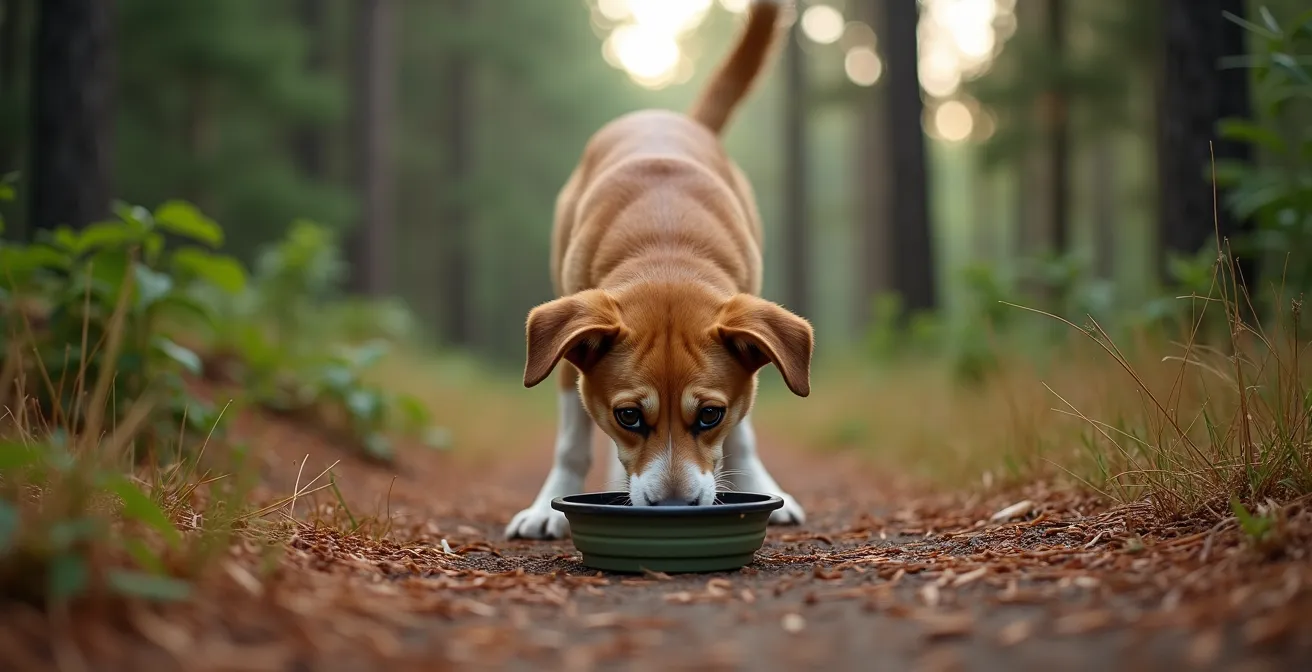
While a collapsible bowl is convenient and familiar to the dog, it introduces a medium risk of contamination if not managed properly. If your dog’s dirty snout goes into the bowl, and you pour the excess water back into your main supply, you have just contaminated your entire reservoir. Squeeze bottles or dedicated dog-specific water bottles with a built-in trough offer a much lower risk, providing a controlled flow of fresh water with no backwash.
| Method | Contamination Risk | Pros | Cons |
|---|---|---|---|
| Squeeze Bottles | Low | Hygienic, controlled flow | Can be slow, dogs may resist |
| Collapsible Bowls | Medium | Convenient, familiar to dogs | Requires cleaning between uses |
| Pack Bladders | Low | High capacity, hands-free | Harder to clean thoroughly |
| Direct Stream Drinking | High | Natural for dogs | Risk of Giardia, Leptospirosis |
Ultimately, the goal is to prevent your dog from ingesting pathogens. This means strictly avoiding shared water bowls at trailheads and never allowing them to drink from puddles, streams, or lakes, no matter how clean they appear. The most hygienic system is one that dispenses water without allowing contaminated water (or saliva) to re-enter the main supply.
Dog Backpacks: How Much Water Weight Can Your Dog Carry Safely?
Having your dog carry its own water seems like a logical solution to managing the significant weight of fluid needed for a long hike. A healthy, conditioned dog can typically carry up to 10-15% of its body weight in a properly fitted backpack. For a 60-pound dog, this means carrying 6 pounds, which is equivalent to nearly 3 liters of water. On paper, this appears to be a highly efficient strategy. However, this simple calculation overlooks a critical physiological trade-off known as the hydration paradox.
The extra weight, even when carried correctly, increases the dog’s physical workload. This increased energy expenditure raises their core body temperature and, consequently, their respiratory rate for thermoregulation. The dog pants more to cool down, leading to a higher rate of evaporative water loss. The very act of carrying water increases the dog’s need for it.
The Hydration Paradox in Practice
A 60-pound dog carrying the recommended 10% body weight (6 pounds) can transport approximately 3 liters of water, sufficient for a 4-6 hour hike. However, the energy expenditure from carrying this weight increases the dog’s hydration needs by approximately 15-20%, creating a diminishing returns scenario that hikers must factor into their water planning.
This does not mean dog backpacks are useless, but their use requires a strategic approach. The dog should only carry a portion of its total water needs, with the hiker carrying the rest. It is crucial to start with a very light pack and gradually increase the weight over several training hikes to allow the dog’s musculoskeletal system to adapt. Furthermore, the water should be distributed evenly on both sides of the pack to maintain balance and prevent chafing or strain. An ill-fitting or unbalanced pack is not only uncomfortable but can also alter the dog’s gait, leading to injury and further increasing energy expenditure.
The decision to use a dog backpack for water transport should be based on the dog’s fitness, conditioning, and the net benefit. If the energy cost of carrying the water nearly cancels out the amount carried, the hiker is better off shouldering the full load.
When to Use K9 Electrolytes Instead of Plain Water?
Hydration is more than just water; it’s about maintaining a precise osmotic balance within the body’s cells. During intense or prolonged exercise, dogs lose not only water through panting but also crucial minerals known as electrolytes—such as sodium, potassium, and chloride. These minerals are vital for nerve function, muscle contraction, and maintaining fluid balance. Offering only plain water during extended, strenuous activity can dilute the remaining electrolytes in the dog’s system, potentially leading to a dangerous condition called hyponatremia (low sodium levels), which can cause weakness, confusion, and even seizures.
The decision to use an electrolyte supplement should be based on the duration and intensity of the activity, as well as the environmental conditions. For short, moderate outings, plain water is perfectly sufficient. However, as the demands increase, the physiological argument for electrolyte supplementation becomes compelling. The goal is to replace what is being lost, thereby maintaining cellular function and preventing performance decline.

A practical framework for deciding when to add electrolytes can be structured by activity level:
- Less than 60 minutes of moderate activity: Plain water is sufficient. The body’s electrolyte reserves are more than adequate.
- 60-90 minutes of moderate activity: Consider electrolytes, especially if the temperature is high. This is a transitional zone where supplementation can begin to offer a benefit.
- Over 90 minutes of high intensity or multi-hour strenuous activity in the heat: Electrolytes become non-negotiable. This is essential for endurance sports, long-distance hiking, or search-and-rescue work.
- Post-activity recovery: Using a recovery-specific formula, which often includes amino acids in addition to electrolytes, can help replenish stores and support muscle repair more effectively than water alone.
It’s crucial to use a formula designed specifically for canines. Human sports drinks are often too high in sugar and may contain ingredients like xylitol, which is toxic to dogs. K9-specific formulas are balanced for their unique physiological needs.
The Skin Tent Test: detecting Dehydration Before Collapse
The “skin tent test,” where you gently lift the skin over a dog’s shoulders and see how quickly it snaps back, is perhaps the most widely known method for checking hydration. However, from a veterinary physiology perspective, it is a lagging indicator. A slow return of the skin (tenting) indicates a loss of skin turgor, which typically becomes apparent only when the dog is already 5-7% dehydrated. At this stage, performance is already compromised, and the dog is well on its way to a more serious fluid deficit. Relying solely on this test means you are detecting a problem, not preventing one.
Proactive hydration management requires monitoring for earlier, more subtle signs. An experienced owner can learn to assess a suite of physiological markers that provide a much quicker and more accurate picture of their dog’s hydration status. These checks should be performed during every rest stop on the trail, comparing the findings to the dog’s known healthy baseline.
Early Dehydration Detection Checklist: Your Proactive Monitoring Protocol
- Check Capillary Refill Time (CRT): Gently press on your dog’s gums until they turn white, then release. The color should return to a healthy pink in under 2 seconds. A time longer than 2 seconds indicates reduced blood flow, an early sign of dehydration.
- Assess Saliva Consistency: Check your dog’s saliva. In a well-hydrated dog, it is thin and watery. Tacky, thick, or stringy saliva is a clear indicator of early-stage dehydration as the body conserves fluid.
- Monitor Behavioral Changes: You know your dog’s trail behavior best. Watch for uncharacteristic lagging, a loss of focus or enthusiasm for the hike, or unusual irritability. These are often the very first signs that something is physiologically amiss.
- Measure Resting Respiratory Rate: After stopping in the shade for 10-15 minutes, a well-hydrated dog’s panting should slow considerably or stop. Continued heavy panting indicates they are still struggling to lower their core temperature, a sign of heat stress and impending dehydration.
- Check Gum Moisture: Instead of just checking CRT, feel the gums. They should be slick and wet. If they feel dry or sticky to the touch, this points to a fluid deficit. This sign appears much earlier than skin tenting.
By the time a dog’s condition is severely compromised, the situation can escalate rapidly. According to veterinary data, at 15% dehydration, a dog’s condition can deteriorate rapidly, potentially leading to organ failure and collapse. Using this hierarchy of early detection methods allows you to intervene with water and rest long before reaching such a critical point.
Why Dehydration Shows Up in the Coat Before the Gums?
While gum condition and capillary refill time are excellent indicators of acute (short-term) hydration status, a dog’s coat can offer clues about their chronic (long-term) hydration state. It may seem counterintuitive, but a dull, “staring” coat—where the hairs seem to stand on end rather than lying flat—can be a sign of underlying, persistent dehydration, even if the dog’s gums appear pink and moist at that moment.
This phenomenon is rooted in the body’s triage system for blood flow during a state of fluid deficit. The physiological mechanism responsible is called peripheral vasoconstriction. When the body detects a state of dehydration, it prioritizes sending oxygenated, nutrient-rich blood to the most vital internal organs: the brain, heart, and kidneys. To do this, it constricts the blood vessels (vasoconstriction) in the peripheral areas of the body, namely the skin and its associated hair follicles.
This shunting of blood away from the skin has two main consequences for coat health. First, it reduces the delivery of essential nutrients needed for healthy hair growth and maintenance. Second, it decreases the production of sebum, the natural oil that gives the coat its luster and suppleness. Over a period of days or weeks of inadequate fluid intake, this reduced perfusion manifests as a dry, brittle, and dull-looking coat. In contrast, changes in the gums reflect the immediate fluid volume in the circulatory system and can change within hours. This makes coat condition a valuable, albeit less immediate, diagnostic tool for assessing a dog’s overall hydration history.
If you notice your dog’s coat has lost its shine despite a good diet and grooming, it’s a strong signal to re-evaluate their daily water intake, not just their hydration on active days. It could be an early warning that their baseline hydration is not being consistently met.
Pre-Trail Hydration: Training Your Dog to Drink on the Go
An effective hydration strategy begins long before you set foot on the trail. Just as athletes “pre-hydrate” before a competition, you can ensure your dog starts any strenuous activity with a full tank. One of the most effective and simplest ways to do this is by leveraging their diet. As nutritional analysis shows, wet dog food contains around 75% water, whereas dry kibble contains only about 8-10%. Simply adding a cup or two of water to your dog’s morning meal of kibble on the day of a hike is an excellent way to boost their baseline hydration level from the inside out.
Beyond pre-hydrating, it’s crucial to train your dog to drink reliably from the specific delivery systems you plan to use on the trail. A dog that happily drinks from a bowl at home may be hesitant or suspicious of a squeeze bottle or a collapsible bowl in a new environment. This hesitation can lead to them refusing water when they need it most. Acclimatizing them to these tools in a low-stress setting is a vital part of your preparation.
A systematic home training protocol can build a positive association with different water sources:
- Week 1: Introduce new tools at home. If you plan to use a collapsible bowl, start by using it as their regular water bowl in the house. If you use a squeeze bottle, let them investigate it and offer small squirts in a fun context.
- Week 2: Practice on familiar walks. Take the collapsible bowl or squeeze bottle on your daily neighborhood walks. Offer water from them during short breaks to normalize the experience outside the home.
- Week 3: Randomize the method. Alternate between your different water delivery methods (bottle, bowl) so the dog becomes comfortable with all of them and doesn’t develop an exclusive preference for one.
- Pre-Hike Routine: In the days leading up to a big hike, consistently use your trail-specific water gear to reinforce the training. This ensures there are no surprises on the trail.
This training removes a significant variable of potential stress. A dog that is confident and comfortable drinking from any system you provide is a dog that will stay better hydrated, safer, and happier on your shared adventures.
Key Takeaways
- Hydration is quantitative: Calculate your dog’s water needs (1oz/lb/hr) and adjust for heat and activity.
- Monitor early physiological signs: Check capillary refill time and saliva consistency, as skin tenting is a late indicator.
- Safe delivery is paramount: Use personal, clean water sources like squeeze bottles to avoid pathogens like Giardia.
From Hydration to Performance: The Foundation of Canine Trail Endurance
Mastering the science of canine hydration is about more than just preventing a medical emergency. It is the fundamental building block of your dog’s endurance, performance, and overall well-being on the trail. Just as a strong foundation is essential before building any structure, proper fluid and electrolyte balance is the invisible support system for every muscle contraction, nerve impulse, and metabolic process that powers your dog’s movement. A mere 2-3% loss of body weight in water can begin to impair performance, reduce focus, and diminish endurance.
A well-hydrated dog is a more capable and resilient partner. They can regulate their body temperature more efficiently, clear metabolic waste from their muscles more effectively, and maintain cognitive function to navigate challenging terrain safely. The proactive, quantitative approach to hydration discussed throughout this guide is not about micromanagement; it’s about providing the physiological support your dog needs to perform at their best and recover more quickly.
By shifting your mindset from a reactive “give water when thirsty” approach to a proactive “manage fluid balance” strategy, you elevate your role from a simple owner to a responsible handler. You are no longer just along for the hike; you are your dog’s personal physiologist, ensuring their internal systems are primed for success. This deepens the partnership and trust between you and your canine companion, transforming your shared adventures into safer, more enjoyable experiences for both of you.
Start implementing these physiological principles on your very next outing. Calculate your dog’s water needs, practice checking their capillary refill time, and make a conscious plan for pre-hydration and safe water delivery.