
Contrary to popular belief, simply putting a bell on your cat’s collar is a deeply flawed strategy for protecting wildlife, especially the most vulnerable young birds.
- Many common “eco-friendly” pet solutions, from bells to biodegradable bags, are far less effective than advertised due to overlooked scientific principles.
- The ecological footprint of our pets extends beyond direct predation by cats to include indirect impacts like disease spillover and scent-marking by dogs.
Recommendation: Shift from guilt-driven, simple fixes to informed, evidence-based actions that address both the direct and indirect environmental impacts of your pet.
The quiet guilt is a familiar feeling for many cat owners. You watch your beloved feline sunning itself in the yard, a picture of pure contentment, but a part of you worries. You’ve heard the staggering statistics about bird populations and you love wildlife, but the thought of confining a creature that loves to roam feels cruel. This internal conflict often leads to compromises—small, well-intentioned actions meant to mitigate the harm. The most common of these is the simple, tinkling bell attached to a collar.
We tell ourselves this small device gives birds a fighting chance, a fair warning. It’s an easy solution that allows us to balance our pet’s freedom with our ecological conscience. But what if this and other popular “fixes” are based more on hope than on science? What if the true ecological footprint of our pets is broader and more complex than we imagine, extending beyond the hunt to the very scent our dogs leave on a trail or the ingredients in their food bowl?
This article moves beyond the simplistic “indoor vs. outdoor” debate. Instead, we will take a balanced, factual look at the hidden mechanics of our pets’ impact on wildlife. We will explore why some of the most common mitigation strategies are inefficient and uncover the less obvious ways our companions interact with the ecosystems around them. The goal is not to assign blame, but to empower you, the conscientious owner, with a deeper understanding. By examining the evidence, we can move from guilt to effective action, making choices that genuinely protect the natural world we and our pets are a part of.
Summary: More Than Just Bells: A Pet Owner’s Guide to the Real Ecological Footprint of Cats and Dogs
- Why Bells on Collars Don’t Save Baby Birds?
- Tag Noise or Silence: Does a Bell Help or Harm Wildlife?
- Off-Trail Dogs: How Scent Marking Disturbs Nesting Wildlife?
- Distemper Spillover: How Unvaccinated Dogs Threaten Wild Foxes?
- Oral Chews vs. Collars: Which Is Safer for Families With Toddlers?
- Biodegradable Bags: Do They Really Break Down in Landfills?
- Palm Oil in Pet Food: Checking Labels for Rainforest Destruction
- Puppy Mill Bans: Why Retail Restrictions Are the Most Effective Tool?
Why Bells on Collars Don’t Save Baby Birds?
The logic of a bell seems sound: the ringing noise should alert prey, allowing them to escape. While some studies suggest bells can reduce predation, they harbor a critical flaw: they are least effective at protecting the most vulnerable wildlife. Fledgling birds, just out of the nest, are a primary target for cats. These young birds lack the experience and physical coordination to react to a warning sound. They often freeze or flutter on the ground, making them easy prey regardless of an auditory cue. Their parents may hear the bell and give alarm calls, but the baby bird itself cannot mount an effective escape.
Furthermore, cats are intelligent predators. Many learn to move in ways that minimize the bell’s sound, stalking with a slow, deliberate gait that prevents the clapper from striking. This learned behavior negates the intended effect over time. While a bell is certainly better than nothing, it provides a false sense of security. As Ada McVean from McGill University’s Office for Science and Society notes, bells are a starting point, not a complete solution.
A number of studies have looked at whether or not bells help prey escape from cats, and the general consensus is yes. Bells on collars seem to reduce the amount of prey caught by about half, which could be enough to no longer pose a threat to ecosystems.
– Ada McVean, McGill University Office for Science and Society
The key is to look at evidence-based alternatives. For instance, brightly colored collar covers, designed to be highly visible to birds (who have excellent color vision), have shown remarkable effectiveness. In fact, studies have shown that scientifically tested alternatives like the BirdsBeSafe collar demonstrate an 87% reduction in birds caught. This shifts the strategy from a sound-based warning, which young birds can’t use, to a visual one that gives adult and juvenile birds a much better chance to spot the predator from a distance.
Tag Noise or Silence: Does a Bell Help or Harm Wildlife?
The debate around bells on cat collars is emblematic of the larger challenge of mitigating pet-wildlife conflict. The sheer scale of the problem is difficult to comprehend. To put it in perspective, the American Bird Conservancy reports that outdoor cats kill approximately 2.4 billion birds annually in the United States alone. This staggering number makes free-roaming domestic cats a leading source of anthropogenic bird mortality. In this context, any tool that can reduce this impact, even partially, warrants serious consideration.
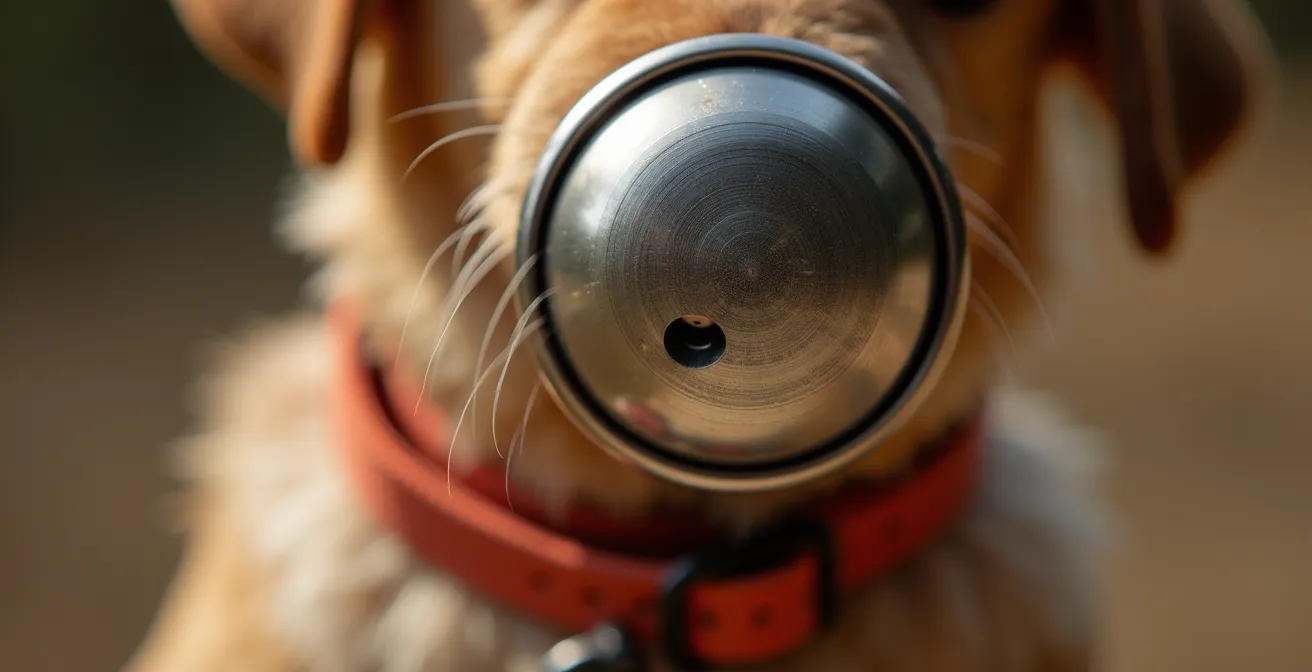
Proponents of the bell argue that a 50% reduction in predation, as some studies suggest, is a significant victory when scaled across millions of cats. It’s a simple, low-cost intervention that is easy for owners to implement. However, critics raise valid concerns beyond its ineffectiveness for fledglings. One argument is the potential for auditory stress on the cat itself. The constant, close-range jingling could be a source of irritation or even damage a cat’s sensitive hearing over the long term, though research on this is limited. Another concern is that the bell could, paradoxically, make the cat more vulnerable to larger predators like coyotes by advertising its location.
Ultimately, the bell represents a compromise, not a panacea. It’s a tool that acknowledges the problem but falls short of solving it. The “harm” it may cause to the cat is a subject of debate, but the “help” it provides to wildlife is provably limited. This positions the bell as a first, tentative step on a longer journey of responsible pet ownership—a journey that must include exploring more robust and scientifically-validated methods like high-visibility collars, leash walking, or supervised outdoor time in a “catio” (a cat-proof patio).
Off-Trail Dogs: How Scent Marking Disturbs Nesting Wildlife?
The ecological impact of our pets is not limited to cats. While dogs are less likely to be free-roaming predators, their mere presence in natural areas can create significant, albeit less visible, disturbances. The primary mechanism for this is scent marking. When a dog urinates on a trail, it’s not just relieving itself; it’s depositing a potent chemical signal announcing the presence of a predator. For many small wildlife species, this is a sign of extreme danger.

Ground-nesting birds, small mammals, and amphibians are acutely sensitive to the scent of canids. The lingering smell of dog urine can create what ecologists call a “landscape of fear.” This can cause parent birds to abandon their nests, even if the dog is long gone. The constant stress of a perceived predator nearby can lead to reduced foraging, lower reproductive success, and avoidance of otherwise ideal habitats. A study of fear responses in domestic dogs themselves highlights this powerful instinct; research on scent marking and fear responses demonstrates that 82 domestic dogs showed decreased time spent and increased heart rate near predator scents. Wild animals experience this same fear, but with life-or-death consequences.
This is why “leave no trace” principles and park regulations often insist that dogs remain on designated trails and that their waste be packed out. Allowing a dog to roam off-trail, even for a moment, can leave a long-lasting scent signature that disrupts the delicate balance of the local ecosystem. The impact is not a bloody carcass, but an abandoned nest or a chronically stressed population, a more subtle but equally damaging form of habitat degradation. Responsible dog ownership in natural spaces means managing not just the leash, but the invisible trail of scent left behind.
Distemper Spillover: How Unvaccinated Dogs Threaten Wild Foxes?
The connection between domestic dogs and wild canids like foxes, wolves, and coyotes extends beyond simple disturbance. It enters the realm of epidemiology through a process known as disease spillover. Domestic dogs can act as reservoir hosts for pathogens that can be devastating to wildlife populations, with Canine Distemper Virus (CDV) being one of the most significant threats. CDV is a highly contagious virus that affects the respiratory, gastrointestinal, and nervous systems of canids and other carnivores.
While CDV is well-managed in the domestic dog population through routine vaccination, pockets of unvaccinated or feral dogs can keep the virus circulating. When these dogs come into proximity with wild habitats, they can transmit the virus to susceptible wildlife. A fox, raccoon, or skunk investigating a food scrap left behind by a dog or simply crossing a path where an infected dog has been can be enough for transmission to occur. For wildlife populations that have no natural immunity, a CDV outbreak can be catastrophic, leading to mass mortality events that can wipe out entire local populations.
The global scale of this issue is significant. A comprehensive meta-analysis of canine distemper virus reveals that an estimated 22.6% of wild mink, foxes, and raccoon dogs tested positive for CDV exposure. This highlights how widespread the “spillover” from domestic sources has become. Therefore, vaccinating one’s pet dog is not just about protecting that individual animal. It is a fundamental act of ecological stewardship. It helps create herd immunity that not only protects the pet population but also acts as a firewall, preventing deadly pathogens from spilling over and decimating vulnerable wildlife.
Oral Chews vs. Collars: Which Is Safer for Families With Toddlers?
A pet owner’s responsibility extends beyond ecological impacts to ensuring the safety of their own family. The choice of flea and tick prevention is a prime example where pet health and human safety intersect, especially in households with young children. The two most common methods, topical/collar treatments and oral chews, work in fundamentally different ways, each with its own safety profile for a family with a curious toddler.
Flea and tick collars and many topical “spot-on” treatments work by depositing a pesticide onto the pet’s skin and fur. This chemical then spreads over the body, killing parasites on contact. The primary concern for families is the potential for chemical residue. A toddler who frequently hugs, pets, or cuddles with the family dog or cat could be exposed to these pesticides through skin contact or hand-to-mouth behavior. While the chemicals are approved for veterinary use, minimizing a child’s exposure to any pesticide is a standard safety principle.
Oral chews, on the other hand, are a systemic treatment. The pet ingests the medication, which then circulates in its bloodstream. Fleas and ticks are only exposed to the chemical when they bite the animal. This method completely eliminates the risk of external chemical residue on the pet’s fur. For a family with a toddler, this is a significant advantage. There is no need to worry about when it’s safe to touch the pet after treatment or if the child is putting their hands in their mouth after petting the dog. The following table summarizes the key considerations.
| Prevention Method | Primary Advantage | Toddler Safety Concern |
|---|---|---|
| Flea/Tick Collars & Topicals | Kills parasites on contact, often before they bite. | Risk of pesticide residue on fur, potential for child exposure. |
| Oral Chews | No external chemical residue on the pet’s coat. | Parasite must bite the pet to be affected. |
While both methods are considered safe for pets when used as directed, the absence of external residue makes oral chews an inherently safer option for minimizing a toddler’s potential chemical exposure. It shifts the safety equation from one of managing external risk to one contained entirely within the pet.
Biodegradable Bags: Do They Really Break Down in Landfills?
In an effort to be environmentally responsible, many pet owners diligently choose “biodegradable” or “compostable” bags for picking up pet waste. It feels like the right choice, an action that turns a daily chore into a small act of environmentalism. However, the reality of what happens to these bags is a stark lesson in the difference between a product’s potential and its actual performance in the real world. The term “biodegradable” simply means that a material can be broken down by microorganisms. It does not specify the time frame or the conditions required.
The critical issue is the environment where these bags end up: a modern sanitary landfill. Landfills are not giant compost piles; they are designed to be as stable and oxygen-free as possible to prevent decomposition, which produces methane gas and liquid leachate that can contaminate groundwater. This anaerobic (oxygen-free) environment is precisely the opposite of what most “biodegradable” plastics need to break down effectively. In the absence of oxygen, sunlight, and moisture, these bags, along with the organic waste they contain, can remain intact for decades, if not centuries.
Even certified “compostable” bags, which are designed to break down in industrial composting facilities, will not perform as intended in a landfill. They require the high temperatures and specific microbial conditions of an industrial composter. Unless you are sending your pet waste to such a facility (which is very rare), a compostable bag is no better than a standard plastic one once it’s buried in a landfill. While using any bag is far better than leaving waste on the ground, the marketing of “biodegradable” bags can create a misleading “green halo” effect. The most significant environmental benefit of picking up pet waste is the removal of harmful bacteria and excess nutrients from the watershed, not the type of bag used.
Key Takeaways
- Simple solutions like bells on collars are often insufficient for protecting the most vulnerable wildlife, such as fledgling birds.
- The ecological impact of pets is broader than direct predation, including indirect effects like scent disturbance, disease spillover, and consumer choices.
- “Eco-friendly” labels on products like biodegradable bags can be misleading if the disposal conditions (e.g., landfills) don’t support their function.
Palm Oil in Pet Food: Checking Labels for Rainforest Destruction
The ecological footprint of our pets extends all the way to their food bowl. Many processed foods, for both humans and pets, contain ingredients that have a significant, though often hidden, environmental cost. One of the most pervasive and destructive of these is palm oil. Derived from the fruit of the oil palm tree, it is an incredibly versatile and cheap vegetable oil used to improve the texture and shelf life of many kibbles and wet foods.
The problem lies in how it is produced. The vast majority of palm oil is grown in Southeast Asia, where its cultivation is a primary driver of deforestation. Huge swathes of tropical rainforest, which are critical habitats for endangered species like orangutans, tigers, and rhinos, are cleared to make way for oil palm plantations. This habitat destruction not only pushes species toward extinction but also releases massive amounts of carbon into the atmosphere, contributing to climate change. The issue is complex, as palm oil is a highly efficient crop and a vital part of the economy for millions of people.
As a conscientious consumer, the first step is to become a diligent label reader. Palm oil can be listed under many different names, including Palmitate, Palmate, Glyceryl Stearate, or simply “vegetable oil.” If a pet food label is vague, it’s a red flag. Look for brands that are transparent about their sourcing or, even better, explicitly state that they are “palm oil-free.” When palm oil is used, look for the RSPO (Roundtable on Sustainable Palm Oil) certification, which indicates the oil was produced without causing new deforestation. By making informed choices, pet owners can use their purchasing power to support companies committed to protecting these vital ecosystems.
Action Plan: Your Eco-Conscious Pet Food Audit
- Ingredient Scan: Check the ingredient list of your current pet food for palm oil and its derivatives (e.g., Palmitate, Sodium Laureth Sulfate).
- Brand Transparency: Visit the pet food company’s website. Do they have a clear statement on their sourcing policies for ingredients like fish and vegetable oils?
- Certification Check: If palm oil is used, look for an RSPO certification logo on the packaging or website. For fish, look for an MSC (Marine Stewardship Council) certification.
- Protein Source Review: Evaluate the primary protein. Proteins with a lower environmental impact include chicken and fish from sustainable sources, as opposed to beef.
- Packaging Assessment: Is the packaging recyclable? Does the company offer larger bag sizes to reduce the packaging-to-product ratio?
Puppy Mill Bans: Why Retail Restrictions Are the Most Effective Tool?
Moving from individual consumer choices to systemic change, one of the most effective tools for improving animal welfare is targeting the economic engine that drives cruel practices. This is clearly demonstrated in the fight against puppy mills—large-scale commercial breeding operations where profit is prioritized over the well-being of the animals. Dogs in these facilities often live in cramped, unsanitary conditions with inadequate veterinary care, socialization, or human contact.
For decades, animal welfare advocates focused on rescuing individual dogs or attempting to prosecute the worst offending mills, which was often a difficult and resource-intensive process. The strategic shift came with the realization that the entire puppy mill industry relies on a single bottleneck: the retail pet store. While some mills sell directly to the public online, the vast majority rely on a distribution network that supplies puppies to pet shops across the country. By cutting off this primary sales channel, you effectively choke the industry’s business model.
This is the logic behind retail pet sale bans, which are laws or ordinances that prohibit pet stores from selling dogs and cats. Instead, stores are encouraged to partner with local animal shelters and rescue groups to host adoption events. This approach is powerful for two reasons. First, it severs the puppy-mill-to-pet-store pipeline, drastically reducing the demand that keeps mills in business. Second, it transforms pet stores from a point of sale for commercially bred animals into a platform for homeless animals, driving up adoption rates and reducing shelter euthanasia. These retail restrictions have proven to be the most effective legislative tool for dismantling the puppy mill industry, demonstrating that sometimes the most powerful change comes from addressing the supply chain rather than the source.
By moving beyond simple, often ineffective, gestures and embracing a more holistic view of our pets’ ecological and ethical footprint, we can become truly effective stewards. It is about making conscious, evidence-based choices—from the products we buy to the policies we support—that protect both the animals we share our homes with and the wild world we all share.