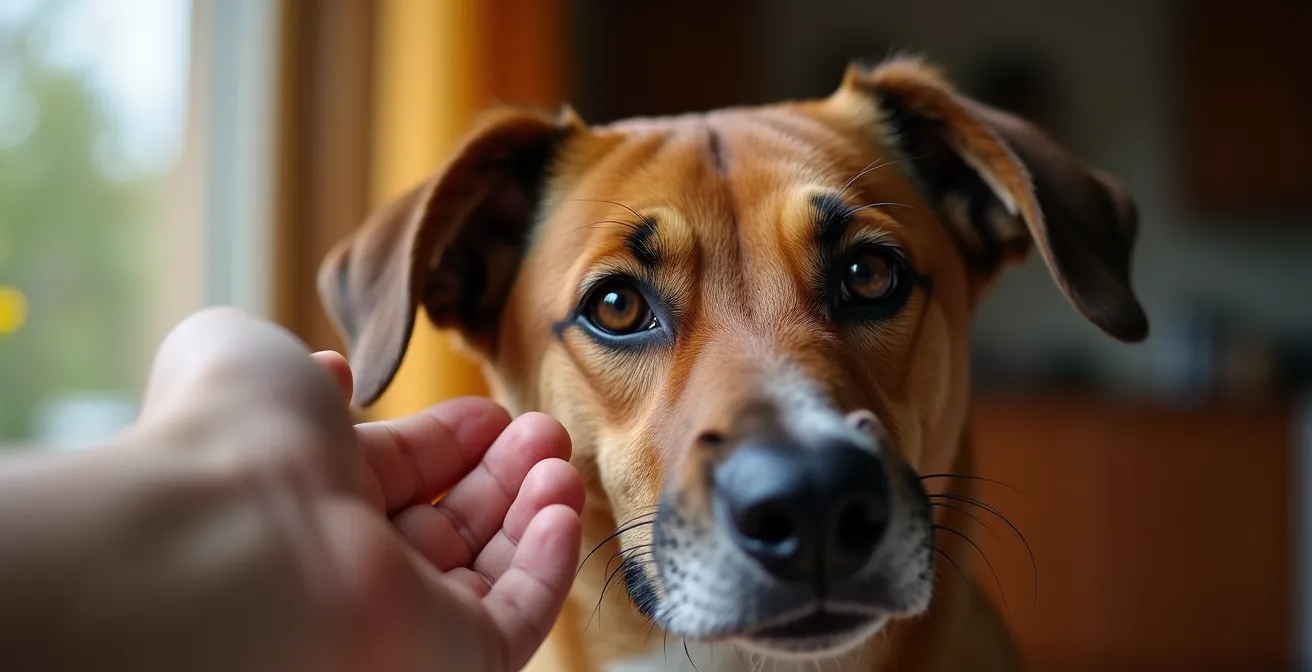
A rescue dog’s bond isn’t weaker than a puppy’s; it’s a more complex and profound connection forged by overcoming a history of survival.
- Their behaviors are not flaws but communications—echoes of past experiences that you can learn to translate.
- Building trust requires earning it through predictability and consent, not just offering affection.
Recommendation: Shift your focus from “training” behaviors to “understanding” the dog’s underlying emotional needs. This is the key to unlocking their unwavering loyalty.
Bringing a rescue dog into your home is an act of profound kindness, filled with hopeful visions of immediate companionship and gratitude. You imagine quiet cuddles, joyful greetings, and a seamless integration into your life. But often, the reality is more complex. You might see a dog that flinches at a raised hand, guards their food bowl with a low growl, or panics when you pick up your keys. It’s easy to feel confused, or even a little disappointed, when the bond doesn’t form as instantly as you’d hoped.
Common advice often revolves around simple maxims like “just be patient” or “establish a routine.” Many compare them to puppies, which are seen as “blank slates,” while rescues come with “baggage.” This comparison, however, misses the fundamental truth of the rescue dog’s experience. Their history is not just baggage; it’s a survival manual that has kept them alive, and their behaviors are the language of that manual. Their brain is wired differently, not because it’s broken, but because it’s been shaped by uncertainty.
But what if the true key to a deep connection isn’t about erasing their past, but about learning to read it? The secret lies in understanding that their actions are communications from a “survival brain” that is constantly scanning for threats. Seemingly random fears, or “ghost triggers,” are simply echoes of a past they can’t tell you about. By learning to translate these signals, you move from being just an owner to becoming their safe harbor—the first truly predictable and trustworthy presence in their life.
This guide will walk you through the most common and confusing behaviors of adult rescue dogs. We won’t just offer solutions; we will decode the psychology behind them. You will learn to see these actions not as problems to be fixed, but as opportunities to build a bond of unparalleled depth and loyalty, one that is earned, understood, and cherished.
To help you navigate this journey, this article breaks down the key psychological and practical steps to building a profound connection with your rescue dog. Explore the sections below to understand their world from their perspective.
Contents: Why an Adult Rescue Dog’s Love is Different: Understanding Their Unique Bond
- The Food Bowl Danger: How to Manage Guarding in a New Home?
- Identifying “Ghost” Triggers: Why Your Dog Panics at Men in Hats?
- Switching Shelter Food to Premium Kibble Without Causing Gastric Distress?
- How to Rename a Shelter Dog and Build Positive Association?
- The First Solo: How Long to Leave a Rescue Dog Alone on Day 1?
- Why Does Your Dog Follow You Everywhere: Anxiety or Affection?
- The “Honeymoon Phase” End: Why Behavior Worsens After 3 Weeks?
- How to Deepen Your Connection With a Rescue Pet in 30 Days?
The Food Bowl Danger: How to Manage Guarding in a New Home?
One of the most unsettling behaviors a new owner can face is resource guarding. A low growl or a stiffening body when you approach the food bowl can feel like a personal rejection, but it’s rarely about you. For a dog with a history of scarcity, guarding food is a deeply ingrained survival instinct. Their survival brain isn’t being aggressive; it’s desperately trying to protect a life-sustaining resource. This behavior is surprisingly common; in fact, a five-year shelter study revealed that 15.3% of shelter dogs exhibited some form of resource guarding.
The goal is not to challenge the dog, which would only confirm their fear that you are a threat to their food. Instead, you must systematically change their perception of your presence. You need to become the provider of more good things, not a potential thief. This involves teaching them that your approach predicts an upgrade, not a loss. It’s a slow process of rewiring their expectations, turning a moment of anxiety into one of positive anticipation.
Start by creating a “safe-distance dining” protocol. The initial phase is all about demonstrating you are not a threat. By staying in the room but far away, you normalize your presence during meals without triggering their defensive instincts. Over time, you slowly decrease the distance, always watching their body language for signs of stress. The moment you see a stiff body or a hard stare, you’ve moved too quickly. Back up and give them more space. This process builds a foundation of trust around their most valuable resource.
The following steps are a proven method to counter-condition this fear. Remember to move at your dog’s pace. Pushing them too fast will only set back your progress. Patience and consistency are your greatest tools in showing them that in their new home, food is abundant and safe.
- Day 1-3: Stay in the same room during feeding, but maintain 10+ feet of distance. Do not interact or make eye contact.
- Day 4-7: Gradually move 2 feet closer each day while the dog is eating, stopping if you see any signs of tension.
- Week 2: From a safe distance, walk past the bowl and toss a high-value treat (like a piece of chicken) near it. Your passing by now predicts something better.
- Week 3: Begin practicing “trade-up” games with lower-value items before ever attempting it with food.
- Week 4+: The only reason you should approach the bowl is to add more delicious food, never to take it away.
Identifying “Ghost” Triggers: Why Your Dog Panics at Men in Hats?
Has your rescue dog ever suddenly panicked at something seemingly random? A man wearing a baseball cap, the jingle of keys, the smell of leather boots, or a raised voice can send them into a state of fear. These are what we call “ghost triggers”—sensory inputs that are neutral to you but are linked to a past traumatic experience for your dog. Because you don’t know their history, you can’t see the “ghost” they’re reacting to. Their reaction isn’t illogical; it’s a conditioned response from a time when that sight, sound, or smell predicted something bad was about to happen.
Understanding this concept is the first step toward helping them. Punishing the fear will only validate it. Instead, your role is to become a detective. Observe your dog and note exactly what was happening in the environment right before their anxiety spiked. Was it a specific object? A type of person? A particular noise? Keeping a journal can help you identify patterns and map out these triggers. It’s not about reliving their trauma, but about understanding what activates their survival brain in the present.

As this visual metaphor suggests, these triggers often form an interconnected web. A dog might not just fear hats, but the combination of a hat, a deep voice, and a fast approach. Once you’ve identified a trigger, the work of desensitization and counter-conditioning can begin. This involves re-introducing the trigger at a very low intensity—a distance where your dog notices it but doesn’t react—and pairing it with something they love, like a high-value treat. Over many sessions, you can slowly decrease the distance or increase the intensity, changing the trigger’s meaning from “danger” to “predictor of treats.”
Switching Shelter Food to Premium Kibble Without Causing Gastric Distress?
One of the first things a new owner wants to do is upgrade their dog’s food from basic shelter fare to a high-quality, premium kibble. While this comes from a place of love, a rapid food switch can cause significant gastric distress, including diarrhea and vomiting. This isn’t just a matter of a sensitive stomach; it’s deeply connected to their emotional state. The stress of being rehomed causes a spike in the hormone cortisol, which can increase gut permeability and disrupt the delicate balance of their digestive system. This means that even a slow transition can be challenging if the dog is highly stressed.
Therefore, the speed of the food transition should be dictated not by a generic 7-day plan, but by the dog’s individual stress level. A calm, confident dog might handle a standard transition, but an anxious, fearful dog needs a much slower, more methodical approach. Rushing the process can create a negative association with the new food and even with mealtime itself, setting back your bonding efforts. The priority is digestive stability first, nutritional upgrade second.
The following table provides a framework for adjusting the transition based on your dog’s behavior. As this stress-adjusted transition plan shows, observing your dog’s emotional state is just as important as measuring out their food.
| Dog Stress Level | Transition Duration | Daily Ratio Change | Additional Support |
|---|---|---|---|
| Low (eating normally) | 7-10 days | 10% new food increase daily | Standard probiotics |
| Moderate (some anxiety) | 14-21 days | 5% new food every 2 days | Probiotics + pumpkin puree |
| High (refusing meals) | 30+ days | Pause until eating regularly | Vet consultation + digestive enzymes |
Pay close attention to both their emotional cues and their stool quality. If you notice signs of an upset stomach, slow down or even take a step back in the transition process. Adding a canine-specific probiotic can help support their gut microbiome during this stressful period. Your patience during this process sends a powerful message: you are attentive to their needs and will not push them past their limits.
How to Rename a Shelter Dog and Build Positive Association?
Deciding whether to rename a rescue dog is a common dilemma. Will it confuse them? Will it erase a part of their identity? The reality is, a dog’s name is not a core part of their identity in the way a human’s is. To a dog, a name is simply a sound that has been conditioned to predict a consequence—good or bad. If their old name was used in a neglectful or abusive environment, that sound may be a trigger for anxiety or fear. Giving them a new name offers a “clean slate,” a chance to build a brand new association based entirely on love, rewards, and positive attention.
The key to successfully renaming your dog is a process called “name charging.” This is an active conditioning exercise where you teach the dog that their new name is the most wonderful sound in the world. It’s not enough to simply start using the new name; you must intentionally load it with positive meaning. This is done through short, happy, and highly rewarding training sessions. The goal is for the dog’s head to whip around with an excited “what wonderful thing is about to happen?” expression every time they hear it.
Follow these steps to effectively “charge” your dog’s new name with positivity. For the first month, make a conscious effort to never use the new name for anything negative, like a correction or to call them for something they dislike (like a bath). The name should only ever predict something great.
- Say the new name in a happy, upbeat tone when the dog is calm and attentive.
- The exact moment they look at you, mark it with an enthusiastic “Yes!” or a clicker.
- Immediately follow with a high-value reward, like a tiny piece of cheese or chicken.
- Repeat this 10-15 times in a short session, holding several sessions throughout the day.
- Practice in different rooms and eventually outdoors to help them generalize the new name.
This process of building positive associations is the cornerstone of a strong bond. As an expert from the JustAnswer Pet Training team notes, this principle extends beyond just a name: “Basic obedience classes will strengthen the bond between you and [your dog] while helping him build self-confidence.”
The First Solo: How Long to Leave a Rescue Dog Alone on Day 1?
For a dog fresh out of a shelter, being left alone can trigger profound terror. The shelter environment, while life-saving, is often chaotic and unpredictable. Your home represents their first taste of stability, and you are the center of that new, safe world. When you leave, their survival brain doesn’t understand you’ll be back in an hour. It can feel like abandonment, a return to the uncertainty they just escaped. So, the answer to “How long can I leave them alone on day 1?” is simple: almost no time at all.
The goal is not to test their endurance but to proactively teach them that your departures are temporary and non-threatening. This starts with deconstructing the very cues that predict you’re leaving. Dogs are masters at picking up on our patterns: we pick up keys, put on shoes, grab a jacket. These actions become triggers for anxiety. You can start to dismantle this by practicing these actions randomly throughout the day *without* leaving. Pick up your keys and put them on the coffee table. Put on your coat, then take it off and watch TV. This teaches the dog that these cues are meaningless and not always a prelude to being abandoned.
When you do start practicing actual departures, they must be incredibly short—so short that the dog doesn’t have time to panic. The goal is for them to experience your return before their anxiety can even begin to build. This builds a new, positive association: your leaving is always followed by a calm, predictable return. This process requires significant patience and planning, especially in the first few weeks.
Your Action Plan: The Day 1 Micro-Departure Protocol
- Step 1: Walk to the door, touch the handle, and immediately return to your dog. Keep it brief (5 seconds).
- Step 2: Walk to the door, open it slightly, close it, and return. Your entire absence is less than 10 seconds.
- Step 3: Step just outside the door, then immediately re-enter. Stay calm and neutral.
- Step 4: Step outside and close the door behind you for just 2 seconds, then re-enter calmly.
- Step 5: Only if the dog remains calm, gradually increase the duration to 30 seconds over many repetitions. Avoid emotional goodbyes or hellos.
Why Does Your Dog Follow You Everywhere: Anxiety or Affection?
A dog that follows you from room to room can be seen as a sign of deep affection—a furry “velcro dog” that adores your company. And sometimes, it is just that. However, in an adult rescue, this behavior can also be a symptom of hyper-vigilance and separation anxiety. The key to telling the difference lies in observing their body language and the context of the behavior. Is it a relaxed “shadow” or an anxious “tail”?
An affectionate dog will follow you casually, with a loose, relaxed body and soft eyes. They might lie down and doze when you settle in a room, content just to be in your vicinity. An anxious dog, however, exhibits a tense, rigid posture. Their eyes may be wide, constantly tracking your every move. They may physically block your path or become distressed if a closed door separates you. This isn’t love; it’s surveillance. Their survival brain is on high alert, unable to relax because it fears you might disappear.
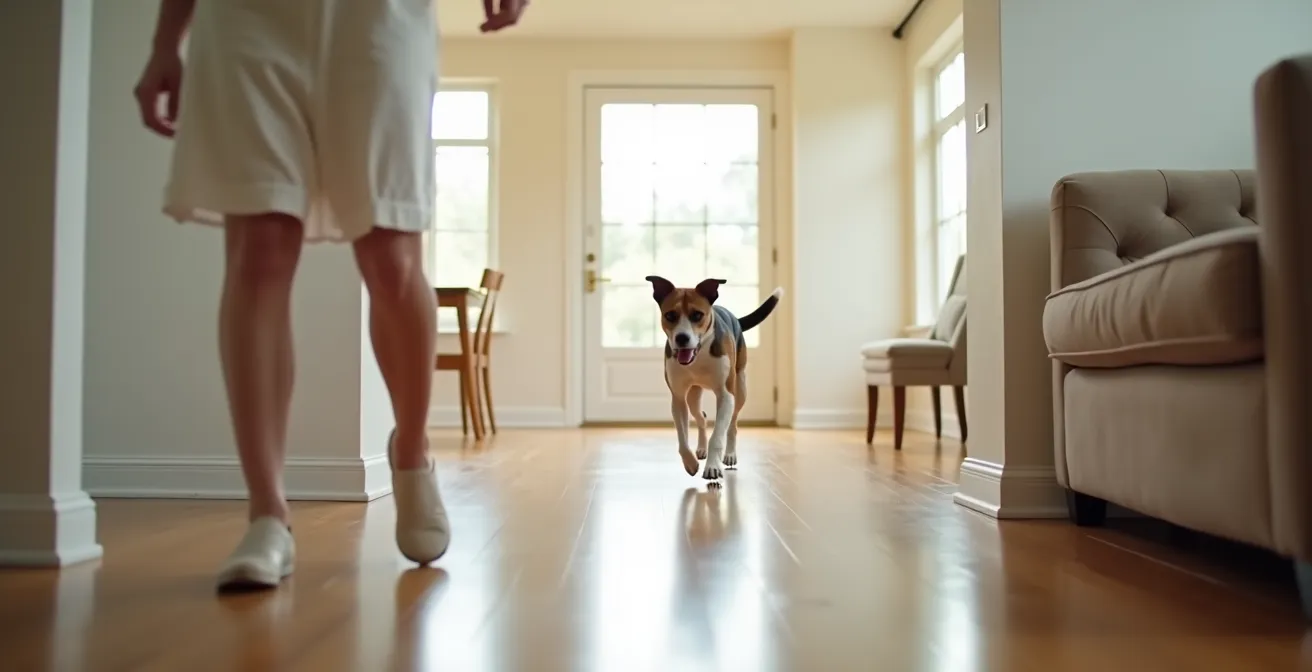
Distinguishing between these two motivations is crucial. Mistaking anxiety for affection can lead owners to inadvertently reinforce the anxious behavior by providing constant reassurance. Instead, if you suspect anxiety, the goal is to build their confidence so they feel safe even when you are not in direct contact. This involves creating a secure base for them, encouraging independent activities like playing with a puzzle toy in their own space, and practicing the micro-departure exercises discussed earlier, even just by closing a bathroom door for a few seconds.
Use the following guide to help diagnose whether your dog’s following is rooted in calm companionship or anxious fear. A careful analysis of their behavior is the first step toward responding appropriately.
| Behavior Indicator | Affectionate Following | Anxious Surveillance |
|---|---|---|
| Body Language | Loose, relaxed posture | Tense, rigid body |
| Eye Contact | Soft eyes, occasional glances | Wide eyes, constant watching |
| Physical Position | Comfortable distance (3-6 feet) | Physically blocking paths |
| Response to Movement | Casual following | Immediate, urgent pursuit |
| Resting Behavior | Can settle when you stop | Remains alert and vigilant |
The “Honeymoon Phase” End: Why Behavior Worsens After 3 Weeks?
Many rescue organizations prepare new adopters for what is known as the “honeymoon phase.” For the first few days or weeks, your new dog may be a perfect angel—quiet, compliant, and causing no trouble. You might think you’ve lucked out with the easiest dog in the world. Then, around the three-week mark, things can change. The dog might start barking at the mailman, chewing on shoes, or showing fear toward things that didn’t bother them before. This isn’t a sign of regression; it’s often a sign of progress.
This journey of adjustment is often described by the widely recognized 3-3-3 rule, which outlines distinct phases: the first 3 days (overwhelmed and shut down), the first 3 weeks (starting to settle and test boundaries), and the first 3 months (building trust and feeling at home). The end of the honeymoon period signals the transition from the shutdown phase to the settling-in phase. The dog is finally starting to feel safe enough for their true personality to emerge.
As Meg McIntire, a rescue advocate, explains in an article for Wilderdog, this is a critical turning point. She states, “The honeymoon period is when the dog is feeling out surroundings and new rules before being comfortable enough to express certain sides of their personalities. You might notice undesirable behaviors they didn’t display earlier, or they might regress with an unexpected fear period.” This is the moment the dog’s emotional decompression is well underway. Their cortisol levels have dropped, and they are moving out of pure survival mode. The “bad” behaviors are often just them finally having the confidence to express their needs, fears, and preferences.
So, instead of being discouraged, see this phase as an invitation to get to know the real dog you’ve adopted. It’s now that the real work of training and bond-building can begin in earnest. The quiet, compliant dog was a guest in your home; the dog who barks at squirrels is starting to believe this is their home, too. This is your cue to provide clear, consistent boundaries and positive reinforcement to guide their emerging personality in the right direction.
Key Takeaways
- A rescue dog’s behavior is a form of communication, reflecting their past survival experiences, not a flaw in their character.
- True trust is built on a foundation of predictability and consent-based interactions, which must be actively earned.
- The end of the initial “honeymoon phase” is not a regression but a positive sign that your dog feels safe enough to reveal their true personality.
How to Deepen Your Connection With a Rescue Pet in 30 Days?
Building a deep, lasting bond with a rescue dog isn’t about grand gestures; it’s about the accumulation of small, trust-building moments. It’s about filling their “predictability bank” with positive experiences until their balance of trust outweighs their history of fear. This process is centered on two key principles: cooperative engagement and consent-based handling. You must shift from a mindset of “doing things to” your dog to “doing things with” your dog.
Cooperative engagement can be as simple as working on a puzzle toy together. Instead of just giving them the toy, you become a partner in solving it. This reframes your interaction from one of hierarchy to one of teamwork. Play is another powerful tool, but you must learn their language. Some dogs, like a rescued Greyhound who only bonded after running “her demons out,” need an outlet for their innate drives, not just a game of fetch. Auditing their play style and providing an appropriate outlet can be the key that unlocks their heart.
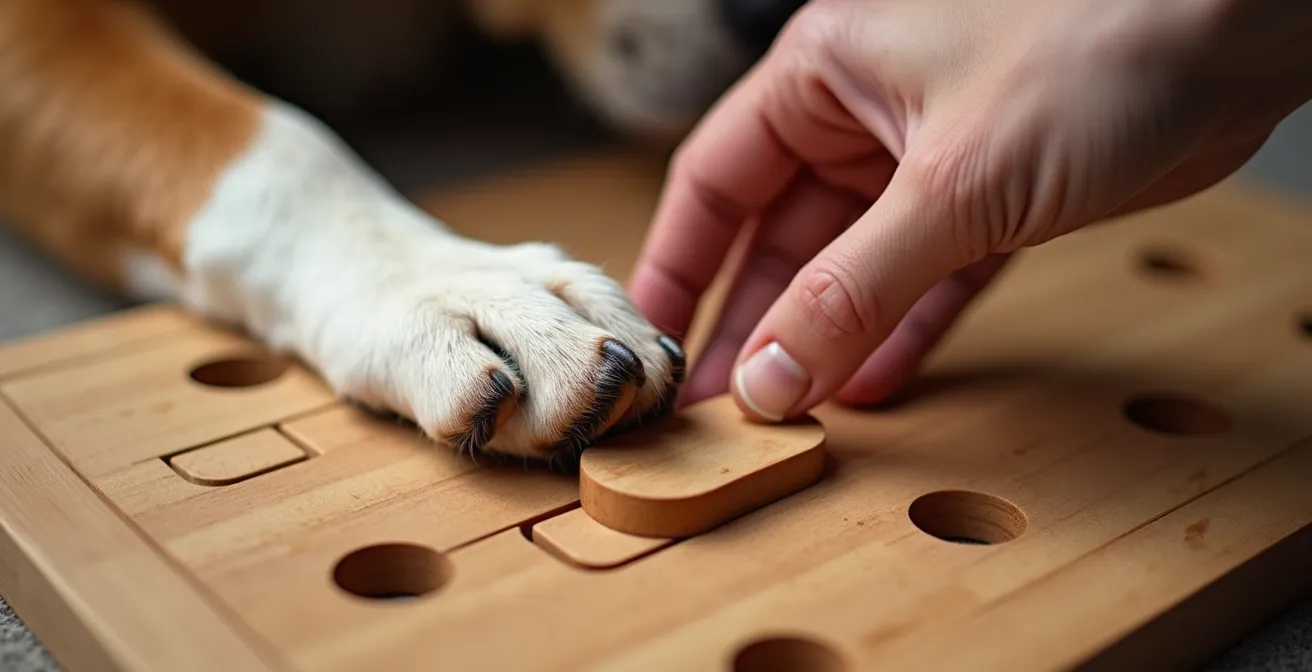
Even more fundamental is the practice of consent-based handling. For a dog that may have experienced unwanted or rough handling, every touch can be a source of anxiety. Instead of forcing affection, you must learn to ask for their permission. This means reading their body language and respecting their “no.” A dog that turns their head away, licks their lips, or stiffens their body is politely declining an interaction. Respecting that signal is a massive deposit in their trust bank. When they do offer consent—by leaning in, seeking contact with soft eyes—you reward it with calm, gentle affection.
By consistently applying this protocol, you empower your dog with choice and control over their own body, perhaps for the first time in their life. This is one of the most powerful messages of safety you can send.
- Always approach your dog from the side, not head-on, which is less confrontational.
- Pause a few feet away and observe their body language before proceeding.
- If the dog leans in or approaches you, extend your hand slowly, keeping it below their chin level.
- Watch for clear consent signals: soft eyes, a relaxed mouth, and leaning their body toward you.
- If the dog turns away, stiffens, or shows any sign of discomfort, respect their “no” and withdraw calmly. Try again later.
This journey of understanding transforms your relationship. You become more than a provider; you become a trusted partner. This is the foundation of the unbreakable bond that so many rescue parents cherish.
Start today by choosing one small area—be it mealtimes or greetings—and commit to making it 100% predictable and positive. This is the first step on a rewarding journey toward earning the unique and powerful love of a rescue dog.
Frequently Asked Questions about Why Adult Rescue Dogs Bond Differently Than Puppies raised from Birth?
Should I use slow-feeder bowls immediately for rescue dogs?
Yes, especially if the dog shows signs of food scarcity trauma. A history of inconsistent meals can lead to gorging, where a dog eats frantically as if it’s their last meal. Slow-feeders prevent this behavior and reduce the risk of vomiting or a dangerous condition called bloat from eating too quickly.
What if my rescue dog refuses the new premium food entirely?
First, don’t panic. A food refusal is often stress-related. Try mixing a small amount of warm water or low-sodium bone broth into the food to enhance its aroma and make it more enticing. If the refusal continues for more than 48 hours, it’s best to consult your veterinarian to rule out any medical issues. You may need to temporarily revert to their previous shelter food while you work on reducing their overall stress level.
Can stress cause digestive issues even with the same food?
Absolutely. This is a critical point many new owners miss. High levels of the stress hormone cortisol, which are common in newly rehomed dogs, can directly impact the digestive system by increasing gut permeability (often called “leaky gut”). This can lead to diarrhea or an upset stomach even if there have been no dietary changes at all. Managing their emotional stress is as important as managing their diet.