Accessories & Equipment
The accessories and equipment we choose for our pets form the foundation of their daily safety, comfort, and wellbeing. Yet the pet product market overwhelms guardians with countless options, many prioritizing marketing appeal over functional design. Understanding the biomechanical, behavioral, and safety principles behind each category transforms shopping from guesswork into informed decision-making that directly impacts your animal’s quality of life.
This comprehensive resource examines six essential equipment categories through the lens of evidence-based selection criteria. From harnesses that protect spinal alignment to tracking devices that maximize recovery chances, we’ll explore how physics, material science, and animal behavior should guide every purchase decision. Whether you’re preparing for a new pet or reevaluating existing gear, these foundational concepts will help you distinguish genuinely protective equipment from cleverly marketed but functionally inadequate products.
Walking Gear: Biomechanics and Safety First
Walking equipment represents the most frequent point of physical connection between you and your pet, making proper design absolutely critical. The forces generated during walks—sudden stops, directional changes, and pulling—travel directly through the gear into your animal’s body. Poorly designed harnesses can compress the trachea, restrict shoulder movement, or create pressure points that cause long-term musculoskeletal damage.
Anatomical Fit and Adjustment
Think of a harness like a suspension bridge: the structure must distribute load evenly across multiple anchor points rather than concentrating stress on a single area. The ideal harness features a Y-shaped front configuration that sits below the throat, leaving the trachea completely unobstructed. Chest plates should rest on the sternum—the flat bone between the front legs—not on soft tissue.
Adjustment capability determines whether equipment can maintain proper fit as your pet moves. Look for at least four independent adjustment points: two around the chest and two around the girth. This allows customization for barrel-chested breeds, deep-chested athletes, or puppies experiencing rapid growth phases. During fitting, you should be able to slide two fingers comfortably under all straps when fastened—tight enough to prevent escape, loose enough to avoid chafing.
Materials and Visibility Features
Material selection directly impacts both durability and safety. Nylon webbing offers excellent strength-to-weight ratios but can cause friction burns when wet. Padded mesh provides comfort but degrades faster under UV exposure and repeated washing. For active pullers, consider double-stitched reinforcement at stress points—particularly where metal hardware attaches to fabric.
Night visibility transcends simple aesthetics; it’s a collision-prevention necessity. Reflective stitching must cover sufficient surface area to create a recognizable silhouette from multiple angles. LED-integrated options provide active illumination but require battery management. For puppies transitioning to walking gear, start with lightweight designs that minimize initial resistance, gradually introducing standard equipment as acceptance builds.
Feeding Accessories as Mental Enrichment Tools
Feeding time offers far more than nutritional delivery—it presents daily opportunities for cognitive engagement and behavioral satisfaction. Wild carnivores spend significant portions of their day foraging and problem-solving for food. Puzzle feeders and slow-feed designs tap into these instinctive behaviors, transforming a five-second bowl gulp into a fifteen-minute mentally enriching activity.
Cognitive Benefits and Difficulty Progression
Mental stimulation during feeding provides measurable behavioral benefits. Animals working for their meals demonstrate reduced anxiety-related behaviors, decreased destructive tendencies, and improved sleep quality. The challenge lies in matching difficulty to capability—too simple provides no engagement, too complex triggers frustration and food guarding.
Implement a graduated difficulty approach. Begin with simple designs featuring large openings or basic sliding compartments. As your pet masters each level, introduce intermediate challenges: rotating layers, weighted obstacles, or sequential steps. Advanced feeders might require multi-step problem-solving or combinations of pushing, lifting, and sliding actions. Monitor engagement time; if your pet abandons the puzzle after brief attempts, step back to an easier configuration.
Material Safety and Hygiene
Feeding equipment contacts both food and saliva, making material safety paramount. Choose food-grade, BPA-free plastics or stainless steel options that withstand repeated washing without degrading. Avoid painted surfaces that chip into food or porous materials that harbor bacteria in microscopic crevices.
Hygiene maintenance requires design consideration. Feeders with removable components and dishwasher-safe construction significantly reduce bacterial accumulation. Inspect rubber or silicone elements regularly for cracks where moisture and food particles lodge. Establish a cleaning schedule based on usage: daily rinsing for wet food puzzles, thorough weekly washing for dry food devices.
Sleeping Support: Preventing Pain Through Proper Bedding
Quality sleep directly correlates with physical recovery and immune function, yet many pets rest on inadequate surfaces that create pressure points and fail to support natural spinal alignment. Orthopedic issues—particularly in senior animals or large breeds—often trace back to years of insufficient sleeping support. Understanding material science helps identify bedding that provides therapeutic benefit rather than mere cushioning.
Material Density and Temperature Regulation
Bedding firmness exists on a spectrum. Too soft allows the body to sink into a hammock-like curve that misaligns the spine; too firm creates pressure points at the shoulders and hips. Memory foam with a density rating of 3-5 pounds per cubic foot offers the sweet spot for most animals—supportive enough to maintain alignment while conforming to individual body contours.
Temperature regulation prevents sleep disruption from overheating or chilling. Gel-infused foam or phase-change materials actively manage heat buildup, particularly important for thick-coated breeds or animals with temperature regulation challenges. Conversely, self-warming fabrics trap body heat for elderly or short-haired pets. Consider seasonal rotation: cooling materials for warm months, insulating options for cold periods.
Placement and Replacement Indicators
Strategic placement maximizes usage and effectiveness. Observe your pet’s natural resting preferences—do they seek enclosed spaces or open visibility? Draft-prone or sun-warmed spots? Position bedding away from high-traffic areas to enable truly restorative sleep, yet maintain visual connection to household activity for social animals.
Even quality bedding degrades over time. Watch for compression that no longer rebounds, visible material breakdown, or persistent odors despite washing. Large breeds typically compress foam within 18-24 months; smaller animals may extend bedding lifespan to 3-4 years. If your pet suddenly avoids previously preferred bedding or demonstrates stiffness upon waking, replacement likely provides the solution.
Collar Safety: Identification vs. Strangulation Risk
Collars serve dual purposes—carrying identification and providing leash attachment—yet they simultaneously present the single highest strangulation risk in pet equipment. This tension between necessity and danger demands careful selection and usage protocols. Understanding failure mechanisms and fitting standards transforms collars from potential hazards into safely functional tools.
Fitting Protocol and Mechanism Types
The two-finger rule provides the baseline for collar fitting: when fastened, you should slide two fingers between the collar and neck with slight resistance. Tighter risks choking during normal activity; looser allows escape or snagging. However, this measurement requires weekly verification during growth phases and seasonal checks for adult animals experiencing weight fluctuations.
Buckle mechanisms present varying safety profiles. Traditional flat buckles offer maximum security but require complete removal for adjustment. Quick-release clasps enable emergency removal but can accidentally disengage under pressure. Breakaway collars—designed to release under sustained force—provide critical safety for cats and unsupervised indoor pets but prove inadequate for leash walking or outdoor containment.
Alternatives and Emergency Removal
Indoor versus outdoor needs require different approaches. For indoor-only animals, consider breakaway collars with identification tags or collar-free identification methods entirely. Outdoor access or multi-pet households may justify sturdier designs, but never leave traditional collars on unsupervised pets in environments with snagging hazards—crate bars, fence elements, or multi-animal play.
Identification alternatives eliminate collar dependency. Microchipping provides permanent identification unaffected by equipment failure, though it requires scanner access and updated registry information. GPS-enabled tags offer tracking capability without collar reliance when integrated into harnesses. Maintain redundancy: combine microchipping with visible identification rather than relying on single-method solutions.
Car Travel Restraints: Physics-Based Safety Standards
Vehicular travel subjects pets to the same physics that necessitate human seatbelts, yet many guardians transport animals completely unrestrained or with equipment designed for convenience rather than crash protection. An unrestrained animal becomes a projectile during sudden deceleration—dangerous to themselves, passengers, and driver control. Understanding impact forces and structural engineering separates marketing claims from genuinely protective systems.
Impact Forces and Connection Points
Consider the physics: a 60-pound dog in a vehicle traveling 30 mph experiences 2,700 pounds of force during a sudden stop. That force must be absorbed and distributed by the restraint system. Inadequate equipment fails catastrophically—snapped clips, torn fabric, or broken anchor points that transform the restraint into additional projectile components.
Connection point strength determines system integrity. Restraints should attach directly to vehicle structural components—the seatbelt latch system or cargo area anchor points rated for human safety equipment. Headrests, seat bases, and plastic trim pieces lack the structural capacity to withstand crash forces. Similarly, the pet’s harness must feature reinforced attachment points specifically designed for travel restraint, distinct from standard walking gear.
Crate vs. Harness Systems
Hard-sided crates and crash-tested harnesses represent two philosophically different approaches. Crates create a protective shell around the animal, preventing ejection and secondary impacts, but require sufficient cargo space and proper securing to prevent the crate itself from becoming a projectile. Look for designs meeting crash test standards with independent verification, featuring reinforced corners and secure door mechanisms.
Harness systems allow closer passenger proximity and work in smaller vehicles but rely entirely on material strength and engineering. The harness must distribute impact forces across the chest and shoulders while the tether includes energy-absorbing elements that decelerate gradually rather than jerking abruptly. Product lifespan for crash protection equipment shortens significantly—replace any restraint involved in a collision, regardless of visible damage, as structural integrity may be compromised.
GPS Tracking Technology: Recovery Speed and Reliability
Lost pet recovery increasingly depends on tracking technology, yet device limitations and service variables create a false sense of security when guardians don’t understand the underlying systems. GPS trackers don’t guarantee location in all circumstances—their effectiveness depends on battery capacity, network infrastructure, environmental factors, and subscription service quality. Evaluating these variables before an emergency occurs dramatically improves recovery outcomes.
Battery Life and Network Coverage
Battery capacity and device size exist in inverse relationship—compact, lightweight trackers sacrifice runtime for wearability. A device offering only 24-48 hours of active tracking may deplete before recovery in extended search scenarios. Evaluate your risk profile: urban environments with dense search resources may tolerate shorter battery life, while rural settings demand extended capacity or solar recharging options.
Network coverage determines whether location data reaches you. Cellular-based trackers depend on mobile network infrastructure, creating coverage gaps in remote areas, large buildings, or underground spaces. Radio frequency systems offer broader coverage but shorter range, requiring you to be within the signal radius. Hybrid devices combining multiple technologies provide redundancy but increase cost and complexity. Research actual coverage maps for your specific region and common travel areas rather than relying on provider marketing claims.
Subscription Models and False Alert Management
Most GPS tracking requires ongoing subscriptions for cellular data transmission and platform access. Compare total cost of ownership—device price plus annual subscription fees—across expected usage years. Some providers lock features behind premium tiers or charge per location update, while others offer unlimited tracking at flat rates.
False positives erode trust and create alert fatigue. Overly sensitive geo-fence settings trigger dozens of notifications for normal movement variations, training you to ignore alerts when genuine escape occurs. Calibrate boundaries with reasonable buffer zones and adjust sensitivity based on your pet’s actual behavior patterns. Modern devices incorporate activity pattern recognition to distinguish normal routine from anomalous movement, reducing false alerts while maintaining genuine emergency detection.
Equipment selection ultimately reflects your priorities as a pet guardian. Each category demands balancing competing factors—safety versus convenience, durability versus comfort, functionality versus cost. By grounding decisions in biomechanical principles, material science, and behavioral understanding rather than marketing narratives, you build an equipment foundation that genuinely serves your animal’s needs. Regularly reassess gear as your pet ages, activity levels change, or new safety research emerges, maintaining equipment standards that evolve alongside your deepening knowledge.

GPS vs. Bluetooth Trackers: Why AirTags Aren’t Enough for Your Dog’s Safety
Relying on an AirTag for a lost dog is a dangerous gamble on passive luck; true recovery demands active, real-time technology designed for the task….
Read more
Crash-Tested vs. “Safety” Harness: The CPS Certification Difference
That “safety” harness you bought on Amazon is a marketing lie that will catastrophically fail in a real crash, turning a simple restraint into a…
Read more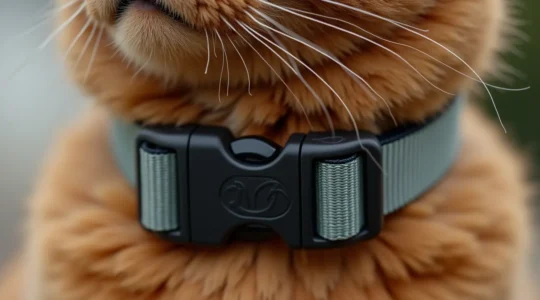
Breakaway Collars: Essential Safety Feature or Security Risk?
True cat safety isn’t found in a single collar, but in a balanced system that manages the conflicting risks of snagging versus the loss of…
Read more
Investing in an Orthopedic Bed for a Young Dog: A Luxury or a Necessity?
Investing in a true orthopedic bed for your young dog isn’t about current comfort; it’s a strategic decision to preserve their “joint capital” and prevent…
Read more
A Life-Saving Guide: How to Use Puzzle Feeders to Stop Bloat in Fast-Eating Dogs
The single most effective way to combat bloat risk isn’t just slowing your dog’s eating—it’s transforming the mealtime ‘sprint’ into a calming, brain-engaging ritual. Working…
Read more
Y-Harness vs. No-Pull: Which Prevents Shoulder Injuries in Pullers?
Choosing the right harness is not about brand, but about respecting your dog’s natural anatomy and freedom of movement. Restrictive harnesses that cross the shoulder…
Read more