That medicated shampoo isn’t the cure you think it is; it’s a temporary patch on a flashing warning light.
- Dry, flaky skin is rarely just a “skin problem.” It’s one of the first and most visible signals of an internal imbalance, often related to diet, hydration, or hormones.
- Surface-level treatments often fail because they ignore the root cause, such as a disrupted skin lipid barrier or an underlying metabolic issue like hypothyroidism.
Recommendation: Start thinking of your dog’s coat as a diagnostic dashboard. Before buying another bottle of shampoo, investigate their diet and look for other systemic signals to find a true, long-term resolution.
You’ve seen the tell-tale white flakes on your dog’s dark fur or on their favorite sleeping spot. The immediate reaction for most loving owners is a trip to the pet store for a soothing, oatmeal-based, or even medicated shampoo. You follow the instructions, the flakes seem to disappear for a few days, and then, they return. This frustrating cycle happens because we’ve been taught to view dandruff as a surface-level problem—a simple case of “dry skin” likely caused by the weather or not enough brushing. While these factors can play a minor role, they are rarely the true culprit.
The truth is, your dog’s skin and coat are not just for petting. They are a highly visible and remarkably accurate gauge of jejich vnitřního zdraví. Those flakes are a message. The dullness in their fur is a signal. From chronic dehydration that manifests in the coat long before it shows in the gums, to the profound impact of a single flea bite on an allergic dog, the skin tells a story. It can even be the first clear indicator of a serious metabolic disorder, like hypothyroidism, that no amount of bathing can ever fix.
But what if you could learn to read these signals? What if, instead of just masking the symptom, you could understand and address the root cause? This is the core of a holistic approach. It means shifting your focus from the skin itself to the systems that support it. This guide is designed to teach you how to stop fighting a losing battle against flakes and start decoding what your dog’s “diagnostic dashboard” is telling you. We will explore the critical link between internal functions and their external expression, giving you the tools to foster a truly healthy, vibrant coat from the inside out.
This article will guide you through the key indicators to watch for, explaining the science behind each one. By understanding these connections, you can move from temporary fixes to lasting wellness. Let’s delve into what your dog’s skin is really trying to communicate.
Summary: Why Your Dog’s Flaky Skin Is More Than a Surface Issue
- Why Dehydration Shows Up in the Coat Before the Gums?
- How Over-Bathing Strips Natural Oils and Causes Itching?
- Flea Dirt vs. Ordinary Dirt: How to Tell the Difference?
- The Dull Coat Warning: Linking Fur Quality to Thyroid Issues
- When to Expect Results After Starting Omega-3 for Skin?
- Why One Flea Bite Can Cause Weeks of Misery for Allergic Dogs?
- Hypothyroid Weight Gain: Why Dieting Doesn’t Work Without Medication?
- Glucosamine vs. Green Lipped Mussel: Which Actually Repairs Joints?
Why Dehydration Shows Up in the Coat Before the Gums?
One of the first principles in holistic health is that the body prioritizes survival. When water is scarce, it shunts moisture to essential internal organs like the heart and kidneys first, leaving less critical tissues like the skin to fend for themselves. This is why a dull, brittle coat and flaky skin are often the earliest systemic signals of chronic, low-grade dehydration. You may not notice other signs, but the skin is already showing the strain. The well-known “skin turgor test”—pinching the skin to see how quickly it snaps back—is actually a marker of more advanced dehydration. In fact, skin elasticity testing only detects dehydration once fluid loss is already significant, often exceeding 5% of body weight.
A healthy coat requires constant moisture from within to support the hair follicles and maintain the skin’s pliable, protective barrier. Without it, the life cycle of skin cells is disrupted. They die and flake off more rapidly, creating dandruff. The hair itself becomes brittle and loses its luster because the sebaceous glands, which produce the coat’s natural shine, can’t function optimally without adequate hydration. So, before you invest in topical moisturizers, ensure your dog is getting enough water. This is especially crucial for dogs on a dry kibble diet, which contains very little moisture compared to a fresh or canned food diet.
Considering the coat as a first-alert system for hydration allows you to intervene much earlier, preventing the issue from progressing to more serious stages that affect organ function.
How Over-Bathing Strips Natural Oils and Causes Itching?
When faced with flaky skin, our instinct is to wash it away. But this very action, especially when done too frequently or with harsh shampoos, is often the cause of the problem. Your dog’s skin is protected by a delicate, microscopic layer called the lipid barrier. This barrier is a complex mixture of ceramides, cholesterol, and essential fatty acids that serves two critical functions: it keeps moisture in and keeps allergens, bacteria, and irritants out. As veterinary expert Dr. Feinman notes, “Overbathing and harsh shampoos can also strip the skin of natural, protective oils,” effectively dismantling this vital shield.
When this lipid barrier is compromised, the skin becomes porous. Moisture escapes easily, leading to dryness and flakiness. Worse, environmental allergens like pollen and dust mites can now penetrate the skin’s deeper layers, triggering an inflammatory response that leads to intense itching. Your dog scratches, further damaging the skin, and a vicious cycle of itching and inflammation begins. Veterinary observations confirm that dogs bathed too often with standard shampoos frequently develop dry skin and hyper-reactive conditions because their lipid barrier is constantly being disrupted.
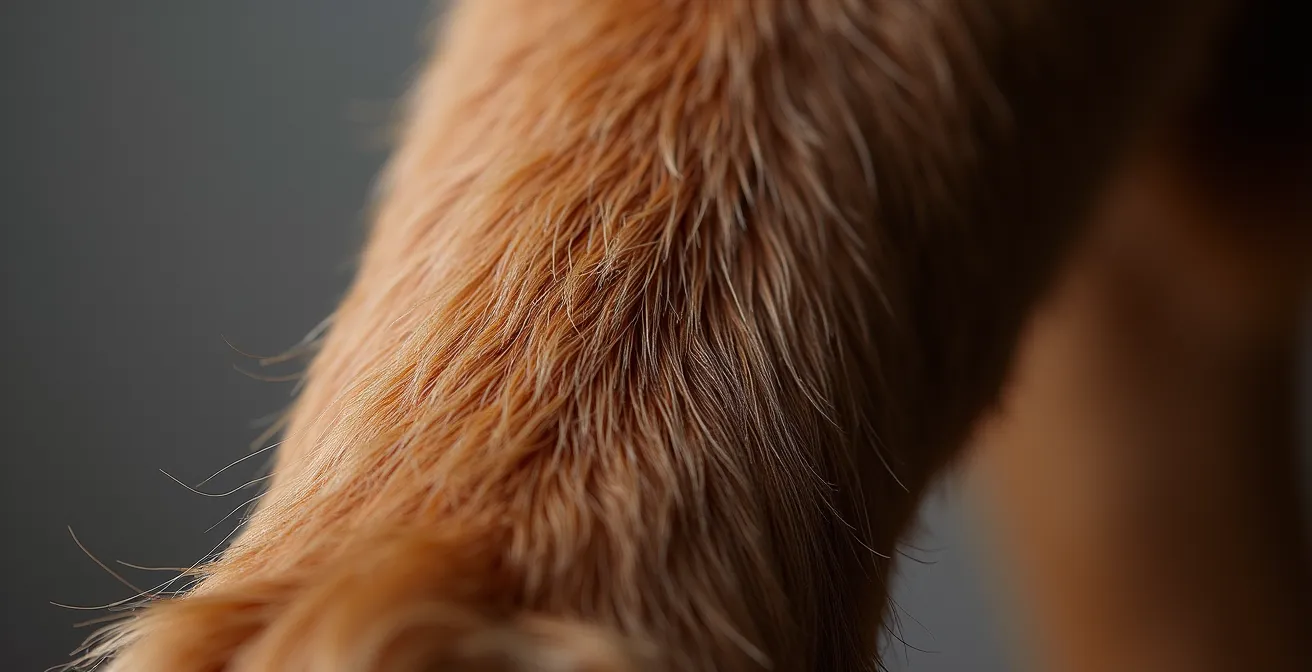
This microscopic view shows the difference between a healthy, intact skin barrier and one that has been stripped and disrupted by over-bathing, leading to inflammation and flaking.
The solution isn’t to stop bathing your dog, but to do it strategically. Use a gentle, pH-balanced shampoo specifically designed for dogs, and limit baths to only when necessary. For many dogs, this might be once every 1-3 months. Protecting the natural microbiome and lipid barrier is more effective than any topical treatment at preventing dryness and itch.
By preserving this natural armor, you allow the skin to heal and regulate itself, addressing the root cause of the irritation rather than just washing away the evidence.
Flea Dirt vs. Ordinary Dirt: How to Tell the Difference?
Sometimes, what appears to be dandruff or simple dirt is actually a sign of a more insidious problem: fleas. Even if you don’t see an adult flea, the presence of “flea dirt” is a definitive clue. Flea dirt is essentially flea feces, which consists of digested blood. Distinguishing it from regular soil or skin debris is a crucial first step in your investigation. The best method is the wet paper test. Collect some of the black specks from your dog’s coat and place them on a white paper towel. Add a drop of water. If the specks start to dissolve and turn reddish-brown, you’re looking at flea dirt. Regular dirt will simply look like wet dirt, retaining its black or brown color.
Identifying the type of speck is critical because it points to vastly different underlying issues and solutions. Flea dirt signals an active infestation that requires immediate, targeted treatment not just on your pet, but in your home. It’s a common misconception that the fleas on your pet are the whole problem; in reality, veterinary parasitology research indicates that for every five adult fleas on your dog, there are 95 more in various life stages (eggs, larvae, pupae) lurking in your carpets, bedding, and furniture. Simply treating the dog will not solve the infestation.
The following table, based on information from veterinary dermatology resources, can help you become a better detective when examining your dog’s skin.
| Type of Speck | Wet Paper Test Result | Location Pattern | Associated Symptoms |
|---|---|---|---|
| Flea Dirt | Turns reddish-brown | Base of tail, groin, neck | Intense itching, hot spots |
| Regular Dirt | Remains black/brown | Random distribution | None specific |
| Follicular Casts | No color change | Along hair shafts | Scaling, hair loss |
| Comedones | No color change | Chin, lips, skin folds | Bumps, possible infection |
Failing to address a flea problem means any other efforts to improve skin health—from dietary changes to bathing routines—will be futile, as the constant irritation will override any potential benefits.
Why One Flea Bite Can Cause Weeks of Misery for Allergic Dogs?
For a dog with Flea Allergy Dermatitis (FAD), a single flea bite is not a minor annoyance; it’s a trigger for a massive, systemic allergic reaction. This is the most common dermatological disease in American dogs, and it explains why some dogs are driven to frantic, whole-body scratching while others in the same household seem unaffected. The root of the problem lies in the flea’s saliva. It is not the bite itself that causes the intense itch, but the dog’s hypersensitive immune response to the foreign proteins injected with it. In fact, veterinary immunology research reveals that over 15 different proteins in flea saliva can act as potent allergens.
When an allergic dog is bitten, its immune system overreacts, releasing a cascade of histamine and other inflammatory chemicals throughout the body. This is why the itching isn’t confined to the bite site. The dog may develop hot spots on its back, chew its paws raw, and suffer from secondary skin infections far from where the flea ever was. The misery is profound and long-lasting. Even after the flea is gone, the inflammatory cycle it initiated can persist for two to three weeks, leading many owners to mistakenly believe the flea treatment isn’t working.
This is a critical distinction: you are not just fighting a parasite; you are managing a severe allergic condition. For these dogs, prevention is not just the best strategy—it is the only strategy. A year-round, high-quality flea preventative is non-negotiable. Missing a single dose can mean a month of suffering. This explains why a seemingly minor flea problem can cause such dramatic skin and coat deterioration, completely derailing any other health and wellness efforts.
Understanding FAD shifts the goal from “getting rid of fleas” to “preventing a single bite,” which is a much higher but necessary standard of care for these sensitive animals.
The Dull Coat Warning: Linking Fur Quality to Thyroid Issues
If you’ve ruled out dehydration, over-bathing, and parasites, but your dog’s coat remains dull, thin, or flaky, it’s time to look deeper into their internal systems. The skin and coat are often the first places where a metabolic or hormonal problem becomes visible. As highlighted by the WebMD Veterinary Team, “Changes in a dog’s skin color or coat texture can be a warning sign of several common metabolic or hormone problems.” One of the most common culprits is hypothyroidism, a condition where the thyroid gland doesn’t produce enough crucial hormones to regulate the body’s metabolism.
Thyroid hormones are essential for the healthy growth and maintenance of hair follicles. When levels are low, the hair growth cycle is arrested. Old hairs fall out but are not replaced, leading to thinning fur, particularly in a symmetrical pattern on the flanks of the body. The coat that remains is often dry and brittle, and the skin can become flaky, dark, and thickened. Another classic sign is the so-called “rat tail,” where the tail loses most of its hair. Because the metabolism has slowed, these dogs also tend to be lethargic, seek out warm spots, and gain weight despite not eating more. These are all critical pieces of the diagnostic puzzle.
Your Action Plan: Hypothyroidism Symptom Checklist for Dog Owners
- Coat Quality: Check for symmetrical hair loss on the trunk and flanks, and note if the fur feels dry or brittle.
- Tail Appearance: Look for the classic “rat tail” with hair loss that often spares the very tip.
- Behavioral Changes: Document any new lethargy, reluctance to exercise, or a constant search for warm places to sleep.
- Weight Management: Track any unexplained weight gain that occurs without a change in diet or appetite.
- Skin & Ears: Record any history of chronic or recurring skin infections, “hot spots,” or ear infections.
If your dog exhibits several of these symptoms, no dietary supplement or special shampoo will solve the problem. A conversation with your vet and a simple blood test are the necessary next steps to diagnose and manage the true root cause.
Hypothyroid Weight Gain: Why Dieting Doesn’t Work Without Medication?
One of the most frustrating symptoms for owners of hypothyroid dogs is the mysterious and stubborn weight gain. You reduce their food, increase their walks (as much as their lethargy allows), yet the scale doesn’t budge. This isn’t a failure of willpower or a simple “calories in, calories out” equation. It’s a fundamental breakdown of their metabolic engine. In hypothyroidism, the Basal Metabolic Rate (BMR)—the energy the body burns at rest—plummets. The body enters an extreme ‘energy conservation’ mode, treating every calorie as precious and storing it as fat.
Attempting to force weight loss through severe calorie restriction in this state is not only ineffective but can be harmful. The body will simply slow its metabolism further to compensate, increasing lethargy and potentially causing nutrient deficiencies. This is proven in clinical settings; a review of hypothyroid dog weight management showed that in many cases, calorie restriction alone failed to produce weight loss. The metabolic “handbrake” is on, and you cannot overcome it by simply pushing harder on the accelerator.
The only way to release the handbrake is to address the hormone deficiency directly. Once a veterinarian diagnoses hypothyroidism and the dog begins treatment with a synthetic thyroid hormone (levothyroxine), the BMR begins to normalize. The body’s engine revs back up to its proper speed. Only then does dietary management become effective. The same dogs that previously failed to lose weight can now achieve a healthy weight with a moderate, balanced diet. This clearly demonstrates that metabolic normalization through medication is the essential first step, before any dietary intervention can hope to succeed.
Ignoring the underlying hormonal issue while focusing only on diet is like trying to inflate a tire with a massive hole in it—a futile effort until you patch the hole first.
Key takeaways
- Your dog’s skin is a mirror of their internal health; flakes and dullness are signals, not the primary problem.
- Look beyond external factors like bathing habits and investigate systemic root causes like diet, hydration, and hormonal balance.
- Addressing underlying issues like hypothyroidism or flea allergies is essential before nutritional supplements like Omega-3s can be fully effective.
When to Expect Results After Starting Omega-3 for Skin?
Once underlying medical issues like hypothyroidism or allergies are managed, focusing on diet becomes the primary tool for rebuilding a healthy coat. Essential fatty acids, particularly Omega-3s like EPA and DHA from marine sources, are the foundational building blocks for a healthy skin lipid barrier and for controlling inflammation. However, owners often get discouraged when they don’t see immediate results. It’s crucial to understand the biological timeline of skin and hair regeneration.
You are not just applying a topical conditioner; you are rebuilding the skin from the inside out. This takes time. According to veterinary dermatology research, it takes approximately 21-30 days for new, healthier skin cells to form in the deepest layer of the epidermis and migrate to the surface. This means you won’t see the initial benefits of supplementation for at least three to four weeks. The full, dramatic effects on coat shine and density, which depend on new hair growth cycles, can take even longer, often between 60 to 90 days. Patience is key.
This timeline shows the progressive improvement, from initial reduction in flakiness to the eventual emergence of a deep, glossy shine as new, healthy hair grows in.

Furthermore, not all supplements are created equal. Clinical studies show that achieving the proper omega-6 to omega-3 ratio is vital for reducing inflammation. Most commercial dog foods are very high in inflammatory omega-6s. To counteract this, a therapeutic dose of high-quality omega-3s is often needed to bring that ratio down to a more ideal level, around 5:1. This is why simply adding a small pump of generic fish oil may not be enough to see a significant change.
Committing to a high-quality supplement for at least three months is the best way to fairly evaluate its impact on your dog’s skin and overall wellness.
Glucosamine vs. Green Lipped Mussel: Which Actually Repairs Joints?
While discussing skin health, it’s valuable to touch upon supplements that offer broader, systemic benefits, as this aligns with a holistic, root-cause approach. Many owners of senior dogs or active breeds are familiar with joint supplements. The two most common are glucosamine and Green Lipped Mussel (GLM). While both aim to support joint health, they work in fundamentally different ways, and one has significant crossover benefits for the skin. Glucosamine is primarily a building block. It provides the raw materials for synthesizing glycosaminoglycans, which are components of cartilage. Its anti-inflammatory effect is minimal.
Green Lipped Mussel, on the other hand, is a powerful, multi-faceted supplement. Its primary benefit comes from a unique profile of omega-3 fatty acids, including ETA (eicosatetraenoic acid), which exerts a potent anti-inflammatory effect. This is where the connection to skin health comes in. The same inflammatory pathways that cause joint pain are also involved in skin conditions like atopic dermatitis and allergic reactions. By providing systemic anti-inflammatory support, GLM can help calm irritated skin in addition to soothing sore joints. Therefore, for a dog with both skin issues and mobility concerns, GLM offers a more comprehensive, two-for-one benefit.
It’s important to have realistic expectations. As veterinary specialists emphasize, “Neither supplement can truly reverse significant cartilage loss. Their function is to slow the progression of degradation, reduce inflammation and pain.” They are for management, not a cure. The table below outlines their distinct actions.
| Supplement | Primary Action | Anti-inflammatory Effect | Skin Benefits |
|---|---|---|---|
| Glucosamine | Provides cartilage building blocks | Minimal | Indirect through mobility |
| Green Lipped Mussel | Contains unique omega-3s (ETA) | Potent, broad-spectrum | Direct anti-inflammatory for skin conditions |
| Combined Use | Synergistic structure + inflammation control | Enhanced | Comprehensive support |
Ultimately, choosing the right supplement is another part of a holistic strategy: selecting interventions that address multiple systems and support the body’s overall balance and well-being.
Frequently Asked Questions on Dry Flaky Skin: Is It the Weather or a Fatty Acid Deficiency?
Why does my dog itch everywhere when I only found one flea?
Flea Allergy Dermatitis causes a systemic reaction where histamine is released throughout the body, not just at the bite site, leading to whole-body itching.
How long does the itching last after flea treatment?
The allergic reaction can persist for 2-3 weeks after the last flea bite due to ongoing inflammation and secondary infections that developed from scratching.
Can indoor dogs develop flea allergies?
Yes, fleas can be brought inside on clothing or other pets. Even one flea entering the home can trigger severe reactions in allergic dogs.