
The vast majority of homemade pet food recipes found online are nutritionally deficient and can cause long-term, irreversible harm to your pet.
- Imbalanced Calcium-to-Phosphorus ratios risk severe skeletal disease and organ damage.
- Incorrect Omega fatty acid balances promote chronic, systemic inflammation.
- Volume-based measurements (cups) lead to ‘invisible’ obesity and metabolic stress.
Recommendation: Discontinue use of unverified online recipes and consult a board-certified veterinary nutritionist to formulate a diet that is biochemically complete for your pet’s specific needs.
The decision to prepare your dog’s food at home often stems from a place of deep care. You want to provide fresh, wholesome ingredients, free from the preservatives and fillers found in some commercial kibbles. This intention is commendable, but it is built on a dangerous misconception: that “fresh” automatically equals “nutritionally complete.” In clinical practice, we see the consequences of this well-meaning but flawed logic. Owners follow popular online recipes, believing they are providing superior care, while unknowingly creating subclinical deficiencies that manifest years later as chronic disease.
The common advice is to “mix some protein, carbs, and vegetables,” perhaps adding a generic multivitamin for good measure. This approach treats diet formulation like cooking a family dinner, when it is, in fact, a precise biochemical equation. Every ingredient and its quantity alters critical nutrient ratios that govern everything from bone integrity to inflammatory response. A diet is not just a collection of ingredients; it is a complex system where the interplay between nutrients is paramount. Overlooking this complexity is the single greatest risk in unsupervised home cooking for pets.
This article will move beyond the platitudes of “balanced diets” to deconstruct the specific, high-stakes metabolic failures that occur when this biochemical equation is ignored. We are not simply listing ingredients. We are dissecting the scientific principles of nutrient ratios, caloric density, and micronutrient bioavailability. The goal is to arm you with the critical understanding necessary to see a pet’s diet not as a recipe, but as a scientific formulation, ensuring your desire to provide the best for your pet does not inadvertently cause them harm.
For those who prefer a condensed visual summary, the following video provides an excellent overview of the key considerations when preparing a veterinarian-approved homemade diet, complementing the detailed scientific principles discussed in this guide.
To navigate the complexities of proper pet nutrition, this guide is structured to address the most critical and commonly misunderstood aspects of homemade diets. The following sections will provide a clear, science-based breakdown of each topic.
Summary: Deconstructing the Nutritional Risks of Homemade Pet Diets
- Why High Protein Isn’t Always Better for Older Dogs?
- How to Use Fiber Sources to Regulate Stool Quality?
- Omega-6 vs. Omega-3:5 Daily Habits That Prevent 80% of Common Vet Visits
- The Rickets Risk: Failing to Balance Calcium and Phosphorus in Meat Diets
- When to Increase Caloric Density for Working Dogs?
- The Iodine Deficiency Error in Unsupervised Home Cooking
- Kitchen Scale vs. Measuring Cup: The Accuracy Difference That Sheds Pounds
- When to Hire a Pet Nutritionist Instead of Asking Your Vet?
Why High Protein Isn’t Always Better for Older Dogs?
A prevailing myth in canine nutrition is that “more protein is always better,” especially for maintaining muscle mass in senior dogs. While protein is essential, this oversimplification ignores a critical biochemical relationship: the link between protein and phosphorus. Most high-quality protein sources, particularly meats, are also rich in phosphorus. For a young, healthy dog with robust kidney function, this is not a concern. However, as dogs age, their renal efficiency can decline, sometimes without obvious clinical signs.
In this context, a high-protein diet inadvertently becomes a high-phosphorus diet. The aging kidneys must work harder to filter and excrete this excess phosphorus. Over time, this sustained workload can accelerate the progression of chronic kidney disease (CKD). The goal for a senior dog, particularly one with or at risk for renal issues, is not simply high protein, but an optimal protein level that meets their needs without overloading their system with phosphorus. This requires careful selection of protein sources and a precisely calculated diet.
Therefore, the focus shifts from a crude percentage of protein to the quality of that protein and its phosphorus content. A board-certified veterinary nutritionist will formulate a diet that provides highly digestible protein with just enough phosphorus to be adequate, but not excessive. This is a delicate balance that generic, high-protein recipes found online almost always fail to achieve, potentially shortening a senior dog’s lifespan under the guise of “healthy” feeding.
How to Use Fiber Sources to Regulate Stool Quality?
Fiber is often an afterthought in homemade diets, yet it is a powerful tool for regulating gastrointestinal health and achieving consistent stool quality. Many owners do not realize that fiber is not a monolithic ingredient; it is broadly categorized into two types, soluble and insoluble, each with a distinct function in the digestive tract. Understanding how to leverage both is key to managing conditions ranging from diarrhea to constipation.
Soluble fiber, found in ingredients like pumpkin, psyllium husk, and oatmeal, absorbs water to form a gel-like substance in the colon. This action is incredibly effective for managing diarrhea, as it slows down transit time and helps form more solid stools. Conversely, insoluble fiber, present in sources like green beans, brown rice, and cellulose, does not dissolve in water. It acts as a “bulking agent,” increasing the size and weight of the stool, which stimulates movement through the intestines and provides relief from constipation.
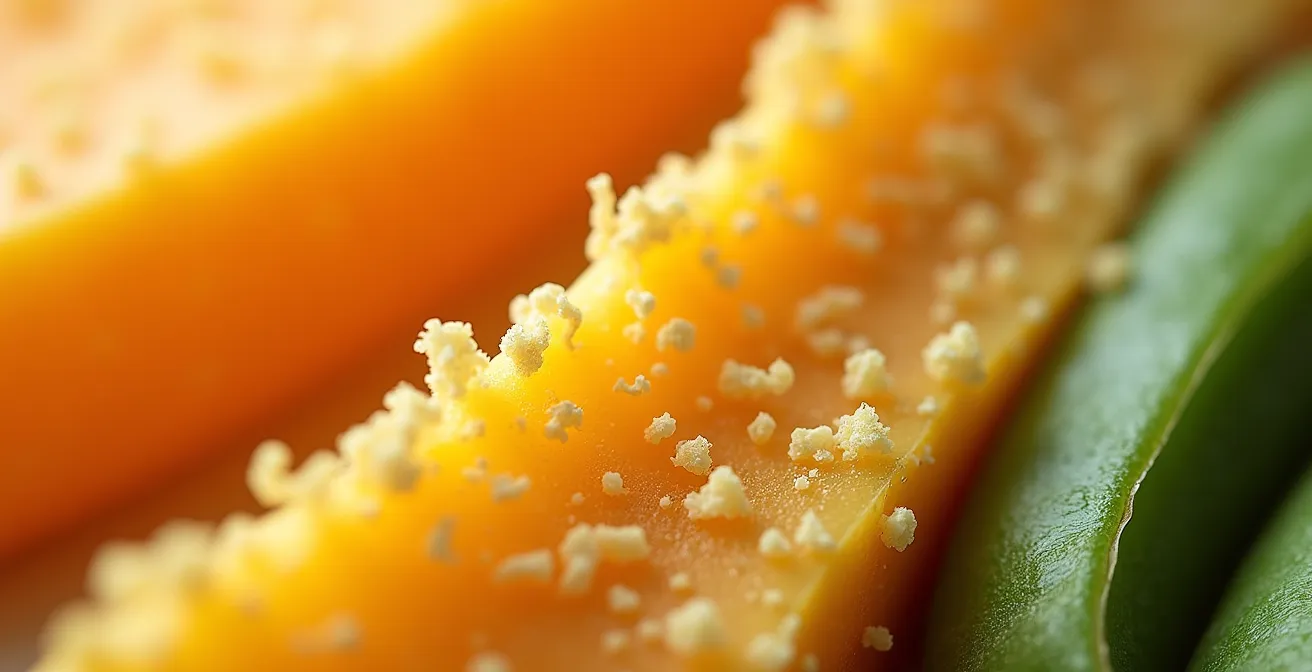
As the image above illustrates with its textural variety, different fiber sources have vastly different physical properties. A successful homemade diet uses these properties strategically. A dog prone to loose stools might benefit from a small amount of psyllium, while a dog struggling with irregularity could see improvement with finely chopped green beans added to their meals. The process involves careful titration, starting with a low percentage of fiber (around 1-2% of the diet’s dry matter) and adjusting based on the dog’s response, using a stool scoring chart to monitor changes objectively. This nuanced approach is far more effective than randomly adding vegetables to a recipe.
Omega-6 vs. Omega-3: 5 Daily Habits That Prevent 80% of Common Vet Visits
The balance between Omega-6 and Omega-3 fatty acids is one of the most powerful, yet commonly ignored, factors in a dog’s long-term health. These are not just “fats”; they are precursors to signaling molecules that regulate inflammation throughout the body. Most homemade diets, especially those heavy in poultry and vegetable oils, are overwhelmingly high in Omega-6 fatty acids (like arachidonic acid). While some Omega-6 is necessary, an excessive amount creates a constant, low-grade, pro-inflammatory state.
This is where Omega-3 fatty acids (like EPA and DHA from fish oil) become critical. They produce anti-inflammatory signaling molecules. The key is not the absolute amount of either fat, but their ratio. A diet with an Omega-6 to Omega-3 ratio of 25:1 or higher keeps the body’s “inflammation switch” permanently on. A ratio closer to 5:1 helps modulate and control inflammatory responses, which is crucial for managing conditions like arthritis, skin allergies, and even certain cancers. As veterinary nutritionist Dr. Laura Gaylord notes in Today’s Veterinary Practice:
Prostaglandins and leukotrienes derived from arachidonic acid (omega-6) are proinflammatory, whereas those from EPA and DHA are anti-inflammatory, explaining why an imbalanced ratio leaves the pro-inflammation switch stuck on.
– Laura Gaylord, DVM, DACVN, Today’s Veterinary Practice
Simply adding a pump of fish oil to a poorly formulated diet is not enough and can be risky. The formulation must account for the Omega-6 content of all other ingredients to achieve a therapeutic ratio. The table below, based on clinical findings, shows how different ratios directly impact health outcomes, demonstrating that this is a matter of precise biochemical balancing.
| Omega-6:Omega-3 Ratio | Health Impact | Study Results |
|---|---|---|
| 5.3:1 | Optimal anti-inflammatory | Significantly different from 95.8:1 in wound healing |
| 10.4:1 | Moderate benefit | Balanced inflammatory response |
| 25:1 | Standard commercial food | Baseline inflammatory markers |
| 95.8:1 | Pro-inflammatory | Increased PGE2 metabolites |
The Rickets Risk: Failing to Balance Calcium and Phosphorus in Meat Diets
Of all the potential errors in homemade pet diets, the failure to correctly balance calcium and phosphorus is the most common and one of the most devastating. Many owners assume that a meat-heavy diet is “natural” and therefore complete. However, meat is extremely high in phosphorus and contains virtually no calcium. This creates a severely inverted Calcium-to-Phosphorus (Ca:P) ratio, which has profound metabolic consequences, particularly for growing puppies.
The ideal Ca:P ratio for a dog is between 1.1:1 and 2:1. When the diet provides excessive phosphorus and negligible calcium, the body will do whatever it takes to maintain blood calcium levels, which are critical for nerve and muscle function. It achieves this by pulling calcium directly from the largest available source: the bones. This process, known as nutritional secondary hyperparathyroidism, leads to rubbery, weak bones that are prone to fracture. In puppies, it causes rickets, resulting in deformed limbs, pain, and lifelong skeletal abnormalities.
This is not a rare occurrence. Groundbreaking UC Davis research reveals that only 9 of 200 homemade dog food recipes analyzed provided all essential nutrients according to AAFCO standards, with calcium being one of the most frequent and severe deficiencies. Simply adding a calcium supplement is also dangerous, as too much calcium can be just as harmful, leading to developmental orthopedic diseases. The calcium must be provided in the correct proportion to the phosphorus present in the entire diet, a calculation that requires a detailed analysis of every ingredient.
When to Increase Caloric Density for Working Dogs?
The nutritional needs of a sedentary house pet are vastly different from those of an athletic or working dog. For canine athletes involved in activities like agility, sled pulling, or herding, energy expenditure skyrockets. Meeting these demands isn’t just about feeding larger portions; it requires a strategic increase in the diet’s caloric density, primarily through fat.
Fat is the most efficient energy source for endurance work, providing more than twice the calories per gram compared to protein or carbohydrates. A standard adult maintenance diet might contain 15% fat on a dry matter basis. For an endurance working dog, this needs to be increased to 25-30% or even higher. This higher fat content allows the dog to consume the necessary calories for fuel without having to eat an impractically large volume of food, which could cause gastrointestinal upset.

Nutrient timing also becomes critical. The dietary strategy for a working dog should include specific protocols for pre- and post-exercise meals to optimize performance and recovery.
- Pre-work (1-2 hours before): A small, easily digestible meal can top off glycogen stores.
- During work: Consistent access to fresh water is paramount to prevent dehydration.
- Post-work (within 1 hour): A meal higher in both protein and fat is crucial for muscle repair and replenishing energy reserves.
This level of specific formulation, adjusting macronutrient percentages and timing meals around activity, goes far beyond a simple recipe. It requires a dynamic approach that adapts to the dog’s training intensity and body condition score, ensuring they have the fuel to perform and the building blocks to recover without gaining excess weight.
The Iodine Deficiency Error in Unsupervised Home Cooking
While macronutrient imbalances like the Ca:P ratio are common, deficiencies in micronutrients can be just as insidious. Iodine is a prime example. This trace mineral is essential for the production of thyroid hormones, which regulate the body’s entire metabolism. An iodine deficiency can lead to hypothyroidism, causing lethargy, weight gain, skin problems, and a host of other metabolic issues. Unfortunately, the common ingredients used in homemade diets are often poor sources of iodine.
A study by Texas A&M’s Dog Aging Project found that the most common ingredients in homemade diets were meat (90%) and vegetables (65%), neither of which are reliable sources of iodine. The problem is widespread; the same project revealed that only 6% of 1,726 homemade dog diets analyzed met essential nutritional requirements. This highlights a critical gap: well-meaning owners believe they are providing variety and quality with fresh meats and produce, but are failing to supply crucial trace minerals.
Some owners attempt to solve this by adding a human multivitamin, but this is a dangerous practice. Human supplements are not formulated for canine needs and can create toxicities of other nutrients like Vitamin D. The correct approach is to use a specific, properly sourced iodine supplement, such as kelp powder or iodized salt, in a precisely calculated amount. The line between deficiency and toxicity for trace minerals is very fine. This is a clear example of why diet formulation is a science; it requires a deep understanding of the nutrient content of each ingredient and how to fill the gaps safely and accurately.
Kitchen Scale vs. Measuring Cup: The Accuracy Difference That Sheds Pounds
Even with a perfectly formulated recipe from a veterinary nutritionist, there is one final step where the entire plan can be derailed: measurement. The vast majority of pet owners, and indeed most recipes found online, use volume-based measurements like cups and scoops. This method is notoriously inaccurate and is a primary driver of the pet obesity epidemic.
The density of kibble, ground meat, or cooked rice can vary significantly. A “cup” of one brand of kibble can contain 20% more calories than a cup of another. Even within the same bag, settling can change the density. A heaping cup versus a level cup can represent a significant caloric surplus. A kitchen scale eliminates this guesswork entirely. Weighing food in grams is the only way to ensure the dog is receiving the exact amount of calories and nutrients prescribed by the formula. This precision is not obsessive; it is fundamental to long-term health management.
Case Study: The Invisible Overage
Research on measurement error provides a stark illustration of this problem. A consistent 15% overestimation in portion size when using a measuring cup—a very realistic margin of error—can result in the dog receiving over two full days of extra calories every single month. Over the course of a year, this “invisible overage” can account for 5 to 10 pounds of weight gain in a medium-sized dog. This gradual weight creep puts immense strain on joints, increases the risk of diabetes and heart disease, and can shorten the pet’s lifespan, all because of an imprecise measuring tool.
This is where the theoretical science of nutrition meets practical application. A perfectly balanced “biochemical equation” is useless if the inputs are consistently wrong. Switching from a measuring cup to a digital kitchen scale is one of the most impactful changes an owner can make to ensure the diet they are so carefully preparing is actually delivering the intended results.
Key Takeaways
- Homemade diets are a high-risk endeavor; over 90% of online recipes are nutritionally incomplete and can cause disease.
- Specific nutrient ratios (Ca:P, Omega-6:3) are more critical than the simple presence of ingredients. Imbalances lead to skeletal, inflammatory, and metabolic disorders.
- Accurate measurement by weight (grams) using a kitchen scale is non-negotiable. Measuring by volume (cups) is a leading cause of accidental overfeeding and obesity.
When to Hire a Pet Nutritionist Instead of Asking Your Vet?
While your primary care veterinarian is your first-line partner in your pet’s health, their training in clinical nutrition can be limited. Most veterinary school curricula provide only a brief overview of nutrition. As a result, many vets are well-equipped to recommend therapeutic commercial diets but may not have the specialized knowledge to formulate a complete and balanced homemade diet from scratch. This is where a board-certified veterinary nutritionist (a DACVN) becomes essential.
A DACVN has undergone years of additional, intensive, post-doctoral training focused exclusively on animal nutrition. They are the definitive experts in formulating diets for all life stages and medical conditions. The decision to consult a nutritionist is not a slight to your vet but an acknowledgement that you require a specialist. While research on pet owner practices shows that only 36.9% of homemade diet users consulted a veterinary nutritionist, doing so is the only way to ensure safety and nutritional adequacy. As Dr. Katie Tolbert of Texas A&M states, “Board certification ensures that the nutritionist has received advanced training from an accredited program. Work with a board-certified veterinary nutritionist to create a healthy diet tailored to your pet.”
So, how do you know when to make that call? The following audit will help you identify the red flags indicating that a specialist’s input is not just beneficial, but critical.
Action Plan: Auditing Your Need for a Nutritionist
- Identify points of contact: List all chronic or complex medical conditions your pet has. This includes IBD, kidney disease, pancreatitis, skin allergies, or multiple concurrent diseases.
- Collect current diet data: Inventory the diet you are considering. Is it for a critical growth stage (puppy), a senior with changing needs, or a high-performance athletic dog?
- Assess for coherence: Confront your current advice with your goals. Did your primary vet’s nutritional guidance consist solely of recommending a specific prescription food brand without discussing formulation?
- Pinpoint unresolved issues: Have previous dietary changes, whether to different commercial foods or simple homemade attempts, failed to resolve ongoing health issues like poor stool quality or skin flare-ups?
- Establish an integration plan: If you checked “yes” to any points in steps 1-4, your immediate plan should be to stop using unverified recipes and schedule a consultation with a DACVN. This is the priority action.
Ultimately, if you are committed to the path of home-cooking for the long term, or if your pet has any health concerns whatsoever, a consultation with a board-certified veterinary nutritionist is the only responsible choice. It transforms a risky guessing game into a safe, scientific, and truly beneficial health strategy.
To ensure your pet’s health and safety, the next logical step is to seek a professional formulation. You can find a board-certified veterinary nutritionist in your area through the American College of Veterinary Nutrition’s online directory.