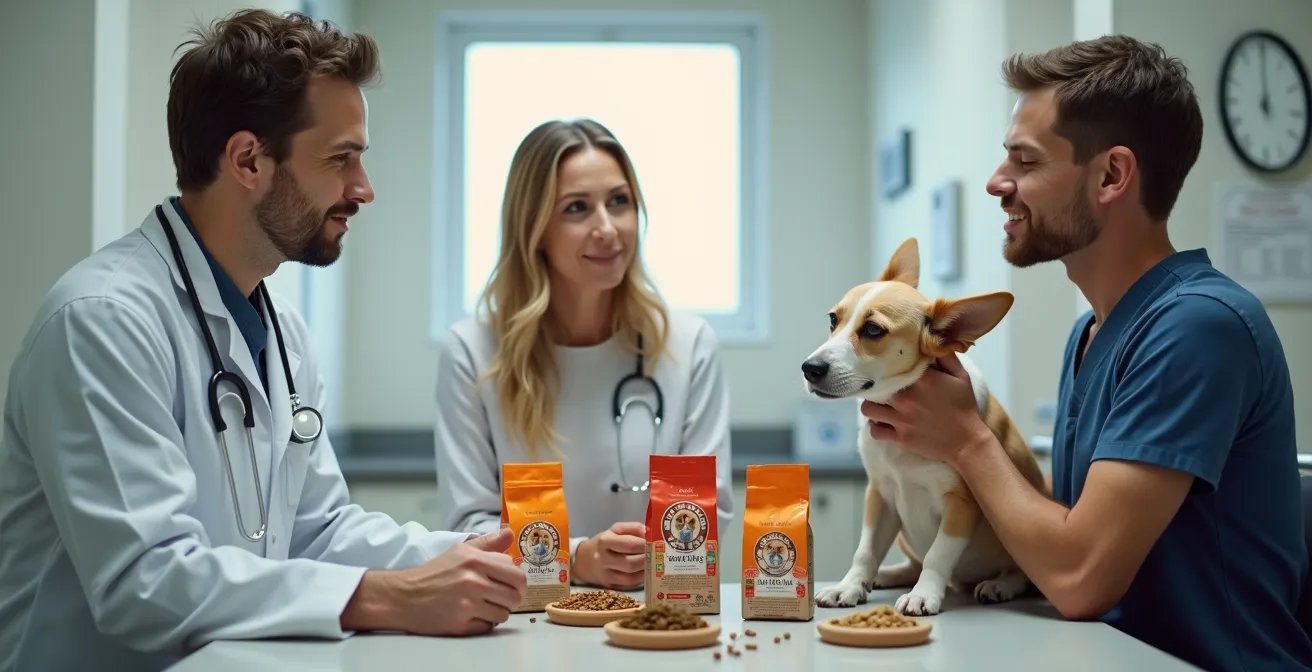
The high price of a prescription diet isn’t for exotic ingredients; it’s for verifiable clinical outcomes and a level of nutritional precision that over-the-counter foods cannot legally provide.
- Therapeutic diets undergo rigorous, peer-reviewed feeding trials to prove they can manage or treat specific medical conditions, from dissolving bladder stones to mitigating allergic reactions.
- A cost-per-calorie analysis often reveals the price gap between prescription and premium wellness foods is significantly smaller than the price-per-bag suggests.
Recommendation: Evaluate the diet based on the clinical evidence for your pet’s specific diagnosis and your veterinarian’s rationale, not by comparing its ingredient list to a standard food.
The conversation usually starts at the checkout counter of your vet’s office. You see the final bill, dominated by a bag of specialized kibble, and the sticker shock hits. It’s often 40% or more expensive than even the premium “human-grade” food you considered buying. The immediate, cynical thought is hard to ignore: “Am I being scammed?” In a market saturated with marketing buzzwords like “ancestral,” “grain-free,” and “holistic,” it’s a fair question. You’re told this food is a medical necessity, yet the ingredient list might not look drastically different from a high-end commercial brand.
This skepticism is valid. Many owners feel pressured to accept the recommendation without a clear understanding of what they’re paying for, beyond the vague assurance that “it’s for research.” But what if the real value isn’t in the ingredients themselves, but in something far less visible? The difference lies in the specific, measurable, and often counter-intuitive science of nutrient profiles, bioavailability, and medical-grade quality control. These diets are often formulated to achieve a precise clinical outcome, a function that legally separates them from any food you can buy at a pet store.
This guide is not here to sell you on expensive food. It’s designed to be an investigative tool. We will dissect the science behind common therapeutic diets, arm you with the right questions to ask, and provide a framework to critically assess whether this prescription is an indispensable medical tool for your pet or an unjustified upsell. We’ll explore why low-protein diets can paradoxically preserve muscle, what “hydrolyzed” really means, and when it might be time to consult a specialist instead of just your family vet.
text
This comprehensive guide will break down the science, cost, and practical considerations of therapeutic diets. Explore the sections below to find the specific answers you need to make an informed decision for your pet’s health and your wallet.
Summary: Prescription Diets: A Skeptical Owner’s Guide to the Cost and Science
- Why Kidney Diets Low in Protein Actually Preserve Muscle Mass?
- How to Switch to a Therapeutic Diet Without Causing Diarrhea?
- Store-Bought “Urinary” Food vs. Vet Script: What Is the Difference?
- The Relapse Risk of Cheating on a Hydrolyzed Protein Diet
- When Can You Transition Off a Gastrointestinal Diet?
- Pre-Existing Conditions: Will Insurance Cover a Congenital Flaw?
- Custom Meal Plan vs. Pre-Made Raw: Which Is More Cost-Effective?
- When to Hire a Pet Nutritionist Instead of Asking Your Vet?
Why Kidney Diets Low in Protein Actually Preserve Muscle Mass?
The recommendation for a low-protein diet for a pet with kidney disease feels deeply counter-intuitive. We associate protein with strength and muscle, so restricting it seems like it would cause wasting. However, the logic is rooted in managing the workload of failing kidneys. Healthy kidneys are brilliant at filtering waste products from protein metabolism, primarily phosphorus and urea. When kidneys fail, these substances build up in the bloodstream—a condition called uremia—which makes the pet feel nauseous, lethargic, and unwilling to eat.
The goal of a therapeutic kidney diet is not to starve the body of protein, but to provide a highly-controlled, high-quality amount that meets essential needs while drastically reducing the toxic byproducts. By lowering the kidneys’ filtration burden, the pet feels significantly better. This improved well-being leads to a better appetite and more activity, which in turn helps preserve existing muscle mass far more effectively than a high-protein diet that makes them too sick to eat. It’s a classic case of “less is more.”
It’s worth noting there is some debate in the veterinary community, with some clinicians reporting success with moderate levels of very high-quality protein in fresh or raw diets. Proponents argue that these diets, like those in Dr. Barbara Royal’s clinical experience, can lead to patients living well beyond their prognoses. However, the established, mainstream veterinary consensus supports restricted, high-quality protein as the safest and most proven approach to slowing disease progression and improving quality of life in the majority of cases.
How to Switch to a Therapeutic Diet Without Causing Diarrhea?
After you’ve made the decision to invest in a therapeutic diet, the last thing you want is for it to cause digestive upset. A sudden switch in food can shock your pet’s gut microbiome, leading to diarrhea, vomiting, or food refusal. A gradual transition is not just a suggestion; it’s a critical step to ensure success. The standard protocol is a slow introduction over seven days, allowing the digestive system time to adapt to the new nutrient profile and ingredients.
The process is straightforward. You begin by mixing a small amount of the new food with the old, gradually increasing the proportion of the new diet each day. If at any point you notice signs of GI upset like soft stools, simply hold the current ratio for an extra day or two until the system stabilizes before proceeding. When changing not just ingredients but also texture—for instance, from kibble to a wet therapeutic diet—the transition might need to be even slower, sometimes taking up to two months for particularly sensitive or picky pets.

A helpful tip, especially when changing textures, is to place the two foods in separate bowls side-by-side. This allows your pet to investigate the new food at their own pace. The key is patience and observation. A successful transition ensures your pet gets the full benefit of their new medical diet without the setback of digestive trouble. For a clear plan, follow this standard 7-day schedule: Days 1-2: 75% old food, 25% new food. Days 3-4: 50% old food, 50% new food. Days 5-6: 25% old food, 75% new food. Day 7: 100% new food.
Store-Bought “Urinary” Food vs. Vet Script: What Is the Difference?
This is where skepticism often peaks. You see a bag labeled “urinary health” at the pet store for half the price of the prescription version. What’s the catch? The difference is not in the marketing, but in the medical function and legal classification. As the Tufts Clinical Nutrition Service highlights, the cost driver for therapeutic diets is not the ingredients, but the science and rigorous testing behind the specific formulation.
It’s not the ingredients that make therapeutic diets expensive—it’s the science that goes into putting them all together. Testing kidney diets involves feeding the diets to pets with kidney disease for many months and monitoring how they do compared to pets fed more typical diets.
– Tufts Clinical Nutrition Service, Tufts Now
An over-the-counter (OTC) “urinary” food is designed for maintenance in a healthy pet. It might contain ingredients like cranberries or have slightly adjusted mineral levels to help prevent problems from starting. A prescription urinary diet, however, is a tool for managing a specific medical condition, such as actively dissolving existing struvite bladder stones. It is formulated with a precise pH target (typically 6.0-6.4) and controlled mineral levels to create an environment in the bladder where stones cannot exist and will dissolve over time. This is a medical action, and the diet has undergone extensive clinical feeding trials to prove its efficacy, a process OTC foods do not have to endure. This distinction is critical—one is for wellness, the other is a treatment.
The table below breaks down the key distinctions between these two types of diets, which often appear similar on the surface but serve fundamentally different purposes, as outlined in a comparative analysis by veterinary nutritionists.
| Feature | OTC ‘Urinary’ Food | Prescription Diet |
|---|---|---|
| Purpose | Maintenance for healthy pets | Managing specific medical conditions like kidney disease |
| Quality Control | Standard manufacturing | More stringent than OTC diets |
| Cost per 100 kcal | Lower baseline cost | Can be competitively priced when compared per 100 kcal |
| Clinical Testing | Limited or none | Extensive feeding trials and research |
| pH Control | General support | Precise pH targeting (6.0-6.4) |
The Relapse Risk of Cheating on a Hydrolyzed Protein Diet
For pets with food allergies or inflammatory bowel disease (IBD), a hydrolyzed protein diet can feel like a miracle. The science is elegant: proteins are broken down (hydrolyzed) into such tiny fragments that the pet’s immune system no longer recognizes them as allergens, preventing an inflammatory reaction. The result is often a dramatic reduction in skin itching, ear infections, or digestive upset. The problem? These diets are only effective with 100% strict adherence. Even a single treat or a scrap from the table can trigger a full-blown relapse.
This is the diet’s greatest weakness, and compliance is a huge challenge for pet owners. In fact, industry data reveals that traditional prescription diets often see 40-50% discontinuation rates within 6 months, frequently due to perceived failure caused by inadvertent “cheating.” The immune system doesn’t grade on a curve; one exposure to the offending protein is enough to restart the inflammatory cascade, making it seem like the expensive food isn’t working.

Success hinges on eliminating all other potential protein sources. This goes beyond obvious treats and includes flavored medications, dental chews, and even the residue in a food bowl that wasn’t washed thoroughly. Veterinary dermatology studies show significant improvement in most pets with food allergies within 4-12 weeks, but only when this strict protocol is followed. Cheating not only risks a medical relapse but also wastes the significant financial investment made in the therapeutic food.
When Can You Transition Off a Gastrointestinal Diet?
A gastrointestinal (GI) diet is typically a short-term solution for acute issues like pancreatitis, severe diarrhea, or recovery from surgery. These diets are formulated to be highly digestible and low in residue, giving the inflamed gut a chance to rest and heal. But once your pet’s stools are normal and they’re feeling better, it’s natural to wonder, “Do I have to buy this expensive food forever?” The answer, in many cases, is no. However, the decision to transition off must be guided by clinical signs, not just a few good days.
As experts at Atlantic Veterinary Internal Medicine & Oncology state, the duration of use depends entirely on the underlying condition. It could be short-term or part of lifelong care for chronic diseases.
In some cases, your pet may only need a prescription diet for a short period—such as during recovery from illness. In other cases, particularly with chronic or progressive conditions, a prescription diet may be part of their lifelong care.
– Atlantic Veterinary Internal Medicine & Oncology, AVIMO Clinical Guidelines
Veterinarians look for a consistent period of stability before recommending a transition back to a maintenance diet. This includes objective milestones. Key clinical exit criteria include at least two months of consistently normal stools, a stable body weight for eight or more weeks, complete resolution of vomiting, and normal results on specific bloodwork panels. For chronic conditions like IBD or certain forms of kidney disease, the GI diet may be a permanent part of management. Forgetting the underlying issue and stopping the diet prematurely is a common cause of relapse. The transition off a GI diet should always be a collaborative decision with your vet, based on data, not just observation.
Pre-Existing Conditions: Will Insurance Cover a Congenital Flaw?
For many owners, the high recurring cost of a therapeutic diet prompts an immediate look at their pet insurance policy. Unfortunately, this is often a dead end. Coverage for prescription food is far from standard, and the fine print around pre-existing conditions is a major hurdle. The hard truth is that most insurance plans are designed to cover future, unforeseen accidents and illnesses, not conditions that were present or diagnosed before the policy took effect.
A congenital flaw, like a portosystemic shunt or certain heart defects, is by definition a pre-existing condition if it was diagnosed or showed symptoms before coverage began. Therefore, the therapeutic diet required to manage it will almost certainly be excluded. The situation is bleak, as market research reveals only 12% of pet insurance policies cover prescription nutrition in the first place, and those that do have strict rules. Even if a condition is diagnosed *after* coverage starts, insurers may use “bilateral exclusions”—for example, if your dog had a cruciate tear in its left leg before coverage, the policy may not cover a similar tear in the right leg, or the special diet needed for recovery.
While there is a trend toward more plans covering prescription diets, affordability remains a challenge, and navigating the claims process requires meticulous documentation. You will need veterinary diagnosis records, the formal prescription, and detailed invoices proving the medical necessity of the food. For most owners facing a new diagnosis, it’s safer to assume the cost of the diet will be an out-of-pocket expense and budget accordingly.
Custom Meal Plan vs. Pre-Made Raw: Which Is More Cost-Effective?
For the owner who is convinced of the need for a therapeutic diet but remains skeptical of large pet food corporations, the idea of a custom-formulated or commercial raw diet is appealing. The assumption is that you can achieve the same or better results for less money by controlling the ingredients yourself. However, a true cost-effectiveness analysis must account for hidden costs like time, initial consultations, and reformulation fees.
A custom meal plan formulated by a board-certified veterinary nutritionist (a DACVN) offers the ultimate in precision but comes with a high upfront cost for the initial consultation and plan, often running from $300 to $500. Then there’s the significant time investment of sourcing ingredients and preparing meals, which can easily be 5-10 hours per week. Pre-made therapeutic diets, whether kibble or a fresh-food option like JustFoodForDogs, offer convenience and proven success rates with minimal time investment. For example, one major prescription weight-loss diet showed a 96% success rate in dogs losing weight in two months in a clinical trial.
This table provides a cost analysis to help you compare the financial and practical implications of choosing a custom-formulated diet versus a pre-made commercial therapeutic food.
| Cost Factor | Custom Meal Plan | Pre-Made Therapeutic |
|---|---|---|
| Initial Consultation | $300-$500 (DACVN nutritionist) | Included in vet visit |
| Monthly Food Cost | $120-200 (medium dog) | $80-150 for medium-sized dogs |
| Success Rate | Variable based on prep consistency | 96% of dogs lost weight in two months (Hill’s Metabolic) |
| Time Investment | 5-10 hours/week prep | Minimal (pour and serve) |
| Re-formulation Costs | $150-250 per adjustment | No additional cost |
When all factors are considered, a pre-made therapeutic diet is often more cost-effective for most owners, especially when the value of your time is factored in. The custom route is an excellent option for pets with multiple complex diseases or for owners with the budget and dedication to see it through, but it is rarely the cheaper path.
Key Takeaways
- Prescription diets are formulated and tested for specific clinical outcomes, not just general health, which is the primary driver of their cost.
- The price reflects extensive research, strict feeding trials to prove efficacy, and higher quality control standards that are not required for over-the-counter foods.
- Strict adherence is non-negotiable; “cheating” on specialized diets like hydrolyzed protein formulas can negate all potential benefits and financial investment.
When to Hire a Pet Nutritionist Instead of Asking Your Vet?
Your primary care veterinarian is the frontline expert for your pet’s health and the correct starting point for any nutritional discussion. They can diagnose conditions and prescribe the appropriate first-line therapeutic diet. However, there are complex situations where their general expertise may reach its limit. This is the point at which you, as an empowered and skeptical owner, should consider escalating to a specialist: a board-certified veterinary nutritionist (DACVN).
A DACVN is a veterinarian who has undergone years of additional, rigorous residency training focused solely on animal nutrition. As Dr. Donna Raditic, a respected voice in the field, points out, these Diplomates of the American College of Veterinary Nutrition are the ultimate resource for complex cases. They are the experts who often consult with the manufacturers themselves. You should consider hiring one when your pet has multiple diseases with conflicting dietary needs (e.g., kidney disease requiring low protein and pancreatitis requiring low fat), when your pet has failed to respond to or refuses all commercial therapeutic options, or if you are strongly committed to a homemade diet and need it to be balanced and safe.
Hiring a nutritionist is not a rejection of your vet’s advice but an intelligent escalation for a complex problem. It transforms you from a passive recipient of a prescription to an active manager of your pet’s health, armed with a specialist’s opinion. This is the final step in due diligence for a skeptical owner who wants the absolute best, evidence-based solution.
Action Plan: When to Escalate to a Nutrition Specialist
- Multiple Diseases: Your pet has been diagnosed with two or more conditions that commercial diets cannot manage simultaneously (e.g., a dog with both CKD and pancreatitis).
- Dietary Failure: You have diligently tried one or more recommended prescription diets without seeing the expected clinical improvement.
- Complete Refusal: Your pet absolutely refuses to eat any of the available commercial therapeutic options, and all palatability strategies have failed.
- Suspected Allergies: Your pet has a suspected allergic reaction to an inert component (like a preservative or fiber source) within commercial therapeutic diets.
- Owner Commitment: You are philosophically opposed to conventional processed pet foods and want to pursue a properly formulated homemade or raw diet for a medical condition.
Ultimately, the decision to use a prescription diet is a medical and financial one. By understanding the science, evaluating the evidence, and knowing when to ask for a specialist’s opinion, you can move past simple sticker shock. You become an informed advocate for your pet, capable of making a rational decision about whether the 40% premium is a justifiable cost for a healthier, longer life.
Frequently Asked Questions About Prescription Diets: Are They Worth the 40% Extra Cost?
Are prescription diets covered if my pet has a pre-existing condition?
While more pet insurance plans are beginning to offer coverage for prescription diets, improving affordability, pre-existing conditions are almost always excluded. If the condition or its symptoms were present before the policy started, the associated food costs will not be covered.
What documentation do I need for insurance claims?
To file a claim for a covered prescription diet, you will typically need complete veterinary records detailing the medical diagnosis, a copy of the formal prescription from your veterinarian, and itemized receipts or invoices that clearly show the name of the therapeutic diet and its cost.
Can bilateral exclusions affect diet coverage?
Yes. Bilateral exclusions are a common clause in pet insurance. If your pet had a diagnosed issue on one side of their body (e.g., hip dysplasia in the left hip) before coverage began, the policy may refuse to cover treatment for a similar condition that later develops on the other side (the right hip), including any therapeutic diet prescribed for it.