
Relying on emergency care isn’t saving you money; it’s exposing you to unmanageable financial risk. The core truth is that proactive health care is a predictable investment that actively prevents catastrophic, volatile debt.
- Reactive treatment for preventable diseases like Parvovirus or Heartworm can cost thousands, while preventive measures cost a few hundred dollars annually.
- “Normal” blood work isn’t a waste of money; it’s the most valuable asset in your pet’s “health portfolio,” establishing a baseline that makes spotting deviations early and cheap to fix.
Recommendation: Shift your mindset from “saving for an emergency” to “investing in wellness.” Scheduling an annual exam is the first step in building a financial strategy that protects both your pet’s health and your bank account.
For a budget-conscious pet owner, the annual wellness exam can feel like a line item you can afford to cut. The logic seems sound: if my pet seems healthy, why spend money on a visit that will likely tell me just that? Many owners choose to set aside funds for a potential emergency, believing this is a more efficient use of their money. This “wait and see” approach feels like a financially savvy strategy, a way to avoid paying for services that don’t seem immediately necessary.
However, this perspective misses the fundamental financial and medical reality of animal health. From a practice management standpoint, we see the devastating consequences of this logic every day. The true cost of pet ownership isn’t measured in predictable annual check-ups, but in the volatile, high-stakes price of emergency intervention. The key isn’t simply that prevention is cheaper than a cure; it’s that preventative care is a form of predictable budgeting, while reactive care is an invitation to unforeseeable debt.
This article will deconstruct the financial illusion of waiting for symptoms. We will reframe veterinary care not as a reactive expense, but as a strategic health investment. By analyzing the costs, understanding the value of baseline data, and knowing how to be a proactive partner in your pet’s health, you can build a financial plan that avoids the emotional and monetary catastrophe of an emergency that could have been prevented.
To help you navigate this strategic shift, we’ve broken down the core financial and medical arguments. This guide will walk you through the real difference between proactive and reactive care, the hidden value in routine tests, and how to make informed decisions for every stage of your pet’s life.
Summary: Why Waiting for Symptoms Costs 3x More Than Preventative Care?
- Reactive vs. Proactive Vet Care: The Financial and Moral Difference
- When to Start Annual Blood Panels for “Healthy” Pets?
- Why “Normal” Blood Work Is the Most Valuable Medical Record?
- How to Vet a New Vet Clinic Before an Emergency Strikes?
- Standard Care or Specialist: Who to Trust for Chronic Issues?
- Supplements or Whole Foods: What Best Supports a weak Immune System?
- The “Wait and See” Danger With Eye Injuries in Pugs
- When to Switch From Annual to Bi-Annual Vet Visits for Seniors?
Reactive vs. Proactive Vet Care: The Financial and Moral Difference
The fundamental difference between proactive and reactive care lies in predictability. Proactive care involves planned, budgeted expenses like wellness exams, vaccinations, and parasite prevention. Reactive care is the unplanned, high-stress cost of treating a problem after it has become a painful, obvious crisis. The financial disparity is not incremental; it’s exponential. As a core principle, the cost of prevention is often a fraction of the cost of treating a disease once it has taken hold. This isn’t just an opinion; it’s a financial reality backed by data.
A proactive approach turns volatile, five-figure risks into manageable, three-figure annual investments. For example, heartworm prevention is a predictable monthly cost. Heartworm treatment, however, is a physically grueling, months-long process that can easily run into thousands of dollars, with no guarantee of a full recovery. The same logic applies to dental disease, where routine cleanings prevent the need for complex, painful, and expensive extractions under anesthesia. This is the central calculation every budget-conscious owner must make: are you managing a predictable expense or gambling against an unpredictable catastrophe?
The table below starkly illustrates the financial chasm between these two approaches. The numbers represent not just money, but the avoidance of pain, stress, and difficult decisions made under duress.
| Proactive Care (Predictable) | Annual Cost | Reactive Care (Volatile) | Potential Cost |
|---|---|---|---|
| Annual wellness exam | $50-$250 | Emergency visit | $1,000-$5,000 |
| Preventive vaccinations | $75-$200 | Parvovirus treatment | $2,000-$4,000 |
| Dental cleaning | $300-$800 | Dental surgery/extractions | $1,500-$3,000 |
| Heartworm prevention | $120-$300 | Heartworm treatment | $1,000-$3,000 |
Beyond the numbers, there is a moral component. Proactive care is an act of stewardship focused on maintaining a high quality of life. Reactive care, by definition, begins only after suffering has started. By investing in wellness, you are not just managing your budget; you are upholding your commitment to the well-being of a dependent family member.
When to Start Annual Blood Panels for “Healthy” Pets?
One of the most common questions from owners of young, seemingly healthy pets is, “Why does my pet need blood work?” The answer is purely strategic. Starting annual blood panels early, often between the ages of one and two, is not about finding a problem today. It is about establishing your pet’s unique “normal.” This baseline data is the cornerstone of effective, long-term health management and becomes an invaluable asset in your pet’s “health portfolio.” Waiting until a pet is senior or showing symptoms to run the first panel means you have no historical data for comparison, forcing veterinarians to diagnose in a vacuum.
The financial argument is compelling. A comprehensive set of routine blood work typically costs $100 to $200. This is a predictable, manageable investment. Compare that to the cost of diagnosing a sick animal with no baseline. The process often requires multiple, more expensive tests and specialist consultations to determine what has gone wrong and by how much. Early detection of kidney or liver changes on a routine panel, for instance, can often be managed with simple diet changes. Discovering the same issue after the pet is exhibiting signs of illness can lead to hospitalization, intensive treatments, and costs that spiral into the thousands.
Our goal at our hospital is to diagnose diseases before our patients are showing obvious signs of problems. Routine healthy bloodwork is invaluable for doing this.
– Dr. Kate Knutson, DVM, American Animal Hospital Association
For breeds with known genetic predispositions—like kidney disease in Beagles or liver shunts in Yorkshire Terriers—establishing this baseline early is not just wise; it’s a critical act of financial and medical foresight. It allows you and your veterinarian to monitor specific values over time, catching the subtle drift from “their normal” long before it becomes a clinical crisis.
Why “Normal” Blood Work Is the Most Valuable Medical Record?
Receiving a call that your pet’s blood work is “all normal” can feel anticlimactic, perhaps even like a waste of money. In reality, that “normal” result is the single most valuable piece of data you can have. Laboratory reference ranges are based on a broad population of animals, but every individual has their own unique metabolic fingerprint. As veterinary experts emphasize, one dog’s baseline may be on the lower end of the normal range, while another healthy dog consistently trends higher. Without knowing your specific pet’s baseline, a result that is technically “within normal limits” could still represent a significant, early-stage shift for them.
This is the “health portfolio” concept in action. Each annual blood panel adds a data point, building a trendline of your pet’s health over time. A veterinarian who sees a creatinine level (a kidney value) slowly creep from 0.8 to 1.3 over three years can intervene, even though 1.3 is still “normal” on paper. That slow creep is the earliest sign of declining kidney function. Waiting until the value hits 2.5 (when it is flagged as abnormal and symptoms appear) is a reactive position where much irreversible damage has already occurred. The “normal” blood work from three years prior is what gives that future result its critical context and value.
A powerful example from the American Veterinary Medical Association highlights this: a dog came in for a routine dental exam, which required pre-anesthetic blood work. That panel revealed a life-threatening heart rhythm abnormality (atrial tachycardia) in a pet showing no outward symptoms. The routine check-up, and the “normal” blood work that was part of it, directly saved his life by flagging a silent but deadly condition. This is the power of proactive data collection.
Action Plan: Building Your Pet’s Health Portfolio
- Request copies of all blood work results after every test to build a physical or digital file.
- Track key kidney values like BUN and Creatinine, paying special attention to trends as your pet enters their senior years.
- Monitor liver enzymes such as ALT and ALKP, as these are often the first indicators of metabolic stress or disease.
- Watch the Complete Blood Count (CBC) values for subtle shifts in white or red blood cell counts, which can indicate hidden inflammation or anemia.
- Focus on comparing results year-over-year against your pet’s own baseline, not just against the lab’s generic “normal” range.
How to Vet a New Vet Clinic Before an Emergency Strikes?
Choosing a veterinary clinic is about more than finding a convenient location and a friendly face. It’s about selecting a strategic partner for your pet’s long-term health plan. Performing “diagnostic diligence” before an emergency forces your hand is a critical step in mitigating future costs and ensuring high-quality care. A key factor in this evaluation is understanding the clinic’s in-house diagnostic capabilities. A clinic with modern technology can provide answers faster and often more cheaply than one that must refer you out for every non-routine issue.
When you’re touring a potential new clinic or having an initial consultation, you are conducting an interview. Ask specifically about their equipment. Do they have digital X-ray, which provides instant images, or do they still use film? Is their ultrasound machine a basic model for quick checks, or can it perform more detailed assessments? Do they have an in-house laboratory for running same-day blood chemistry panels in an emergency, or are all samples sent to an external lab with a 24-48 hour turnaround? The answers to these questions reveal the clinic’s investment in efficient, effective care.

A well-equipped clinic can mean the difference between immediate diagnosis and a stressful, costly transfer to an emergency hospital. The ability to get answers on-site saves critical time, reduces stress for your pet, and consolidates costs. The table below outlines what a modern clinic can typically handle in-house versus when a specialist referral becomes necessary.
This comparative data helps you assess a clinic’s readiness. A clinic with robust in-house diagnostics is better positioned to be your partner in both proactive planning and efficient emergency response.
| In-House Capability | Benefits | When Referral Needed |
|---|---|---|
| Digital X-ray | Immediate results, lower cost | Advanced imaging (MRI, CT) |
| Basic Ultrasound | Real-time organ assessment | Cardiac specialist evaluation |
| Blood Chemistry Lab | Same-day results for emergencies | Specialized genetic testing |
| Dental X-ray | Complete oral health evaluation | Complex oral surgery |
Standard Care or Specialist: Who to Trust for Chronic Issues?
When your pet is diagnosed with a chronic condition like arthritis, diabetes, or kidney disease, you’re faced with a new set of financial decisions. The immediate question is often whether to continue management with your primary care veterinarian or seek a referral to a specialist. For a budget-conscious owner, the higher cost of a specialist can be intimidating. However, in certain situations, a specialist can actually be the more cost-effective choice in the long run by providing a more precise diagnosis and efficient treatment plan, avoiding months of trial-and-error with a primary care vet.
The key is open and honest communication about finances. Your primary care veterinarian is your first and most important partner. They can manage the vast majority of chronic conditions effectively. The time to consider a specialist is when the diagnosis is unclear, the condition is not responding to standard treatments, or the required care (like complex surgery or advanced imaging) falls outside the scope of general practice. For example, a dog with a torn CCL (a common knee injury) might be repaired by a general practitioner, but a board-certified surgeon may offer a more advanced technique with a faster recovery time and lower risk of future complications.
The cost of delaying necessary care while trying less effective treatments can add up. For example, delaying proper heartworm prevention is a gamble that can lead to a disease where heartworm treatment can cost a couple thousand dollars. This principle applies to chronic care as well. Spending months on ineffective arthritis medication not only prolongs your pet’s pain but also wastes money that could have been put toward a more effective, albeit initially more expensive, specialist-recommended plan.
Most importantly, pet owners shouldn’t be afraid to talk with their veterinarian about finances. Asking for an estimate, discussing budget limits, and prioritizing care within those boundaries is not only acceptable — it’s the goal.
– Dr. Lori Teller, Texas A&M College of Veterinary Medicine
Your vet wants to find a solution that works for your pet and your budget. The decision to see a specialist should be a collaborative one, based on the complexity of the case and an honest assessment of financial realities.
Supplements or Whole Foods: What Best Supports a weak Immune System?
The concept of proactive health extends beyond the vet clinic and into your pet’s daily life, particularly their diet. A common question is whether to invest in expensive immune-boosting supplements or focus on a high-quality, whole-food diet. While specific supplements can be crucial for managing diagnosed conditions, the foundation of a robust immune system is almost always superior nutrition and maintaining a healthy body weight. You cannot supplement your way out of a poor diet.
From a financial and health perspective, your first and best investment is a diet formulated to meet AAFCO (Association of American Feed Control Officials) standards for your pet’s life stage. The next step is portion control. Obesity is one of the most significant and preventable health crises facing pets today. It puts enormous strain on the immune system, joints, and organs. In fact, comprehensive studies have shown that overweight pets often have shorter lifespans and a significantly higher risk for costly chronic diseases like diabetes, arthritis, and heart disease.
Instead of spending money on a cabinet full of “immune-boosting” pills and powders that may or may not be effective, focus your budget on two key areas:
- A high-quality diet: Work with your vet to choose the best food for your pet’s specific needs and age. This is a predictable, recurring investment in their core health.
- Maintaining a lean body condition: This is the most powerful “supplement” there is, and it’s free. It drastically reduces inflammation and lowers the risk of developing expensive, lifelong diseases.
This doesn’t mean supplements have no place. For pets with diagnosed allergies, joint disease, or specific deficiencies, targeted supplementation under veterinary guidance is essential. But for a generally healthy pet, a whole-food diet and a healthy weight are the most powerful tools in your preventive care arsenal.
The “Wait and See” Danger With Eye Injuries in Pugs
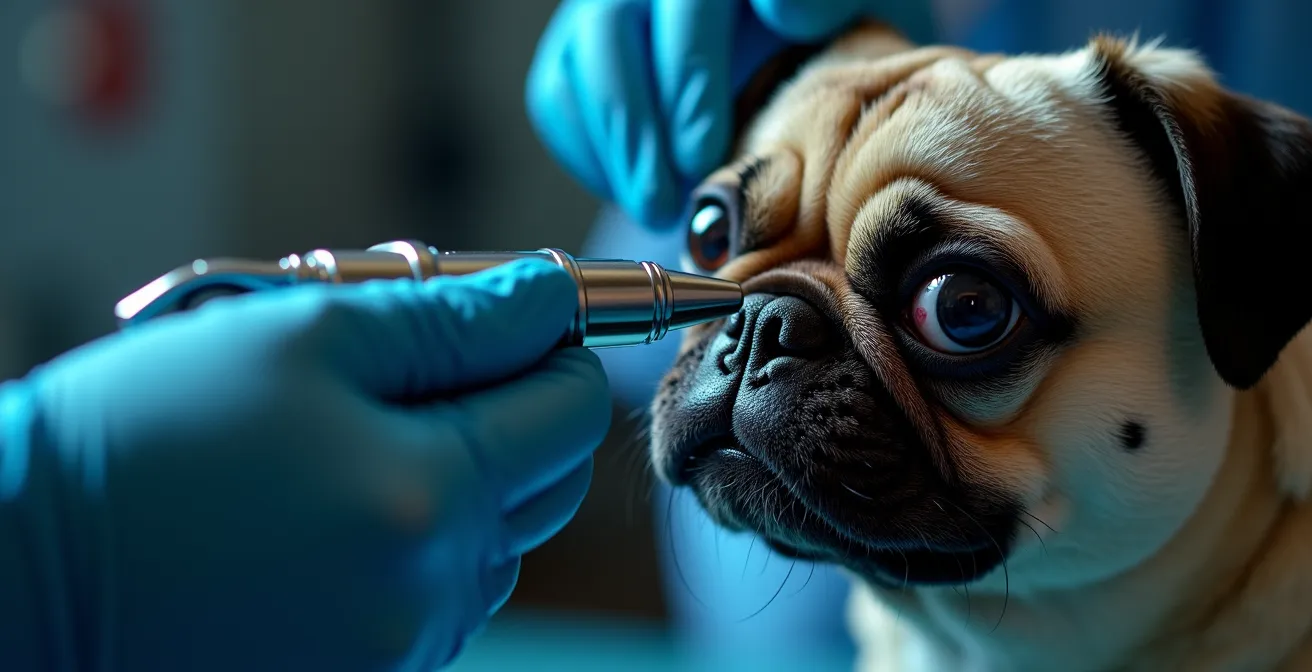
The “wait and see” approach is dangerous for any pet, but for brachycephalic (flat-faced) breeds like Pugs, it can be catastrophic, especially with eye injuries. Due to their prominent eyes and shallow eye sockets, Pugs are exceptionally vulnerable to corneal ulcers, scratches, and even proptosis (when the eyeball pops out of its socket). What might seem like minor squinting or redness can escalate into a vision-threatening emergency within hours. The cost of delay here is measured not just in dollars, but potentially in your pet’s sight.
An owner might see their Pug squinting and decide to “wait and see” if it gets better overnight. During that time, a simple scratch can become an infected, melting ulcer. The cost difference is stark: an immediate vet visit for a fluorescein stain and antibiotic drops might cost $150-$300. Waiting 24 hours could lead to a scenario requiring specialist surgery, a conjunctival graft, and intensive post-operative care, with costs soaring to $2,000-$4,000, and a much higher risk of vision loss. The “wait and see” gamble is one you cannot afford to take with a Pug’s eyes.
This principle of “cost of delay” applies to all areas of preventative care. A classic, heartbreaking example is seen with preventable infectious diseases. As one PBS documentary on pet care costs highlighted, veterinary emergency rooms frequently treat puppies for Parvovirus, a deadly and aggressive disease. The cost of vaccination is minimal, a predictable part of a puppy wellness plan. The cost of Parvovirus treatment, involving days of intensive hospitalization, is thousands of dollars, and many puppies still don’t survive. Whether it’s a vaccine or an eye check, the financial and emotional calculus is the same: the small, upfront cost of action prevents a catastrophic, delayed cost of inaction.
Key Takeaways
- Proactive care is a predictable financial investment; reactive care is an unpredictable, high-cost debt.
- “Normal” blood work is a critical asset that establishes a baseline, allowing for early, low-cost intervention years later.
- The cost of delay is real: waiting on symptoms can multiply treatment costs exponentially, especially for vulnerable breeds or preventable diseases.
When to Switch From Annual to Bi-Annual Vet Visits for Seniors?
As pets enter their senior years, typically around age seven for most dogs and cats, their bodies begin to change more rapidly. The value of proactive care increases, and the “wait and see” risk becomes even more pronounced. This is the stage where a switch from annual to bi-annual wellness exams becomes a crucial strategic decision. A year is a long time in the life of a senior pet, and six-month check-ups allow your veterinarian to catch age-related conditions like arthritis, dental disease, kidney decline, and cancer much earlier.
From a financial standpoint, this increased frequency is a smart investment. The cost of an extra exam per year is minimal compared to the cost of treating an advanced-stage disease that could have been identified six months sooner. It’s at this life stage that baseline blood work pays its biggest dividends. Because you have years of data, even minor changes are immediately apparent. For this reason, many veterinary experts recommend that senior pets should have blood work done every six months, in conjunction with their exams.
As an owner, your vigilance at home is also part of this strategy. Between visits, monitor for subtle signs of aging. Keep a simple log of any changes in your pet’s appetite, water intake, mobility, or behavior. Are they slower to get up in the morning? Have they lost interest in their favorite toy? Are they drinking more water than usual? These are not just “old age”—they are specific clinical signs that, when reported to your vet, can lead to early diagnosis and management of common senior diseases, keeping your pet comfortable and your costs manageable.
Ultimately, shifting your financial strategy from reactive saving to proactive investment is the single most powerful decision you can make for your pet’s health and your own financial peace of mind. The evidence is clear: small, predictable investments in wellness visits and diagnostics build a bulwark against the devastating and unpredictable costs of emergency. Take the first step in this strategic shift today by scheduling your pet’s next wellness exam.