Travel & Activities with Pets
Sharing adventures with your pet—whether flying across continents, hiking mountain trails, or training for competitive sports—transforms ordinary ownership into a deeply rewarding partnership. Yet these experiences demand careful preparation that goes far beyond enthusiasm. From understanding airline container mathematics to managing your dog’s electrolyte balance during a long trail run, the difference between a memorable adventure and a preventable crisis often lies in knowing what questions to ask before you leave home.
This comprehensive resource connects the essential knowledge you need across three major domains: air and international travel logistics, outdoor activity safety, and athletic training protocols. Each area presents unique challenges, but they share a common foundation—understanding your pet’s physiological needs, anticipating regulatory requirements, and planning with precision. Whether you’re preparing for your first flight with a nervous cat or conditioning a border collie for agility competition, the principles outlined here will help you make informed decisions that prioritize your companion’s wellbeing.
Preparing for Air Travel with Your Pet
Air travel remains one of the most anxiety-inducing experiences for pet owners, largely because it involves surrendering control while navigating a complex web of airline-specific regulations. The foundation of safe air travel starts months before departure, with crate training that transforms a plastic container from a prison into a familiar sanctuary.
Understanding Container Mathematics and Requirements
Airlines enforce precise dimensional formulas that many owners discover too late. Your pet must be able to stand without touching the carrier’s ceiling, turn around completely, and lie down in a natural position. This translates to a mathematical calculation: measure your pet’s length from nose to tail base, add 2-4 inches, then measure floor-to-shoulder height and add 3-4 inches. A 45-pound Labrador typically requires a 36-inch crate, but individual body proportions matter more than breed averages.
Hardware specifications are equally non-negotiable. IATA-compliant carriers must feature solid tops, ventilation on at least three sides, leak-proof bottoms, and doors secured by two independent locking mechanisms. Metal fasteners that simply slide into place won’t pass inspection—you need bolts with nuts or heavy-duty zip ties as secondary security. Think of these requirements as similar to car seat regulations: they seem excessive until you understand they’re engineered for worst-case turbulence scenarios.
Documentation and Identification Protocols
Proper labeling transforms a generic crate into a tracked, identifiable unit in the cargo system. Each carrier requires specific label placement, but universal best practices include:
- Live Animal stickers on at least three sides with directional arrows indicating upright position
- Contact information for both departure and arrival destinations, laminated against moisture
- Feeding and watering instructions with last meal timestamp
- A recent photograph of your pet attached to the exterior
- Veterinary contact information and any critical medical conditions
Hydration logistics present a practical puzzle: you want water available, but spilled liquid creates respiratory risks in pressurized cargo holds. Freezing water in the attached bowl gives your pet access as it melts while preventing immediate spillage during handling. For flights exceeding eight hours, regulations require accessible food—typically secured in a bag taped to the carrier’s exterior with feeding instructions.
Crossing Borders: Health and Legal Requirements
International pet travel operates under an entirely different framework than domestic flights, governed by overlapping jurisdictions that include your departure country, the destination nation, and sometimes transit countries for layovers. The bureaucracy exists to prevent disease transmission, particularly rabies, which remains endemic in many regions despite being nearly eliminated in others.
Timing Your Rabies Vaccination Strategy
Rabies protocols follow strict temporal logic that catches many travelers unprepared. Most countries require vaccinations administered at least 21 days before entry but not more than 12 months prior, creating a compliance window you must calculate backward from your travel date. If your pet’s vaccination occurred 13 months ago, even by a single day, you’ll need a booster and must restart the waiting period. Some nations impose even longer waiting periods—up to six months—for animals arriving from high-risk rabies regions.
The situation becomes more complex with puppies and kittens. Since rabies vaccines aren’t administered before 12-16 weeks of age, young animals may be physically too young to meet import requirements, effectively making certain destinations off-limits until they reach the appropriate age plus the waiting period.
Microchip Standards and Parasite Treatment
Microchip technology sounds universal, but international travel reveals critical incompatibilities. The European Union and many other regions require ISO 11784/11785 compliant chips operating at 134.2 kHz. If your pet has an older 125 kHz chip common in North America, you’ll need to bring a compatible reader to the border inspection, or better yet, have a second ISO-compliant chip implanted before travel. The microchip must be implanted before rabies vaccination to establish an unbroken chain of identification.
Certain destinations mandate parasite treatments within specific timeframes. The United Kingdom, for example, requires tapeworm treatment administered by a veterinarian between 24-120 hours before entry, with the exact timestamp documented in your pet’s health certificate. These treatments target parasites not present in the destination country, functioning as a biological border control.
USDA Endorsement and Breed Restrictions
For U.S. departures, your veterinary health certificate requires USDA endorsement—a separate step where a federal veterinarian validates your private vet’s examination. This endorsement must occur within 10 days of travel, creating a narrow window for completing paperwork. The process requires scheduling at USDA offices that may be hours from your location, and during peak travel seasons, appointments can book weeks in advance.
Perhaps most heartbreaking are breed-specific restrictions that ban certain dogs regardless of individual temperament. Countries including the United Kingdom, Germany, and Australia prohibit or severely restrict pit bull-type breeds, Japanese Tosas, and others deemed dangerous. These restrictions apply even to service animals in some jurisdictions, and there are no exceptions for layovers—your pet cannot transit through a country that bans their breed, even if they never leave the airport cargo area.
Keeping Your Pet Hydrated During Outdoor Adventures
Outdoor activities amplify your pet’s water requirements in ways that surprise even experienced owners. A dog that drinks two cups of water daily at home may require five to eight cups during a strenuous hike, and failure to meet this demand triggers a cascade of physiological problems that develop faster than most people recognize.
Calculating Volume Requirements
Baseline hydration follows a simple formula: one ounce of water per pound of body weight daily. A 60-pound dog needs roughly 60 ounces (7.5 cups) under normal conditions. Physical activity, heat, and humidity multiply this requirement—potentially doubling or tripling it. A moderate three-hour hike in 75°F weather might demand an additional 30-40 ounces, while intense activity in 85°F heat could require even more.
The challenge lies in the fact that dogs can’t tell you they’re thirsty until they’re already experiencing early dehydration. By the time your dog refuses food or appears lethargic, they’ve crossed from mild to moderate dehydration. Testing skin elasticity provides a field assessment: gently pull up the skin on your dog’s shoulder blades—it should snap back instantly. If it returns slowly or maintains a “tent” shape, immediate rehydration is critical.
Bacteria Risks and Water Safety
That pristine mountain stream looks refreshing, but it may harbor Giardia, Leptospirosis, and other pathogens that cause severe gastrointestinal illness. The same water you filter or purify for yourself should be provided to your pet, or at minimum, bring sufficient clean water from home for the entire excursion. Collapsible bowls made from food-grade silicone have become the standard for portable water delivery—they pack flat, clean easily, and hold 4-6 cups, enough for a mid-hike hydration break.
Stagnant water presents even greater risks. Ponds and puddles can contain toxic algae blooms, particularly blue-green algae (cyanobacteria) that produce liver toxins capable of killing a dog within hours of ingestion. These blooms appear as thick, paint-like scum on the water’s surface and are most common in warm, nutrient-rich water during summer months.
Electrolyte Supplementation for Extended Activity
Just as human athletes use sports drinks to replace minerals lost through sweat, dogs engaged in prolonged exertion benefit from electrolyte supplementation. Dogs primarily cool through panting rather than sweating, but they still lose sodium, potassium, and chloride through respiratory moisture and limited paw pad perspiration. Pet-specific electrolyte powders designed for working and sporting dogs can be added to water, though dosing matters—too much causes diarrhea, defeating the hydration purpose.
Warning signs that your pet needs immediate attention include excessive drooling, bright red or pale gums, stumbling or weakness, and vomiting. These symptoms indicate heat exhaustion progressing toward heat stroke, a genuine emergency. Find shade immediately, offer small amounts of cool (not ice-cold) water, and wet their paw pads and belly with cool water while seeking veterinary care.
Training for Canine Sports and High-Impact Activities
The explosion in competitive dog sports—from agility and dock diving to flyball and disc competitions—has created a generation of canine athletes requiring the same thoughtful conditioning approach that human athletes receive. The exuberance that makes dogs natural competitors also makes them prone to overexertion, as they’ll frequently push past pain thresholds to please their handlers.
Managing Joint Impact and Physical Development
Growth plate considerations dictate when young dogs can safely begin high-impact training. Large breed dogs don’t achieve skeletal maturity until 18-24 months, and asking a 10-month-old German Shepherd to repeatedly jump full-height agility bars risks permanent orthopedic damage. Think of it like expecting a young teenager to train for powerlifting—the skeletal framework simply isn’t ready for those forces, regardless of enthusiasm or apparent capability.
Even in mature dogs, repetitive impact activities like jump sequences or weave poles create cumulative stress on joints, particularly the stifles (knees), hocks (ankles), and shoulders. Progressive training protocols mirror human athletic development:
- Foundation conditioning building core strength and proprioception (body awareness) through balance exercises and controlled movement
- Low-impact skill development where dogs learn obstacle mechanics at reduced heights or speeds
- Gradual intensity increase adding height, speed, or repetition in small increments over weeks or months
- Peak performance maintenance with adequate rest intervals and cross-training to prevent overuse injuries
Weave Pole Mechanics and Technical Training
Weave poles epitomize the intersection of athleticism and precision. Dogs must slalom through 6-12 upright poles spaced 20-24 inches apart at high speed, requiring spinal flexibility, rhythm, and intense focus. The motion places significant lateral stress on the spine and creates torque in the shoulder joints with each entry and exit.
Training methods have evolved from physical guidance (literally walking the dog through the poles) to channel methods using offset poles that gradually narrow, and ultimately to modern 2×2 training that teaches the entry angle and weaving motion independently before combining elements. The handler’s position and subtle body language cues guide the dog’s entry angle—a few inches of misalignment at entry multiplies into missing poles or popping out mid-sequence at competition speed.
Handler Fitness and Mental Preparation
An often-overlooked element in canine sports is handler conditioning. In agility, you’re running alongside your dog, directing them through 15-20 obstacles in under 60 seconds. A handler who’s winded or moving slowly sends confusing signals that degrade the dog’s performance. Handler fitness directly correlates with team success—your ability to accelerate, decelerate, and change direction smoothly allows your dog to read your intent and respond appropriately.
Mental focus training benefits both species. Dogs competing in high-stimulation environments—crowds cheering, other dogs barking, novel locations—must maintain concentration on their handler’s cues despite distractions. This requires systematic desensitization and focus exercises, gradually increasing environmental distractions during training sessions. Course analysis, where handlers mentally “walk” the sequence before running it, helps identify optimal handling positions and potential problem areas where timing will be critical.
Whether you’re buckling your dog into a travel crate, filling a water bottle for a trail hike, or walking an agility course layout, these activities share a fundamental requirement: informed preparation that respects your pet’s physical limits while expanding their world. The technical details—container dimensions, vaccination timelines, hydration formulas, training progressions—aren’t obstacles to adventure. They’re the framework that makes safe, enriching experiences possible for the animals who depend on our judgment to protect them while letting them thrive.
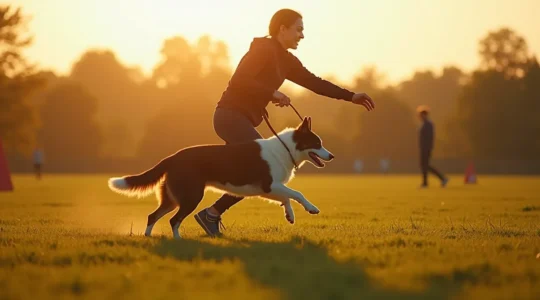
Agility Foundation: Why Flatwork Matters More Than Obstacles?
Contrary to the rush for jumps and weaves, elite agility performance isn’t built on obstacles; it’s engineered on the flat. True speed and safety come…
Read more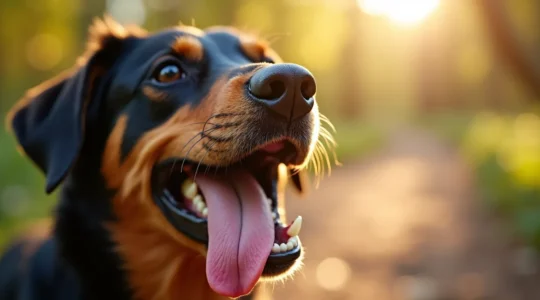
K9 Dehydration: Why Panting Evaporates Water Faster Than You Think?
Your dog loses far more water through panting than you realize, rendering common hydration practices dangerously inadequate on the trail. Hydration is a quantitative science:…
Read more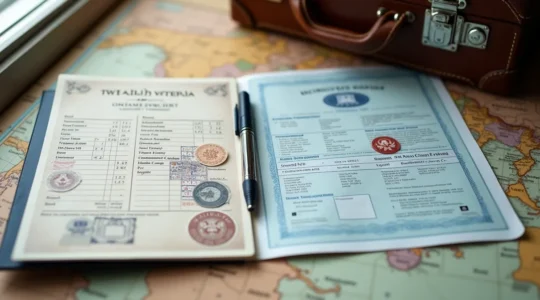
Pet Passport vs. Health Certificate: What Is the Difference?
The critical distinction between a “Pet Passport” and an “Animal Health Certificate” is not the document’s name, but the regulatory system it represents; one is…
Read more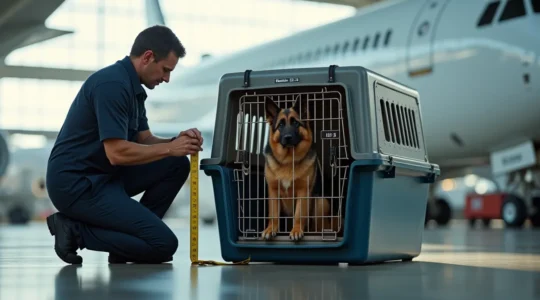
IATA Compliance: The Ventilation Details That Get Carriers Rejected
Being denied boarding because of an IATA-non-compliant pet crate is a common, costly, and entirely preventable regulatory failure. Compliance is not subjective; it is a…
Read more